

172
An Introduction to Beam Physics
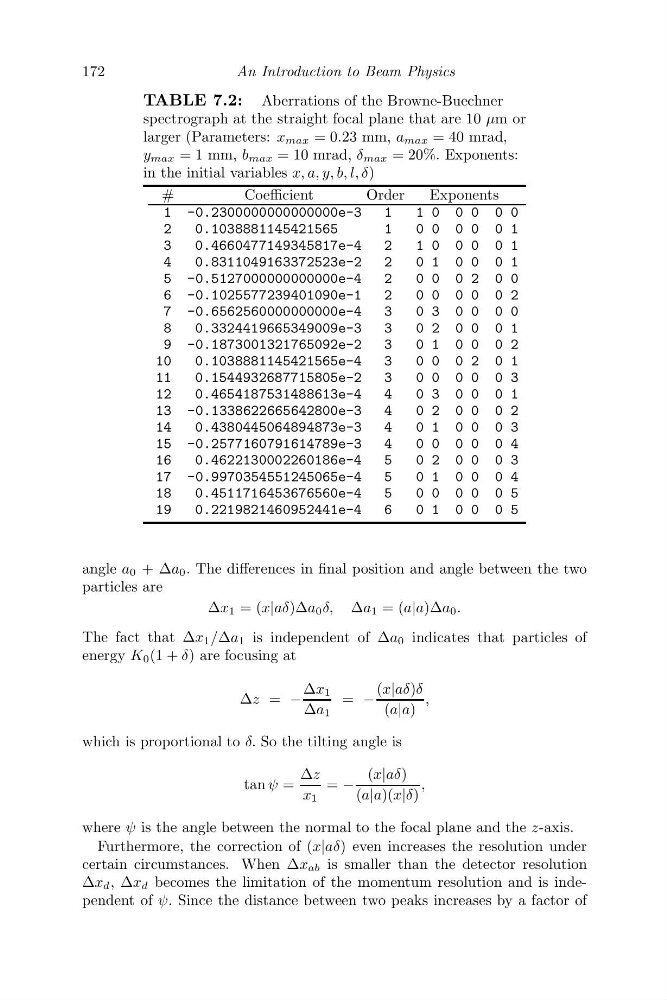
TABLE 7.2: Aberrations of the Browne-Buechner
spectrograph at the straight focal plane that are 10 μm or
larger (Parameters: x max = 0.23 mm, a max = 40 mrad,
y max = 1 mm, b max = 10 mrad, δ max = 20%. Exponents:
in the initial variables x, a, y, b, l, δ)
#
Coefficient
Order
Exponents
1 -0.2300000000000000e-3 1
1 0 0 0 0 0
2
0.1038881145421565
1
0 0 0 0 0 1
3
0.4660477149345817e-4 2
1 0 0 0 0 1
4
0.8311049163372523e-2 2
0 1 0 0 0 1
5 -0.5127000000000000e-4 2
0 0 0 2 0 0
6 -0.1025577239401090e-1 2
0 0 0 0 0 2
7 -0.6562560000000000e-4 3
0 3 0 0 0 0
8
0.3324419665349009e-3 3
0 2 0 0 0 1
9 -0.1873001321765092e-2 3
0 1 0 0 0 2
10
0.1038881145421565e-4 3
0 0 0 2 0 1
11
0.1544932687715805e-2 3
0 0 0 0 0 3
12
0.4654187531488613e-4 4
0 3 0 0 0 1
13 -0.1338622665642800e-3 4
0 2 0 0 0 2
14
0.4380445064894873e-3 4
0 1 0 0 0 3
15 -0.2577160791614789e-3 4
0 0 0 0 0 4
16
0.4622130002260186e-4 5
0 2 0 0 0 3
17 -0.9970354551245065e-4 5
0 1 0 0 0 4
18
0.4511716453676560e-4 5
0 0 0 0 0 5
19
0.2219821460952441e-4 6
0 1 0 0 0 5
angle a 0 + Δa 0 . The differences in final position and angle between the two
particles are
Δx 1 = (x|aδ)Δa 0 δ, Δa 1 = (a|a)Δa 0 .
The fact that Δx 1 /Δa 1 is independent of Δa 0 indicates that particles of
energy K 0 (1 + δ) are focusing at
Δz = −
Δx 1
Δa 1
= −
(x|aδ)δ
(a|a)
,
which is proportional to δ. So the tilting angle is
tan ψ =
Δz
x 1
= −
(x|aδ)
(a|a)(x|δ)
,
where ψ is the angle between the normal to the focal plane and the z-axis.
Furthermore, the correction of (x|aδ) even increases the resolution under
certain circumstances. When Δx ab is smaller than the detector resolution
Δx d , Δx d becomes the limitation of the momentum resolution and is independent of ψ. Since the distance between two peaks increases by a factor of
An Introduction to Beam Physics
TABLE 7.2: Aberrations of the Browne-Buechner
spectrograph at the straight focal plane that are 10 μm or
larger (Parameters: x max = 0.23 mm, a max = 40 mrad,
y max = 1 mm, b max = 10 mrad, δ max = 20%. Exponents:
in the initial variables x, a, y, b, l, δ)
#
Coefficient
Order
Exponents
1 -0.2300000000000000e-3 1
1 0 0 0 0 0
2
0.1038881145421565
1
0 0 0 0 0 1
3
0.4660477149345817e-4 2
1 0 0 0 0 1
4
0.8311049163372523e-2 2
0 1 0 0 0 1
5 -0.5127000000000000e-4 2
0 0 0 2 0 0
6 -0.1025577239401090e-1 2
0 0 0 0 0 2
7 -0.6562560000000000e-4 3
0 3 0 0 0 0
8
0.3324419665349009e-3 3
0 2 0 0 0 1
9 -0.1873001321765092e-2 3
0 1 0 0 0 2
10
0.1038881145421565e-4 3
0 0 0 2 0 1
11
0.1544932687715805e-2 3
0 0 0 0 0 3
12
0.4654187531488613e-4 4
0 3 0 0 0 1
13 -0.1338622665642800e-3 4
0 2 0 0 0 2
14
0.4380445064894873e-3 4
0 1 0 0 0 3
15 -0.2577160791614789e-3 4
0 0 0 0 0 4
16
0.4622130002260186e-4 5
0 2 0 0 0 3
17 -0.9970354551245065e-4 5
0 1 0 0 0 4
18
0.4511716453676560e-4 5
0 0 0 0 0 5
19
0.2219821460952441e-4 6
0 1 0 0 0 5
angle a 0 + Δa 0 . The differences in final position and angle between the two
particles are
Δx 1 = (x|aδ)Δa 0 δ, Δa 1 = (a|a)Δa 0 .
The fact that Δx 1 /Δa 1 is independent of Δa 0 indicates that particles of
energy K 0 (1 + δ) are focusing at
Δz = −
Δx 1
Δa 1
= −
(x|aδ)δ
(a|a)
,
which is proportional to δ. So the tilting angle is
tan ψ =
Δz
x 1
= −
(x|aδ)
(a|a)(x|δ)
,
where ψ is the angle between the normal to the focal plane and the z-axis.
Furthermore, the correction of (x|aδ) even increases the resolution under
certain circumstances. When Δx ab is smaller than the detector resolution
Δx d , Δx d becomes the limitation of the momentum resolution and is independent of ψ. Since the distance between two peaks increases by a factor of