

Imaging Devices
169
',
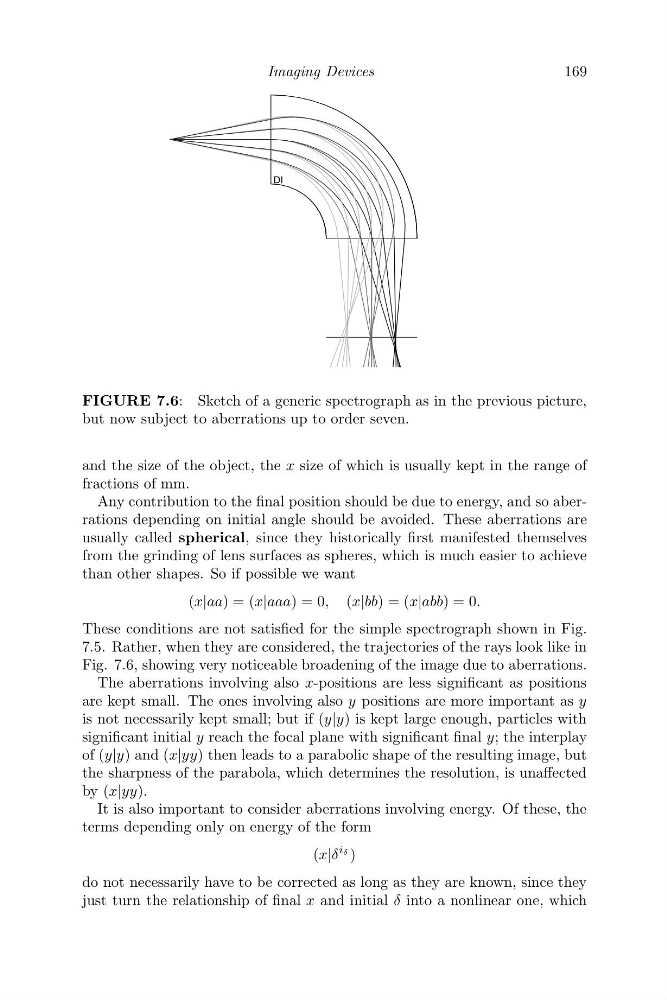
FIGURE 7.6: Sketch of a generic spectrograph as in the previous picture,
but now subject to aberrations up to order seven.
and the size of the object, the x size of which is usually kept in the range of
fractions of mm.
Any contribution to the final position should be due to energy, and so aberrations depending on initial angle should be avoided. These aberrations are
usually called spherical, since they historically first manifested themselves
from the grinding of lens surfaces as spheres, which is much easier to achieve
than other shapes. So if possible we want
(x|aa) = (x|aaa) = 0, (x|bb) = (x|abb) = 0.
These conditions are not satisfied for the simple spectrograph shown in Fig.
7.5. Rather, when they are considered, the trajectories of the rays look like in
Fig. 7.6, showing very noticeable broadening of the image due to aberrations.
The aberrations involving also x-positions are less significant as positions
are kept small. The ones involving also y positions are more important as y
is not necessarily kept small; but if (y|y) is kept large enough, particles with
significant initial y reach the focal plane with significant final y; the interplay
of (y|y) and (x|yy) then leads to a parabolic shape of the resulting image, but
the sharpness of the parabola, which determines the resolution, is unaffected
by (x|yy).
It is also important to consider aberrations involving energy. Of these, the
terms depending only on energy of the form
(x|δ
i δ )
do not necessarily have to be corrected as long as they are known, since they
just turn the relationship of final x and initial δ into a nonlinear one, which
169
',
FIGURE 7.6: Sketch of a generic spectrograph as in the previous picture,
but now subject to aberrations up to order seven.
and the size of the object, the x size of which is usually kept in the range of
fractions of mm.
Any contribution to the final position should be due to energy, and so aberrations depending on initial angle should be avoided. These aberrations are
usually called spherical, since they historically first manifested themselves
from the grinding of lens surfaces as spheres, which is much easier to achieve
than other shapes. So if possible we want
(x|aa) = (x|aaa) = 0, (x|bb) = (x|abb) = 0.
These conditions are not satisfied for the simple spectrograph shown in Fig.
7.5. Rather, when they are considered, the trajectories of the rays look like in
Fig. 7.6, showing very noticeable broadening of the image due to aberrations.
The aberrations involving also x-positions are less significant as positions
are kept small. The ones involving also y positions are more important as y
is not necessarily kept small; but if (y|y) is kept large enough, particles with
significant initial y reach the focal plane with significant final y; the interplay
of (y|y) and (x|yy) then leads to a parabolic shape of the resulting image, but
the sharpness of the parabola, which determines the resolution, is unaffected
by (x|yy).
It is also important to consider aberrations involving energy. Of these, the
terms depending only on energy of the form
(x|δ
i δ )
do not necessarily have to be corrected as long as they are known, since they
just turn the relationship of final x and initial δ into a nonlinear one, which