

Actions during service 173
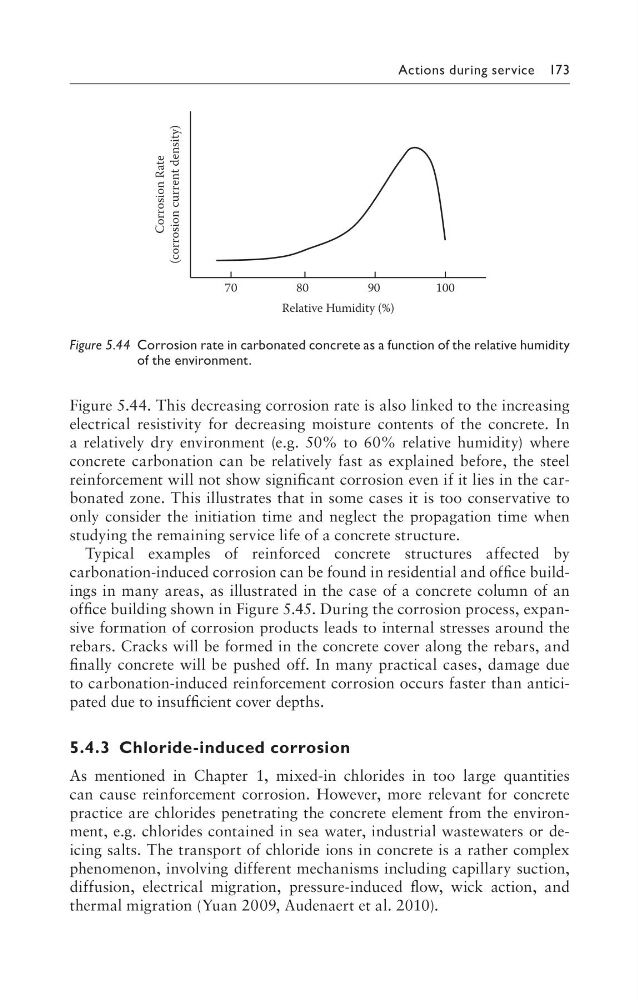
Figure 5.44. This decreasing corrosion rate is also linked to the increasing
electrical resistivity for decreasing moisture contents of the concrete. In
a relatively dry environment (e.g. 50% to 60% relative humidity) where
concrete carbonation can be relatively fast as explained before, the steel
reinforcement will not show significant corrosion even if it lies in the carbonated zone. This illustrates that in some cases it is too conservative to
only consider the initiation time and neglect the propagation time when
studying the remaining service life of a concrete structure.
Typical examples of reinforced concrete structures affected by
carbonation-induced corrosion can be found in residential and office buildings in many areas, as illustrated in the case of a concrete column of an
office building shown in Figure 5.45. During the corrosion process, expansive formation of corrosion products leads to internal stresses around the
rebars. Cracks will be formed in the concrete cover along the rebars, and
finally concrete will be pushed off. In many practical cases, damage due
to carbonation-induced reinforcement corrosion occurs faster than anticipated due to insufficient cover depths.
5.4.3 chloride-induced corrosion
As mentioned in Chapter 1, mixed-in chlorides in too large quantities
can cause reinforcement corrosion. However, more relevant for concrete
practice are chlorides penetrating the concrete element from the environment, e.g. chlorides contained in sea water, industrial wastewaters or deicing salts. The transport of chloride ions in concrete is a rather complex
phenomenon, involving different mechanisms including capillary suction,
diffusion, electrical migration, pressure-induced flow, wick action, and
thermal migration (Yuan 2009, Audenaert et al. 2010).
Relative Humidity (%)
Corrosion Rate
(corrosion current density)
100
90
80
70
Figure 5.44 Corrosion rate in carbonated concrete as a function of the relative humidity
of the environment.
Figure 5.44. This decreasing corrosion rate is also linked to the increasing
electrical resistivity for decreasing moisture contents of the concrete. In
a relatively dry environment (e.g. 50% to 60% relative humidity) where
concrete carbonation can be relatively fast as explained before, the steel
reinforcement will not show significant corrosion even if it lies in the carbonated zone. This illustrates that in some cases it is too conservative to
only consider the initiation time and neglect the propagation time when
studying the remaining service life of a concrete structure.
Typical examples of reinforced concrete structures affected by
carbonation-induced corrosion can be found in residential and office buildings in many areas, as illustrated in the case of a concrete column of an
office building shown in Figure 5.45. During the corrosion process, expansive formation of corrosion products leads to internal stresses around the
rebars. Cracks will be formed in the concrete cover along the rebars, and
finally concrete will be pushed off. In many practical cases, damage due
to carbonation-induced reinforcement corrosion occurs faster than anticipated due to insufficient cover depths.
5.4.3 chloride-induced corrosion
As mentioned in Chapter 1, mixed-in chlorides in too large quantities
can cause reinforcement corrosion. However, more relevant for concrete
practice are chlorides penetrating the concrete element from the environment, e.g. chlorides contained in sea water, industrial wastewaters or deicing salts. The transport of chloride ions in concrete is a rather complex
phenomenon, involving different mechanisms including capillary suction,
diffusion, electrical migration, pressure-induced flow, wick action, and
thermal migration (Yuan 2009, Audenaert et al. 2010).
Relative Humidity (%)
Corrosion Rate
(corrosion current density)
100
90
80
70
Figure 5.44 Corrosion rate in carbonated concrete as a function of the relative humidity
of the environment.