

614
M. G. Derenevich et al.
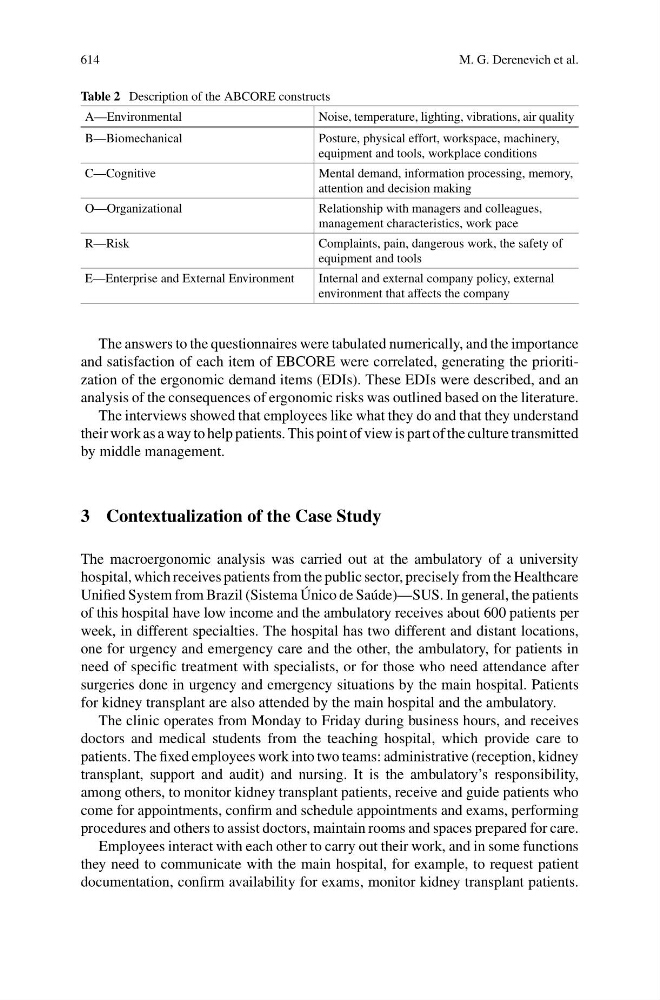
Table 2 Description of the ABCORE constructs
A—Environmental
Noise, temperature, lighting, vibrations, air quality
B—Biomechanical
Posture, physical effort, workspace, machinery,
equipment and tools, workplace conditions
C—Cognitive
Mental demand, information processing, memory,
attention and decision making
O—Organizational
Relationship with managers and colleagues,
management characteristics, work pace
R—Risk
Complaints, pain, dangerous work, the safety of
equipment and tools
E—Enterprise and External Environment
Internal and external company policy, external
environment that affects the company
The answers to the questionnaires were tabulated numerically, and the importance
and satisfaction of each item of EBCORE were correlated, generating the prioritization of the ergonomic demand items (EDIs). These EDIs were described, and an
analysis of the consequences of ergonomic risks was outlined based on the literature.
The interviews showed that employees like what they do and that they understand
their work as a way to help patients. This point of view is part of the culture transmitted
by middle management.
3 Contextualization of the Case Study
The macroergonomic analysis was carried out at the ambulatory of a university
hospital, which receives patients from the public sector, precisely from the Healthcare
Unified System from Brazil (Sistema Único de Saúde)—SUS. In general, the patients
of this hospital have low income and the ambulatory receives about 600 patients per
week, in different specialties. The hospital has two different and distant locations,
one for urgency and emergency care and the other, the ambulatory, for patients in
need of specific treatment with specialists, or for those who need attendance after
surgeries done in urgency and emergency situations by the main hospital. Patients
for kidney transplant are also attended by the main hospital and the ambulatory.
The clinic operates from Monday to Friday during business hours, and receives
doctors and medical students from the teaching hospital, which provide care to
patients. The fixed employees work into two teams: administrative (reception, kidney
transplant, support and audit) and nursing. It is the ambulatory’s responsibility,
among others, to monitor kidney transplant patients, receive and guide patients who
come for appointments, confirm and schedule appointments and exams, performing
procedures and others to assist doctors, maintain rooms and spaces prepared for care.
Employees interact with each other to carry out their work, and in some functions
they need to communicate with the main hospital, for example, to request patient
documentation, confirm availability for exams, monitor kidney transplant patients.
M. G. Derenevich et al.
Table 2 Description of the ABCORE constructs
A—Environmental
Noise, temperature, lighting, vibrations, air quality
B—Biomechanical
Posture, physical effort, workspace, machinery,
equipment and tools, workplace conditions
C—Cognitive
Mental demand, information processing, memory,
attention and decision making
O—Organizational
Relationship with managers and colleagues,
management characteristics, work pace
R—Risk
Complaints, pain, dangerous work, the safety of
equipment and tools
E—Enterprise and External Environment
Internal and external company policy, external
environment that affects the company
The answers to the questionnaires were tabulated numerically, and the importance
and satisfaction of each item of EBCORE were correlated, generating the prioritization of the ergonomic demand items (EDIs). These EDIs were described, and an
analysis of the consequences of ergonomic risks was outlined based on the literature.
The interviews showed that employees like what they do and that they understand
their work as a way to help patients. This point of view is part of the culture transmitted
by middle management.
3 Contextualization of the Case Study
The macroergonomic analysis was carried out at the ambulatory of a university
hospital, which receives patients from the public sector, precisely from the Healthcare
Unified System from Brazil (Sistema Único de Saúde)—SUS. In general, the patients
of this hospital have low income and the ambulatory receives about 600 patients per
week, in different specialties. The hospital has two different and distant locations,
one for urgency and emergency care and the other, the ambulatory, for patients in
need of specific treatment with specialists, or for those who need attendance after
surgeries done in urgency and emergency situations by the main hospital. Patients
for kidney transplant are also attended by the main hospital and the ambulatory.
The clinic operates from Monday to Friday during business hours, and receives
doctors and medical students from the teaching hospital, which provide care to
patients. The fixed employees work into two teams: administrative (reception, kidney
transplant, support and audit) and nursing. It is the ambulatory’s responsibility,
among others, to monitor kidney transplant patients, receive and guide patients who
come for appointments, confirm and schedule appointments and exams, performing
procedures and others to assist doctors, maintain rooms and spaces prepared for care.
Employees interact with each other to carry out their work, and in some functions
they need to communicate with the main hospital, for example, to request patient
documentation, confirm availability for exams, monitor kidney transplant patients.