

A Theoretical Framework Between Corporate Social …
585
Social Responsibility Themes
Organizational
governance
Human
rights
Working
practices
Environment
Loyal
operating
practices
Consumer
issues
Community
involvement
and
development
Macroergonomics
Environment
Biomechanical
Cognitive
Organization
of Work
Risk
Enterprise
External
factors
Personal
factors
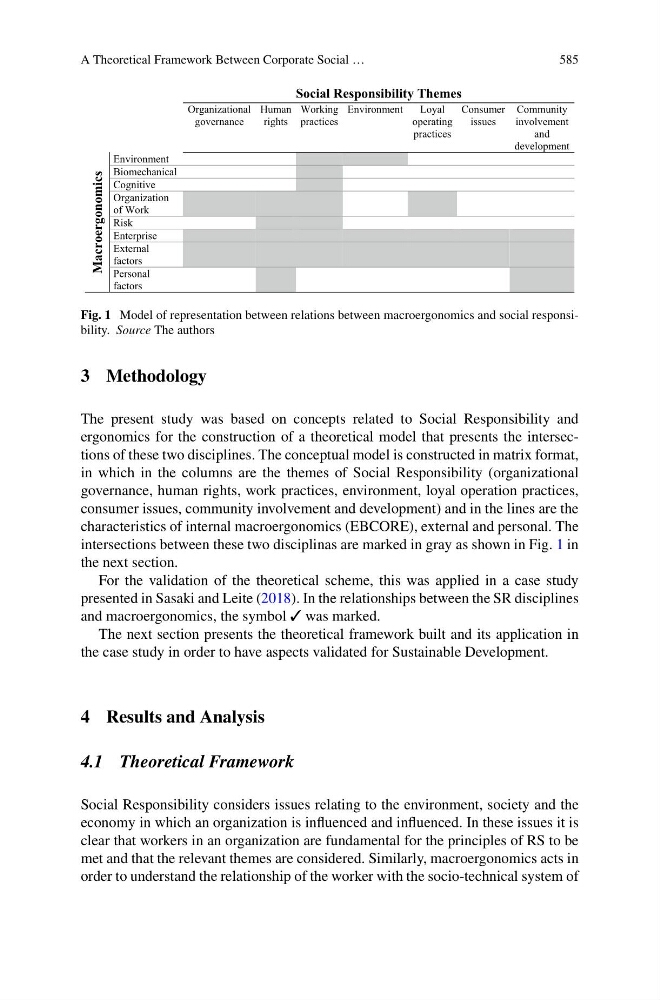
Fig. 1 Model of representation between relations between macroergonomics and social responsibility. Source The authors
3 Methodology
The present study was based on concepts related to Social Responsibility and
ergonomics for the construction of a theoretical model that presents the intersections of these two disciplines. The conceptual model is constructed in matrix format,
in which in the columns are the themes of Social Responsibility (organizational
governance, human rights, work practices, environment, loyal operation practices,
consumer issues, community involvement and development) and in the lines are the
characteristics of internal macroergonomics (EBCORE), external and personal. The
intersections between these two disciplinas are marked in gray as shown in Fig. 1 in
the next section.
For the validation of the theoretical scheme, this was applied in a case study
presented in Sasaki and Leite (2018). In the relationships between the SR disciplines
and macroergonomics, the symbol ✓ was marked.
The next section presents the theoretical framework built and its application in
the case study in order to have aspects validated for Sustainable Development.
4 Results and Analysis
4.1 Theoretical Framework
Social Responsibility considers issues relating to the environment, society and the
economy in which an organization is influenced and influenced. In these issues it is
clear that workers in an organization are fundamental for the principles of RS to be
met and that the relevant themes are considered. Similarly, macroergonomics acts in
order to understand the relationship of the worker with the socio-technical system of
585
Social Responsibility Themes
Organizational
governance
Human
rights
Working
practices
Environment
Loyal
operating
practices
Consumer
issues
Community
involvement
and
development
Macroergonomics
Environment
Biomechanical
Cognitive
Organization
of Work
Risk
Enterprise
External
factors
Personal
factors
Fig. 1 Model of representation between relations between macroergonomics and social responsibility. Source The authors
3 Methodology
The present study was based on concepts related to Social Responsibility and
ergonomics for the construction of a theoretical model that presents the intersections of these two disciplines. The conceptual model is constructed in matrix format,
in which in the columns are the themes of Social Responsibility (organizational
governance, human rights, work practices, environment, loyal operation practices,
consumer issues, community involvement and development) and in the lines are the
characteristics of internal macroergonomics (EBCORE), external and personal. The
intersections between these two disciplinas are marked in gray as shown in Fig. 1 in
the next section.
For the validation of the theoretical scheme, this was applied in a case study
presented in Sasaki and Leite (2018). In the relationships between the SR disciplines
and macroergonomics, the symbol ✓ was marked.
The next section presents the theoretical framework built and its application in
the case study in order to have aspects validated for Sustainable Development.
4 Results and Analysis
4.1 Theoretical Framework
Social Responsibility considers issues relating to the environment, society and the
economy in which an organization is influenced and influenced. In these issues it is
clear that workers in an organization are fundamental for the principles of RS to be
met and that the relevant themes are considered. Similarly, macroergonomics acts in
order to understand the relationship of the worker with the socio-technical system of