

444
A. E. Builes Vélez and P. A. Zapata Ramírez
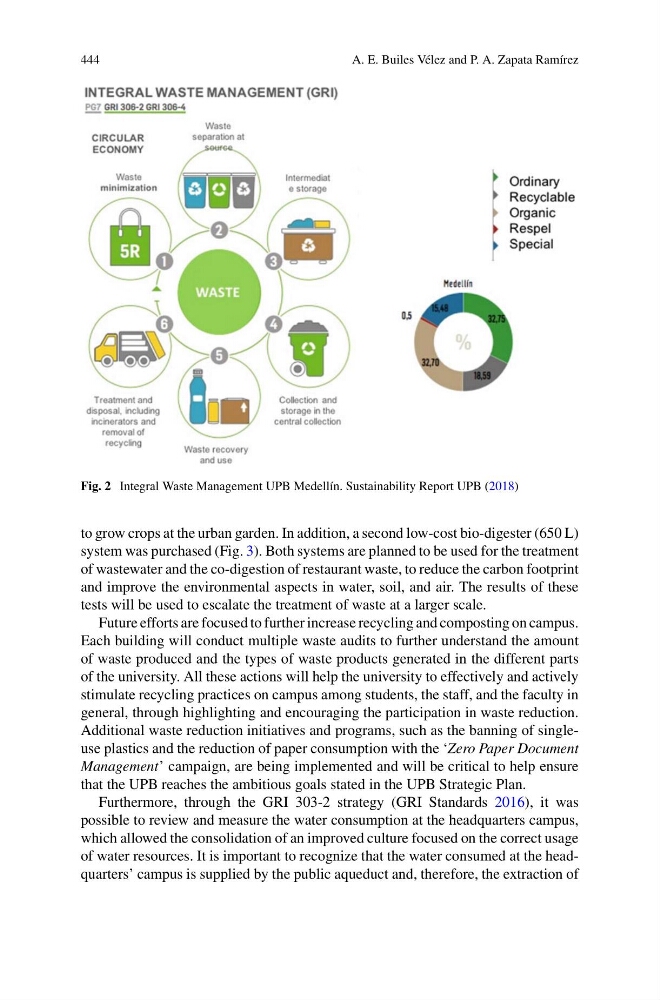
Fig. 2 Integral Waste Management UPB Medellín. Sustainability Report UPB (2018)
to grow crops at the urban garden. In addition, a second low-cost bio-digester (650 L)
system was purchased (Fig. 3). Both systems are planned to be used for the treatment
of wastewater and the co-digestion of restaurant waste, to reduce the carbon footprint
and improve the environmental aspects in water, soil, and air. The results of these
tests will be used to escalate the treatment of waste at a larger scale.
Future efforts are focused to further increase recycling and composting on campus.
Each building will conduct multiple waste audits to further understand the amount
of waste produced and the types of waste products generated in the different parts
of the university. All these actions will help the university to effectively and actively
stimulate recycling practices on campus among students, the staff, and the faculty in
general, through highlighting and encouraging the participation in waste reduction.
Additional waste reduction initiatives and programs, such as the banning of singleuse plastics and the reduction of paper consumption with the ‘Zero Paper Document
Management’ campaign, are being implemented and will be critical to help ensure
that the UPB reaches the ambitious goals stated in the UPB Strategic Plan.
Furthermore, through the GRI 303-2 strategy (GRI Standards 2016), it was
possible to review and measure the water consumption at the headquarters campus,
which allowed the consolidation of an improved culture focused on the correct usage
of water resources. It is important to recognize that the water consumed at the headquarters’ campus is supplied by the public aqueduct and, therefore, the extraction of
A. E. Builes Vélez and P. A. Zapata Ramírez
Fig. 2 Integral Waste Management UPB Medellín. Sustainability Report UPB (2018)
to grow crops at the urban garden. In addition, a second low-cost bio-digester (650 L)
system was purchased (Fig. 3). Both systems are planned to be used for the treatment
of wastewater and the co-digestion of restaurant waste, to reduce the carbon footprint
and improve the environmental aspects in water, soil, and air. The results of these
tests will be used to escalate the treatment of waste at a larger scale.
Future efforts are focused to further increase recycling and composting on campus.
Each building will conduct multiple waste audits to further understand the amount
of waste produced and the types of waste products generated in the different parts
of the university. All these actions will help the university to effectively and actively
stimulate recycling practices on campus among students, the staff, and the faculty in
general, through highlighting and encouraging the participation in waste reduction.
Additional waste reduction initiatives and programs, such as the banning of singleuse plastics and the reduction of paper consumption with the ‘Zero Paper Document
Management’ campaign, are being implemented and will be critical to help ensure
that the UPB reaches the ambitious goals stated in the UPB Strategic Plan.
Furthermore, through the GRI 303-2 strategy (GRI Standards 2016), it was
possible to review and measure the water consumption at the headquarters campus,
which allowed the consolidation of an improved culture focused on the correct usage
of water resources. It is important to recognize that the water consumed at the headquarters’ campus is supplied by the public aqueduct and, therefore, the extraction of