

418
T. L. Cruz
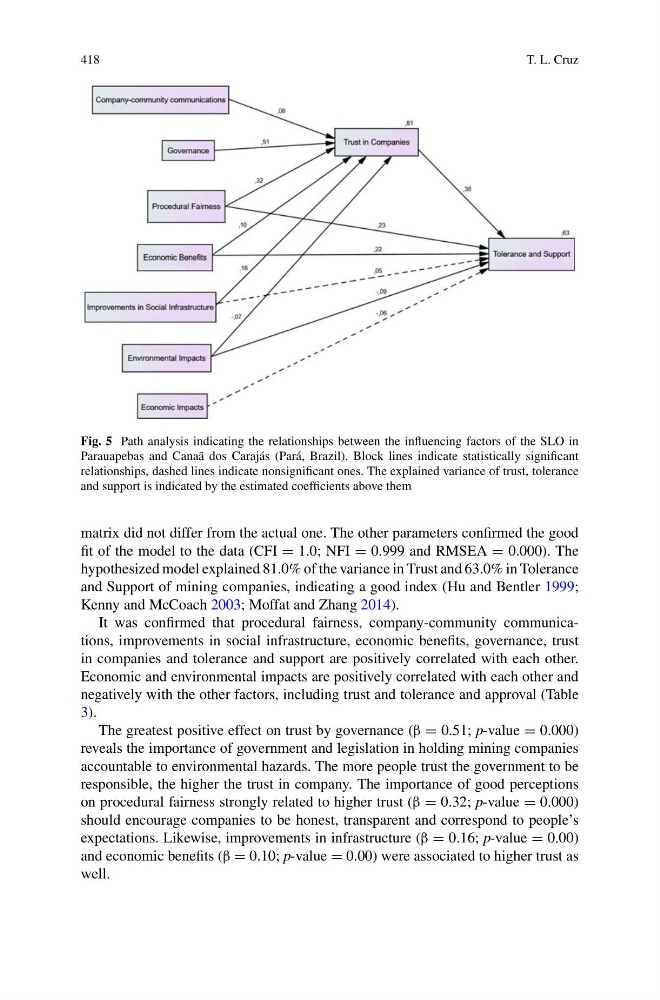
Fig. 5 Path analysis indicating the relationships between the influencing factors of the SLO in
Parauapebas and Canaã dos Carajás (Pará, Brazil). Block lines indicate statistically significant
relationships, dashed lines indicate nonsignificant ones. The explained variance of trust, tolerance
and support is indicated by the estimated coefficients above them
matrix did not differ from the actual one. The other parameters confirmed the good
fit of the model to the data (CFI = 1.0; NFI = 0.999 and RMSEA = 0.000). The
hypothesized model explained 81.0% of the variance in Trust and 63.0% in Tolerance
and Support of mining companies, indicating a good index (Hu and Bentler 1999;
Kenny and McCoach 2003; Moffat and Zhang 2014).
It was confirmed that procedural fairness, company-community communications, improvements in social infrastructure, economic benefits, governance, trust
in companies and tolerance and support are positively correlated with each other.
Economic and environmental impacts are positively correlated with each other and
negatively with the other factors, including trust and tolerance and approval (Table
3).
The greatest positive effect on trust by governance (β = 0.51; p-value = 0.000)
reveals the importance of government and legislation in holding mining companies
accountable to environmental hazards. The more people trust the government to be
responsible, the higher the trust in company. The importance of good perceptions
on procedural fairness strongly related to higher trust (β = 0.32; p-value = 0.000)
should encourage companies to be honest, transparent and correspond to people’s
expectations. Likewise, improvements in infrastructure (β = 0.16; p-value = 0.00)
and economic benefits (β = 0.10; p-value = 0.00) were associated to higher trust as
well.
T. L. Cruz
Fig. 5 Path analysis indicating the relationships between the influencing factors of the SLO in
Parauapebas and Canaã dos Carajás (Pará, Brazil). Block lines indicate statistically significant
relationships, dashed lines indicate nonsignificant ones. The explained variance of trust, tolerance
and support is indicated by the estimated coefficients above them
matrix did not differ from the actual one. The other parameters confirmed the good
fit of the model to the data (CFI = 1.0; NFI = 0.999 and RMSEA = 0.000). The
hypothesized model explained 81.0% of the variance in Trust and 63.0% in Tolerance
and Support of mining companies, indicating a good index (Hu and Bentler 1999;
Kenny and McCoach 2003; Moffat and Zhang 2014).
It was confirmed that procedural fairness, company-community communications, improvements in social infrastructure, economic benefits, governance, trust
in companies and tolerance and support are positively correlated with each other.
Economic and environmental impacts are positively correlated with each other and
negatively with the other factors, including trust and tolerance and approval (Table
3).
The greatest positive effect on trust by governance (β = 0.51; p-value = 0.000)
reveals the importance of government and legislation in holding mining companies
accountable to environmental hazards. The more people trust the government to be
responsible, the higher the trust in company. The importance of good perceptions
on procedural fairness strongly related to higher trust (β = 0.32; p-value = 0.000)
should encourage companies to be honest, transparent and correspond to people’s
expectations. Likewise, improvements in infrastructure (β = 0.16; p-value = 0.00)
and economic benefits (β = 0.10; p-value = 0.00) were associated to higher trust as
well.