

246
P. de Oliveira and L. A. Pereira
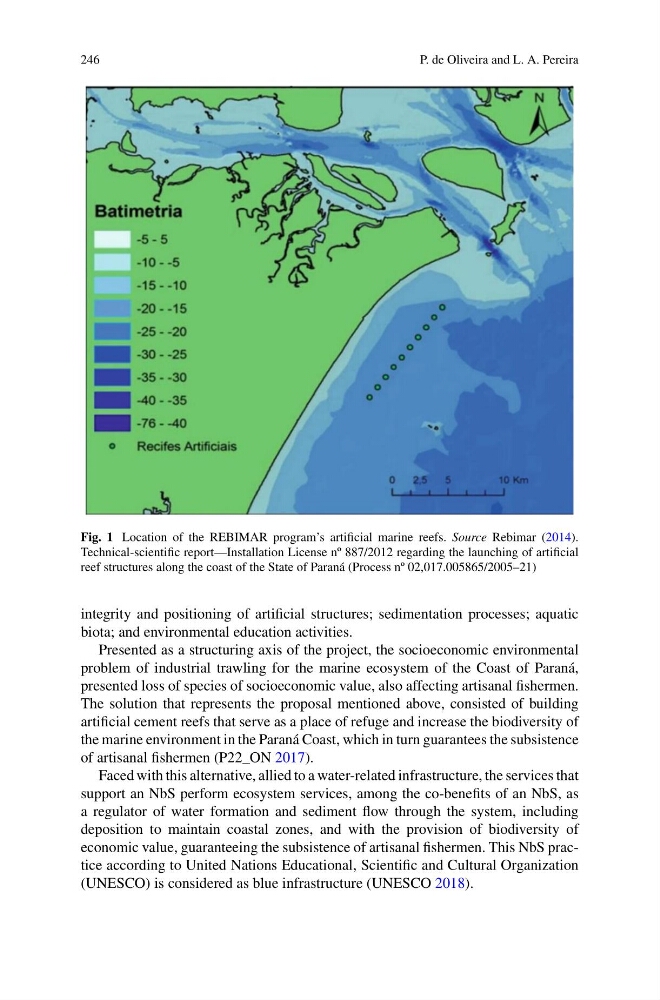
Fig. 1 Location of the REBIMAR program’s artificial marine reefs. Source Rebimar (2014).
Technical-scientific report—Installation License nº 887/2012 regarding the launching of artificial
reef structures along the coast of the State of Paraná (Process nº 02,017.005865/2005–21)
integrity and positioning of artificial structures; sedimentation processes; aquatic
biota; and environmental education activities.
Presented as a structuring axis of the project, the socioeconomic environmental
problem of industrial trawling for the marine ecosystem of the Coast of Paraná,
presented loss of species of socioeconomic value, also affecting artisanal fishermen.
The solution that represents the proposal mentioned above, consisted of building
artificial cement reefs that serve as a place of refuge and increase the biodiversity of
the marine environment in the Paraná Coast, which in turn guarantees the subsistence
of artisanal fishermen (P22_ON 2017).
Faced with this alternative, allied to a water-related infrastructure, the services that
support an NbS perform ecosystem services, among the co-benefits of an NbS, as
a regulator of water formation and sediment flow through the system, including
deposition to maintain coastal zones, and with the provision of biodiversity of
economic value, guaranteeing the subsistence of artisanal fishermen. This NbS practice according to United Nations Educational, Scientific and Cultural Organization
(UNESCO) is considered as blue infrastructure (UNESCO 2018).
P. de Oliveira and L. A. Pereira
Fig. 1 Location of the REBIMAR program’s artificial marine reefs. Source Rebimar (2014).
Technical-scientific report—Installation License nº 887/2012 regarding the launching of artificial
reef structures along the coast of the State of Paraná (Process nº 02,017.005865/2005–21)
integrity and positioning of artificial structures; sedimentation processes; aquatic
biota; and environmental education activities.
Presented as a structuring axis of the project, the socioeconomic environmental
problem of industrial trawling for the marine ecosystem of the Coast of Paraná,
presented loss of species of socioeconomic value, also affecting artisanal fishermen.
The solution that represents the proposal mentioned above, consisted of building
artificial cement reefs that serve as a place of refuge and increase the biodiversity of
the marine environment in the Paraná Coast, which in turn guarantees the subsistence
of artisanal fishermen (P22_ON 2017).
Faced with this alternative, allied to a water-related infrastructure, the services that
support an NbS perform ecosystem services, among the co-benefits of an NbS, as
a regulator of water formation and sediment flow through the system, including
deposition to maintain coastal zones, and with the provision of biodiversity of
economic value, guaranteeing the subsistence of artisanal fishermen. This NbS practice according to United Nations Educational, Scientific and Cultural Organization
(UNESCO) is considered as blue infrastructure (UNESCO 2018).