

Comparative Analysis of the Sustainable Practices Based on Social …
95
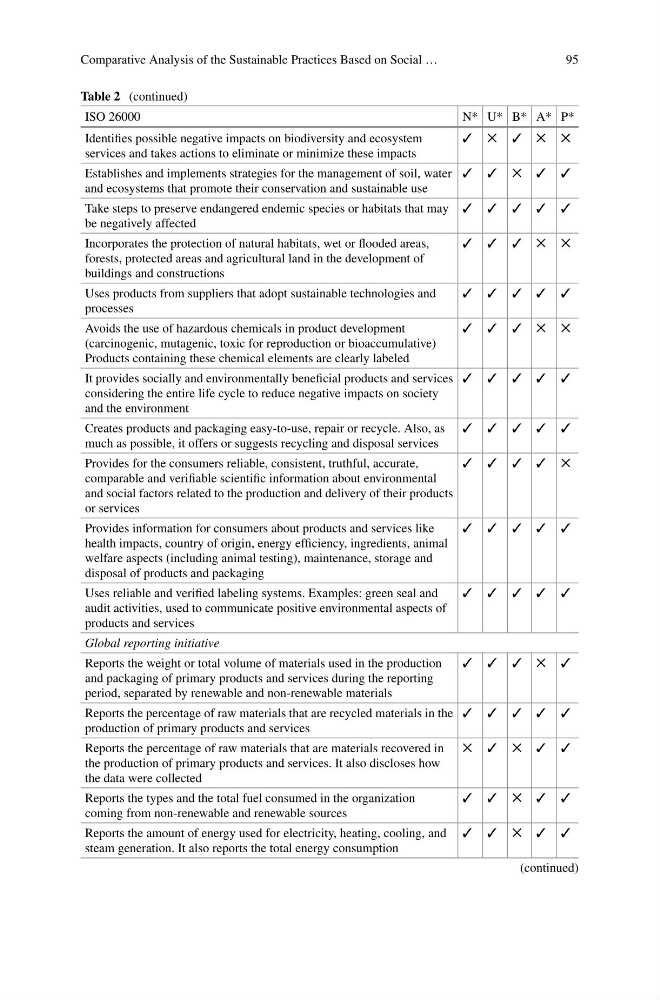
Table 2 (continued)
ISO 26000
N* U* B* A* P*
Identifies possible negative impacts on biodiversity and ecosystem
services and takes actions to eliminate or minimize these impacts
✓ ✕ ✓ ✕ ✕
Establishes and implements strategies for the management of soil, water
and ecosystems that promote their conservation and sustainable use
✓ ✓ ✕ ✓ ✓
Take steps to preserve endangered endemic species or habitats that may
be negatively affected
✓ ✓ ✓ ✓ ✓
Incorporates the protection of natural habitats, wet or flooded areas,
forests, protected areas and agricultural land in the development of
buildings and constructions
✓ ✓ ✓ ✕ ✕
Uses products from suppliers that adopt sustainable technologies and
processes
✓ ✓ ✓ ✓ ✓
Avoids the use of hazardous chemicals in product development
(carcinogenic, mutagenic, toxic for reproduction or bioaccumulative)
Products containing these chemical elements are clearly labeled
✓ ✓ ✓ ✕ ✕
It provides socially and environmentally beneficial products and services
considering the entire life cycle to reduce negative impacts on society
and the environment
✓ ✓ ✓ ✓ ✓
Creates products and packaging easy-to-use, repair or recycle. Also, as
much as possible, it offers or suggests recycling and disposal services
✓ ✓ ✓ ✓ ✓
Provides for the consumers reliable, consistent, truthful, accurate,
comparable and verifiable scientific information about environmental
and social factors related to the production and delivery of their products
or services
✓ ✓ ✓ ✓ ✕
Provides information for consumers about products and services like
health impacts, country of origin, energy efficiency, ingredients, animal
welfare aspects (including animal testing), maintenance, storage and
disposal of products and packaging
✓ ✓ ✓ ✓ ✓
Uses reliable and verified labeling systems. Examples: green seal and
audit activities, used to communicate positive environmental aspects of
products and services
✓ ✓ ✓ ✓ ✓
Global reporting initiative
Reports the weight or total volume of materials used in the production
and packaging of primary products and services during the reporting
period, separated by renewable and non-renewable materials
✓ ✓ ✓ ✕ ✓
Reports the percentage of raw materials that are recycled materials in the
production of primary products and services
✓ ✓ ✓ ✓ ✓
Reports the percentage of raw materials that are materials recovered in
the production of primary products and services. It also discloses how
the data were collected
✕ ✓ ✕ ✓ ✓
Reports the types and the total fuel consumed in the organization
coming from non-renewable and renewable sources
✓ ✓ ✕ ✓ ✓
Reports the amount of energy used for electricity, heating, cooling, and
steam generation. It also reports the total energy consumption
✓ ✓ ✕ ✓ ✓
(continued)
95
Table 2 (continued)
ISO 26000
N* U* B* A* P*
Identifies possible negative impacts on biodiversity and ecosystem
services and takes actions to eliminate or minimize these impacts
✓ ✕ ✓ ✕ ✕
Establishes and implements strategies for the management of soil, water
and ecosystems that promote their conservation and sustainable use
✓ ✓ ✕ ✓ ✓
Take steps to preserve endangered endemic species or habitats that may
be negatively affected
✓ ✓ ✓ ✓ ✓
Incorporates the protection of natural habitats, wet or flooded areas,
forests, protected areas and agricultural land in the development of
buildings and constructions
✓ ✓ ✓ ✕ ✕
Uses products from suppliers that adopt sustainable technologies and
processes
✓ ✓ ✓ ✓ ✓
Avoids the use of hazardous chemicals in product development
(carcinogenic, mutagenic, toxic for reproduction or bioaccumulative)
Products containing these chemical elements are clearly labeled
✓ ✓ ✓ ✕ ✕
It provides socially and environmentally beneficial products and services
considering the entire life cycle to reduce negative impacts on society
and the environment
✓ ✓ ✓ ✓ ✓
Creates products and packaging easy-to-use, repair or recycle. Also, as
much as possible, it offers or suggests recycling and disposal services
✓ ✓ ✓ ✓ ✓
Provides for the consumers reliable, consistent, truthful, accurate,
comparable and verifiable scientific information about environmental
and social factors related to the production and delivery of their products
or services
✓ ✓ ✓ ✓ ✕
Provides information for consumers about products and services like
health impacts, country of origin, energy efficiency, ingredients, animal
welfare aspects (including animal testing), maintenance, storage and
disposal of products and packaging
✓ ✓ ✓ ✓ ✓
Uses reliable and verified labeling systems. Examples: green seal and
audit activities, used to communicate positive environmental aspects of
products and services
✓ ✓ ✓ ✓ ✓
Global reporting initiative
Reports the weight or total volume of materials used in the production
and packaging of primary products and services during the reporting
period, separated by renewable and non-renewable materials
✓ ✓ ✓ ✕ ✓
Reports the percentage of raw materials that are recycled materials in the
production of primary products and services
✓ ✓ ✓ ✓ ✓
Reports the percentage of raw materials that are materials recovered in
the production of primary products and services. It also discloses how
the data were collected
✕ ✓ ✕ ✓ ✓
Reports the types and the total fuel consumed in the organization
coming from non-renewable and renewable sources
✓ ✓ ✕ ✓ ✓
Reports the amount of energy used for electricity, heating, cooling, and
steam generation. It also reports the total energy consumption
✓ ✓ ✕ ✓ ✓
(continued)