

96
M. Morioka et al.
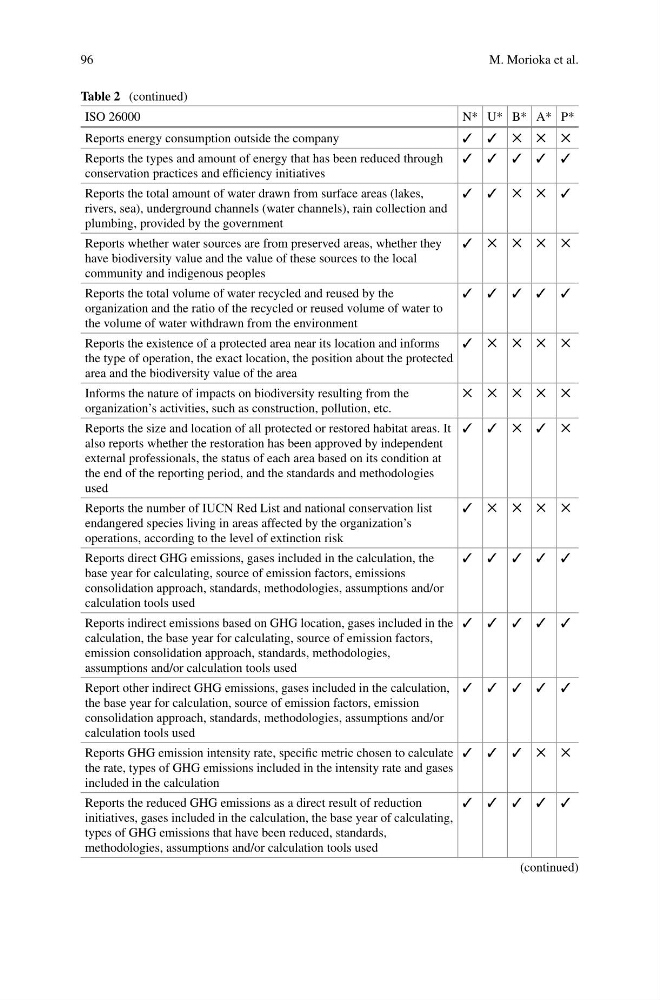
Table 2 (continued)
ISO 26000
N* U* B* A* P*
Reports energy consumption outside the company
✓ ✓ ✕ ✕ ✕
Reports the types and amount of energy that has been reduced through
conservation practices and efficiency initiatives
✓ ✓ ✓ ✓ ✓
Reports the total amount of water drawn from surface areas (lakes,
rivers, sea), underground channels (water channels), rain collection and
plumbing, provided by the government
✓ ✓ ✕ ✕ ✓
Reports whether water sources are from preserved areas, whether they
have biodiversity value and the value of these sources to the local
community and indigenous peoples
✓ ✕ ✕ ✕ ✕
Reports the total volume of water recycled and reused by the
organization and the ratio of the recycled or reused volume of water to
the volume of water withdrawn from the environment
✓ ✓ ✓ ✓ ✓
Reports the existence of a protected area near its location and informs
the type of operation, the exact location, the position about the protected
area and the biodiversity value of the area
✓ ✕ ✕ ✕ ✕
Informs the nature of impacts on biodiversity resulting from the
organization’s activities, such as construction, pollution, etc.
✕ ✕ ✕ ✕ ✕
Reports the size and location of all protected or restored habitat areas. It
also reports whether the restoration has been approved by independent
external professionals, the status of each area based on its condition at
the end of the reporting period, and the standards and methodologies
used
✓ ✓ ✕ ✓ ✕
Reports the number of IUCN Red List and national conservation list
endangered species living in areas affected by the organization’s
operations, according to the level of extinction risk
✓ ✕ ✕ ✕ ✕
Reports direct GHG emissions, gases included in the calculation, the
base year for calculating, source of emission factors, emissions
consolidation approach, standards, methodologies, assumptions and/or
calculation tools used
✓ ✓ ✓ ✓ ✓
Reports indirect emissions based on GHG location, gases included in the
calculation, the base year for calculating, source of emission factors,
emission consolidation approach, standards, methodologies,
assumptions and/or calculation tools used
✓ ✓ ✓ ✓ ✓
Report other indirect GHG emissions, gases included in the calculation,
the base year for calculation, source of emission factors, emission
consolidation approach, standards, methodologies, assumptions and/or
calculation tools used
✓ ✓ ✓ ✓ ✓
Reports GHG emission intensity rate, specific metric chosen to calculate
the rate, types of GHG emissions included in the intensity rate and gases
included in the calculation
✓ ✓ ✓ ✕ ✕
Reports the reduced GHG emissions as a direct result of reduction
initiatives, gases included in the calculation, the base year of calculating,
types of GHG emissions that have been reduced, standards,
methodologies, assumptions and/or calculation tools used
✓ ✓ ✓ ✓ ✓
(continued)
M. Morioka et al.
Table 2 (continued)
ISO 26000
N* U* B* A* P*
Reports energy consumption outside the company
✓ ✓ ✕ ✕ ✕
Reports the types and amount of energy that has been reduced through
conservation practices and efficiency initiatives
✓ ✓ ✓ ✓ ✓
Reports the total amount of water drawn from surface areas (lakes,
rivers, sea), underground channels (water channels), rain collection and
plumbing, provided by the government
✓ ✓ ✕ ✕ ✓
Reports whether water sources are from preserved areas, whether they
have biodiversity value and the value of these sources to the local
community and indigenous peoples
✓ ✕ ✕ ✕ ✕
Reports the total volume of water recycled and reused by the
organization and the ratio of the recycled or reused volume of water to
the volume of water withdrawn from the environment
✓ ✓ ✓ ✓ ✓
Reports the existence of a protected area near its location and informs
the type of operation, the exact location, the position about the protected
area and the biodiversity value of the area
✓ ✕ ✕ ✕ ✕
Informs the nature of impacts on biodiversity resulting from the
organization’s activities, such as construction, pollution, etc.
✕ ✕ ✕ ✕ ✕
Reports the size and location of all protected or restored habitat areas. It
also reports whether the restoration has been approved by independent
external professionals, the status of each area based on its condition at
the end of the reporting period, and the standards and methodologies
used
✓ ✓ ✕ ✓ ✕
Reports the number of IUCN Red List and national conservation list
endangered species living in areas affected by the organization’s
operations, according to the level of extinction risk
✓ ✕ ✕ ✕ ✕
Reports direct GHG emissions, gases included in the calculation, the
base year for calculating, source of emission factors, emissions
consolidation approach, standards, methodologies, assumptions and/or
calculation tools used
✓ ✓ ✓ ✓ ✓
Reports indirect emissions based on GHG location, gases included in the
calculation, the base year for calculating, source of emission factors,
emission consolidation approach, standards, methodologies,
assumptions and/or calculation tools used
✓ ✓ ✓ ✓ ✓
Report other indirect GHG emissions, gases included in the calculation,
the base year for calculation, source of emission factors, emission
consolidation approach, standards, methodologies, assumptions and/or
calculation tools used
✓ ✓ ✓ ✓ ✓
Reports GHG emission intensity rate, specific metric chosen to calculate
the rate, types of GHG emissions included in the intensity rate and gases
included in the calculation
✓ ✓ ✓ ✕ ✕
Reports the reduced GHG emissions as a direct result of reduction
initiatives, gases included in the calculation, the base year of calculating,
types of GHG emissions that have been reduced, standards,
methodologies, assumptions and/or calculation tools used
✓ ✓ ✓ ✓ ✓
(continued)