

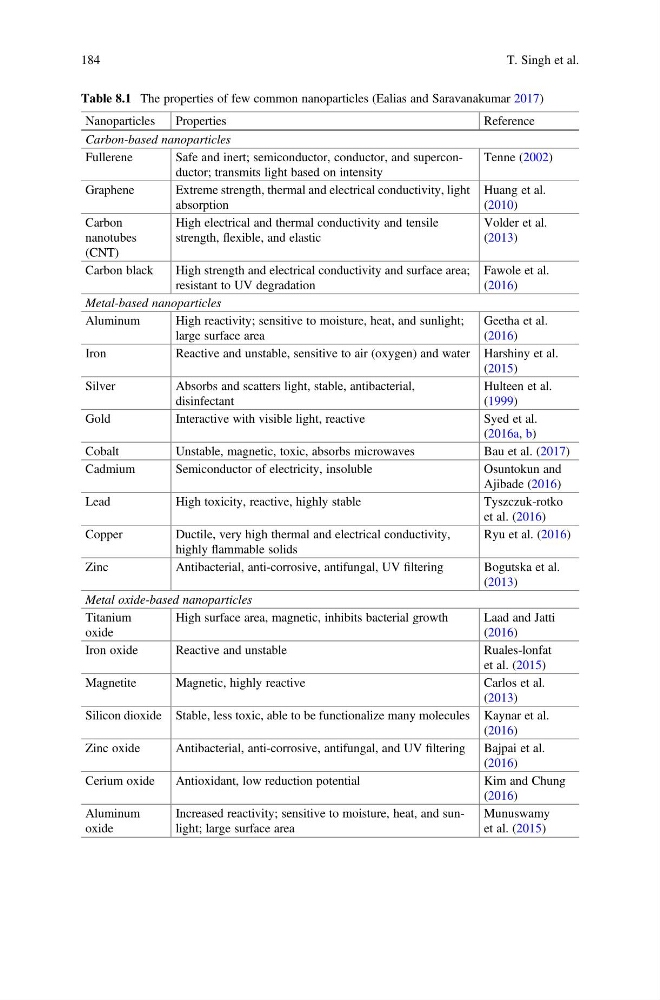
Table 8.1 The properties of few common nanoparticles (Ealias and Saravanakumar 2017)
Nanoparticles
Properties
Reference
Carbon-based nanoparticles
Fullerene
Safe and inert; semiconductor, conductor, and superconductor; transmits light based on intensity
Tenne (2002)
Graphene
Extreme strength, thermal and electrical conductivity, light
absorption
Huang et al.
(2010)
Carbon
nanotubes
(CNT)
High electrical and thermal conductivity and tensile
strength, flexible, and elastic
Volder et al.
(2013)
Carbon black
High strength and electrical conductivity and surface area;
resistant to UV degradation
Fawole et al.
(2016)
Metal-based nanoparticles
Aluminum
High reactivity; sensitive to moisture, heat, and sunlight;
large surface area
Geetha et al.
(2016)
Iron
Reactive and unstable, sensitive to air (oxygen) and water Harshiny et al.
(2015)
Silver
Absorbs and scatters light, stable, antibacterial,
disinfectant
Hulteen et al.
(1999)
Gold
Interactive with visible light, reactive
Syed et al.
(2016a, b)
Cobalt
Unstable, magnetic, toxic, absorbs microwaves
Bau et al. (2017)
Cadmium
Semiconductor of electricity, insoluble
Osuntokun and
Ajibade (2016)
Lead
High toxicity, reactive, highly stable
Tyszczuk-rotko
et al. (2016)
Copper
Ductile, very high thermal and electrical conductivity,
highly flammable solids
Ryu et al. (2016)
Zinc
Antibacterial, anti-corrosive, antifungal, UV filtering
Bogutska et al.
(2013)
Metal oxide-based nanoparticles
Titanium
oxide
High surface area, magnetic, inhibits bacterial growth
Laad and Jatti
(2016)
Iron oxide
Reactive and unstable
Ruales-lonfat
et al. (2015)
Magnetite
Magnetic, highly reactive
Carlos et al.
(2013)
Silicon dioxide Stable, less toxic, able to be functionalize many molecules Kaynar et al.
(2016)
Zinc oxide
Antibacterial, anti-corrosive, antifungal, and UV filtering Bajpai et al.
(2016)
Cerium oxide
Antioxidant, low reduction potential
Kim and Chung
(2016)
Aluminum
oxide
Increased reactivity; sensitive to moisture, heat, and sunlight; large surface area
Munuswamy
et al. (2015)
184
T. Singh et al.
Nanoparticles
Properties
Reference
Carbon-based nanoparticles
Fullerene
Safe and inert; semiconductor, conductor, and superconductor; transmits light based on intensity
Tenne (2002)
Graphene
Extreme strength, thermal and electrical conductivity, light
absorption
Huang et al.
(2010)
Carbon
nanotubes
(CNT)
High electrical and thermal conductivity and tensile
strength, flexible, and elastic
Volder et al.
(2013)
Carbon black
High strength and electrical conductivity and surface area;
resistant to UV degradation
Fawole et al.
(2016)
Metal-based nanoparticles
Aluminum
High reactivity; sensitive to moisture, heat, and sunlight;
large surface area
Geetha et al.
(2016)
Iron
Reactive and unstable, sensitive to air (oxygen) and water Harshiny et al.
(2015)
Silver
Absorbs and scatters light, stable, antibacterial,
disinfectant
Hulteen et al.
(1999)
Gold
Interactive with visible light, reactive
Syed et al.
(2016a, b)
Cobalt
Unstable, magnetic, toxic, absorbs microwaves
Bau et al. (2017)
Cadmium
Semiconductor of electricity, insoluble
Osuntokun and
Ajibade (2016)
Lead
High toxicity, reactive, highly stable
Tyszczuk-rotko
et al. (2016)
Copper
Ductile, very high thermal and electrical conductivity,
highly flammable solids
Ryu et al. (2016)
Zinc
Antibacterial, anti-corrosive, antifungal, UV filtering
Bogutska et al.
(2013)
Metal oxide-based nanoparticles
Titanium
oxide
High surface area, magnetic, inhibits bacterial growth
Laad and Jatti
(2016)
Iron oxide
Reactive and unstable
Ruales-lonfat
et al. (2015)
Magnetite
Magnetic, highly reactive
Carlos et al.
(2013)
Silicon dioxide Stable, less toxic, able to be functionalize many molecules Kaynar et al.
(2016)
Zinc oxide
Antibacterial, anti-corrosive, antifungal, and UV filtering Bajpai et al.
(2016)
Cerium oxide
Antioxidant, low reduction potential
Kim and Chung
(2016)
Aluminum
oxide
Increased reactivity; sensitive to moisture, heat, and sunlight; large surface area
Munuswamy
et al. (2015)
184
T. Singh et al.