

applications. Auxiliary biofuels have been delivered as solids (charcoal), liquids
(ethanol, biodiesel), and gases (hydrogen) (Nigam and Singh 2011).
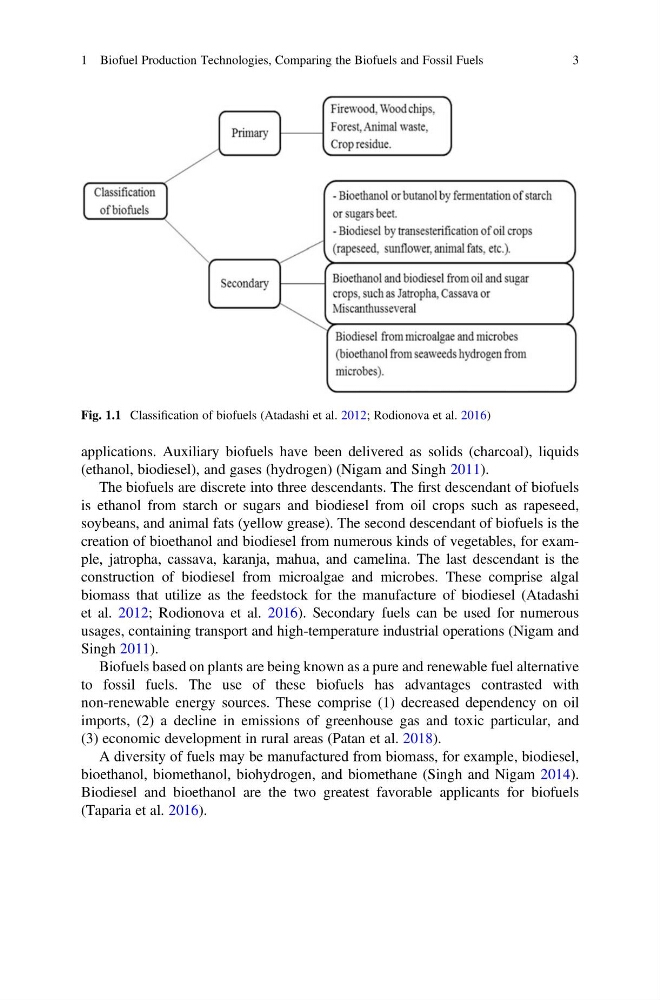
The biofuels are discrete into three descendants. The first descendant of biofuels
is ethanol from starch or sugars and biodiesel from oil crops such as rapeseed,
soybeans, and animal fats (yellow grease). The second descendant of biofuels is the
creation of bioethanol and biodiesel from numerous kinds of vegetables, for example, jatropha, cassava, karanja, mahua, and camelina. The last descendant is the
construction of biodiesel from microalgae and microbes. These comprise algal
biomass that utilize as the feedstock for the manufacture of biodiesel (Atadashi
et al. 2012; Rodionova et al. 2016). Secondary fuels can be used for numerous
usages, containing transport and high-temperature industrial operations (Nigam and
Singh 2011).
Biofuels based on plants are being known as a pure and renewable fuel alternative
to fossil fuels. The use of these biofuels has advantages contrasted with
non-renewable energy sources. These comprise (1) decreased dependency on oil
imports, (2) a decline in emissions of greenhouse gas and toxic particular, and
(3) economic development in rural areas (Patan et al. 2018).
A diversity of fuels may be manufactured from biomass, for example, biodiesel,
bioethanol, biomethanol, biohydrogen, and biomethane (Singh and Nigam 2014).
Biodiesel and bioethanol are the two greatest favorable applicants for biofuels
(Taparia et al. 2016).
Fig. 1.1 Classification of biofuels (Atadashi et al. 2012; Rodionova et al. 2016)
1 Biofuel Production Technologies, Comparing the Biofuels and Fossil Fuels
3
(ethanol, biodiesel), and gases (hydrogen) (Nigam and Singh 2011).
The biofuels are discrete into three descendants. The first descendant of biofuels
is ethanol from starch or sugars and biodiesel from oil crops such as rapeseed,
soybeans, and animal fats (yellow grease). The second descendant of biofuels is the
creation of bioethanol and biodiesel from numerous kinds of vegetables, for example, jatropha, cassava, karanja, mahua, and camelina. The last descendant is the
construction of biodiesel from microalgae and microbes. These comprise algal
biomass that utilize as the feedstock for the manufacture of biodiesel (Atadashi
et al. 2012; Rodionova et al. 2016). Secondary fuels can be used for numerous
usages, containing transport and high-temperature industrial operations (Nigam and
Singh 2011).
Biofuels based on plants are being known as a pure and renewable fuel alternative
to fossil fuels. The use of these biofuels has advantages contrasted with
non-renewable energy sources. These comprise (1) decreased dependency on oil
imports, (2) a decline in emissions of greenhouse gas and toxic particular, and
(3) economic development in rural areas (Patan et al. 2018).
A diversity of fuels may be manufactured from biomass, for example, biodiesel,
bioethanol, biomethanol, biohydrogen, and biomethane (Singh and Nigam 2014).
Biodiesel and bioethanol are the two greatest favorable applicants for biofuels
(Taparia et al. 2016).
Fig. 1.1 Classification of biofuels (Atadashi et al. 2012; Rodionova et al. 2016)
1 Biofuel Production Technologies, Comparing the Biofuels and Fossil Fuels
3