

Sahoo et al. (2012) investigated the properties of biodiesel produced from
T. peruviana conform with the quality standards of IS:15607 and ASTM 6751 for
biodiesel. Also, the kinematic viscosity of biodiesel was 3.67 cSt, lower than that of
petrodiesel. Ighose et al. (2017) optimized the fatty acid methyl ester (FAME)
production from T. peruviana seed oil using ANFIS-RSM-GA. FAME was produced through esterification followed by transesterification. During esterification,
FFA content of oil was reduced to 0.65 Æ 0.05% by reacting oil with methanol at
molar ratio of 1:9 using 3% (w/w) FeSO 4 as a catalyst for 40 min. During
transesterification, a yield of 99.8% FAME was achieved by reacting oil with
methanol at molar ratio of 1:12.5 using 0.79% (w/v) sodium methoxide as a catalyst
for 58.2 min using ANFIS-GA in comparison to 98.8% using RSM-GA. They found
that ANFIS produced better model than RSM-CCD. Kumar et al. (2013a) produced
methyl ester of N. oleander (MEON) oil by transesterification process to minimize
its viscosity to use in CI engines without key configurational changes. Bora (2009)
reported the use of potassium hydroxide as a catalyst to facilitate esterification
process.
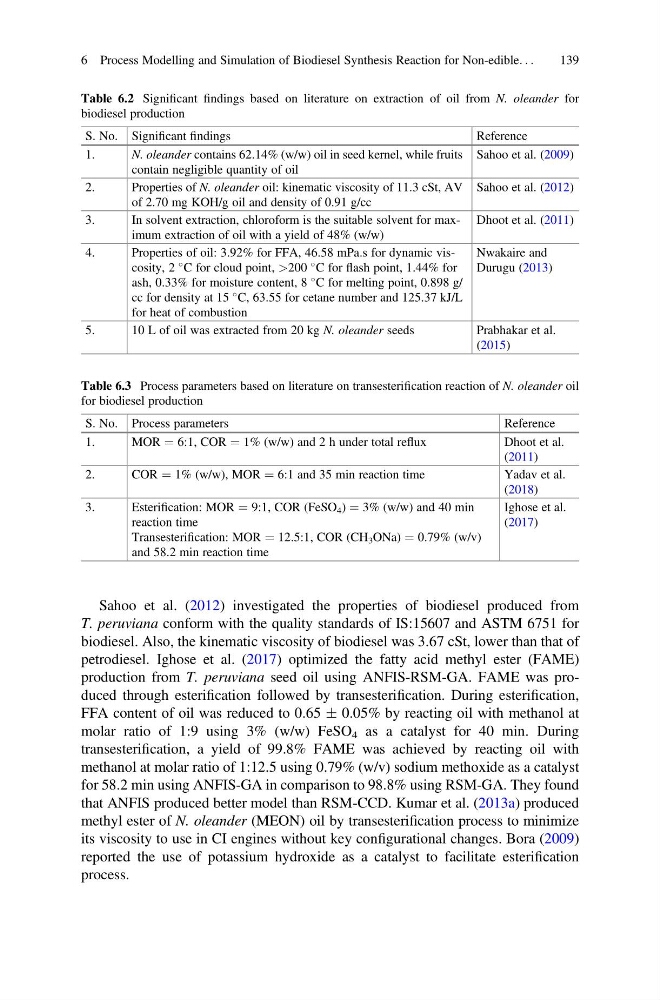
Table 6.2 Significant findings based on literature on extraction of oil from N. oleander for
biodiesel production
S. No. Significant findings
Reference
1.
N. oleander contains 62.14% (w/w) oil in seed kernel, while fruits
contain negligible quantity of oil
Sahoo et al. (2009)
2.
Properties of N. oleander oil: kinematic viscosity of 11.3 cSt, AV
of 2.70 mg KOH/g oil and density of 0.91 g/cc
Sahoo et al. (2012)
3.
In solvent extraction, chloroform is the suitable solvent for maximum extraction of oil with a yield of 48% (w/w)
Dhoot et al. (2011)
4.
Properties of oil: 3.92% for FFA, 46.58 mPa.s for dynamic viscosity, 2
C for cloud point, >200
C for flash point, 1.44% for
ash, 0.33% for moisture content, 8
C for melting point, 0.898 g/
cc for density at 15
C, 63.55 for cetane number and 125.37 kJ/L
for heat of combustion
Nwakaire and
Durugu (2013)
5.
10 L of oil was extracted from 20 kg N. oleander seeds
Prabhakar et al.
(2015)
Table 6.3 Process parameters based on literature on transesterification reaction of N. oleander oil
for biodiesel production
S. No. Process parameters
Reference
1.
MOR ¼ 6:1, COR ¼ 1% (w/w) and 2 h under total reflux
Dhoot et al.
(2011)
2.
COR ¼ 1% (w/w), MOR ¼ 6:1 and 35 min reaction time
Yadav et al.
(2018)
3.
Esterification: MOR ¼ 9:1, COR (FeSO 4 ) ¼ 3% (w/w) and 40 min
reaction time
Transesterification: MOR ¼ 12.5:1, COR (CH 3 ONa) ¼ 0.79% (w/v)
and 58.2 min reaction time
Ighose et al.
(2017)
6 Process Modelling and Simulation of Biodiesel Synthesis Reaction for Non-edible. . .
139
T. peruviana conform with the quality standards of IS:15607 and ASTM 6751 for
biodiesel. Also, the kinematic viscosity of biodiesel was 3.67 cSt, lower than that of
petrodiesel. Ighose et al. (2017) optimized the fatty acid methyl ester (FAME)
production from T. peruviana seed oil using ANFIS-RSM-GA. FAME was produced through esterification followed by transesterification. During esterification,
FFA content of oil was reduced to 0.65 Æ 0.05% by reacting oil with methanol at
molar ratio of 1:9 using 3% (w/w) FeSO 4 as a catalyst for 40 min. During
transesterification, a yield of 99.8% FAME was achieved by reacting oil with
methanol at molar ratio of 1:12.5 using 0.79% (w/v) sodium methoxide as a catalyst
for 58.2 min using ANFIS-GA in comparison to 98.8% using RSM-GA. They found
that ANFIS produced better model than RSM-CCD. Kumar et al. (2013a) produced
methyl ester of N. oleander (MEON) oil by transesterification process to minimize
its viscosity to use in CI engines without key configurational changes. Bora (2009)
reported the use of potassium hydroxide as a catalyst to facilitate esterification
process.
Table 6.2 Significant findings based on literature on extraction of oil from N. oleander for
biodiesel production
S. No. Significant findings
Reference
1.
N. oleander contains 62.14% (w/w) oil in seed kernel, while fruits
contain negligible quantity of oil
Sahoo et al. (2009)
2.
Properties of N. oleander oil: kinematic viscosity of 11.3 cSt, AV
of 2.70 mg KOH/g oil and density of 0.91 g/cc
Sahoo et al. (2012)
3.
In solvent extraction, chloroform is the suitable solvent for maximum extraction of oil with a yield of 48% (w/w)
Dhoot et al. (2011)
4.
Properties of oil: 3.92% for FFA, 46.58 mPa.s for dynamic viscosity, 2
C for cloud point, >200
C for flash point, 1.44% for
ash, 0.33% for moisture content, 8
C for melting point, 0.898 g/
cc for density at 15
C, 63.55 for cetane number and 125.37 kJ/L
for heat of combustion
Nwakaire and
Durugu (2013)
5.
10 L of oil was extracted from 20 kg N. oleander seeds
Prabhakar et al.
(2015)
Table 6.3 Process parameters based on literature on transesterification reaction of N. oleander oil
for biodiesel production
S. No. Process parameters
Reference
1.
MOR ¼ 6:1, COR ¼ 1% (w/w) and 2 h under total reflux
Dhoot et al.
(2011)
2.
COR ¼ 1% (w/w), MOR ¼ 6:1 and 35 min reaction time
Yadav et al.
(2018)
3.
Esterification: MOR ¼ 9:1, COR (FeSO 4 ) ¼ 3% (w/w) and 40 min
reaction time
Transesterification: MOR ¼ 12.5:1, COR (CH 3 ONa) ¼ 0.79% (w/v)
and 58.2 min reaction time
Ighose et al.
(2017)
6 Process Modelling and Simulation of Biodiesel Synthesis Reaction for Non-edible. . .
139