

5.4 Metagenomic Application for the Biodiesel Production
Biodiesel is a fatty acid methyl ester derived from edible as well as non-edible
vegetable oils, fats of animals, and cooking waste oils through transesterification
chemical reactions. It is a significant alternative energy source derived from
oil-producing plants and microbes (Rubin 2008). It is also produced from several
microbial species such as algae, bacteria, and fungi by using engineered microbes
(Singh et al. 2020c; Shahab et al. 2020). Microorganisms are an alternative source of
biodiesel production. Abundant microbes like fungi, microalgae, and bacteria can
store triacylglycerol into their cells. Microbial oil has many advantages than plant oil
because it has a shorter life cycle and less labor is needed. In the future, microbial oil
will become one of the significant oil feedstocks for biodiesel production.
Metagenomics is defined as a culture-independent tool and identifies a novel functional gene from uncultured microorganisms. Metagenomic is based on direct
extraction of microbial genomic DNAs from environmental samples, for cloning
and gene transformation vector and host used; further constructing metagenomic
libraries and isolated novel enzyme (Ferrer et al. 2005; Singh et al. 2017). The
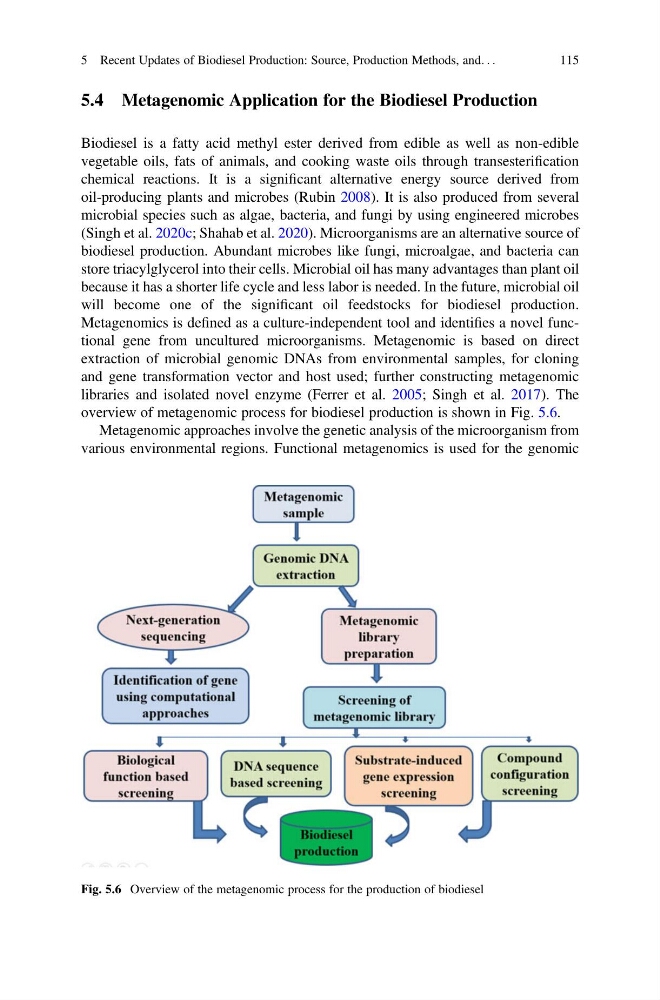
overview of metagenomic process for biodiesel production is shown in Fig. 5.6.
Metagenomic approaches involve the genetic analysis of the microorganism from
various environmental regions. Functional metagenomics is used for the genomic
Fig. 5.6 Overview of the metagenomic process for the production of biodiesel
5 Recent Updates of Biodiesel Production: Source, Production Methods, and. . .
115
Biodiesel is a fatty acid methyl ester derived from edible as well as non-edible
vegetable oils, fats of animals, and cooking waste oils through transesterification
chemical reactions. It is a significant alternative energy source derived from
oil-producing plants and microbes (Rubin 2008). It is also produced from several
microbial species such as algae, bacteria, and fungi by using engineered microbes
(Singh et al. 2020c; Shahab et al. 2020). Microorganisms are an alternative source of
biodiesel production. Abundant microbes like fungi, microalgae, and bacteria can
store triacylglycerol into their cells. Microbial oil has many advantages than plant oil
because it has a shorter life cycle and less labor is needed. In the future, microbial oil
will become one of the significant oil feedstocks for biodiesel production.
Metagenomics is defined as a culture-independent tool and identifies a novel functional gene from uncultured microorganisms. Metagenomic is based on direct
extraction of microbial genomic DNAs from environmental samples, for cloning
and gene transformation vector and host used; further constructing metagenomic
libraries and isolated novel enzyme (Ferrer et al. 2005; Singh et al. 2017). The
overview of metagenomic process for biodiesel production is shown in Fig. 5.6.
Metagenomic approaches involve the genetic analysis of the microorganism from
various environmental regions. Functional metagenomics is used for the genomic
Fig. 5.6 Overview of the metagenomic process for the production of biodiesel
5 Recent Updates of Biodiesel Production: Source, Production Methods, and. . .
115