

liquid at that temperature and are known as unsaturated oils. Non-edible oils like
karanja, mahua, tobacco, jatropha, rubber, castor, etc. One of the most potential
biodiesel feedstocks is algae with higher lipid contents. Microalgae form biodiesel in
the presence of sunlight through the process of photosynthesis (Cheruiyot et al.
2019).
5.3 Methods for Biodiesel Production
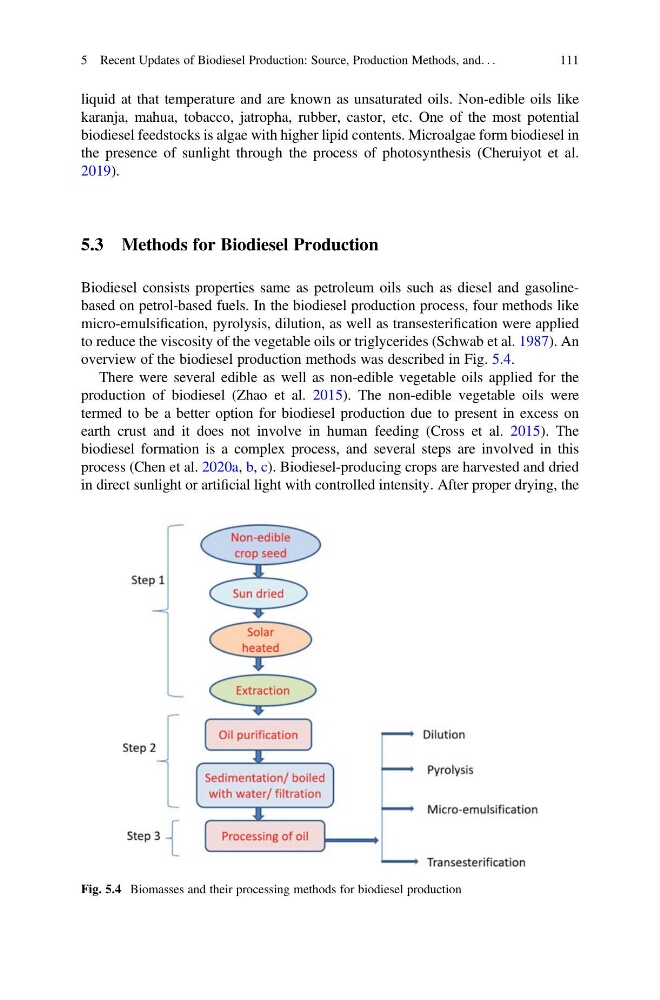
Biodiesel consists properties same as petroleum oils such as diesel and gasolinebased on petrol-based fuels. In the biodiesel production process, four methods like
micro-emulsification, pyrolysis, dilution, as well as transesterification were applied
to reduce the viscosity of the vegetable oils or triglycerides (Schwab et al. 1987). An
overview of the biodiesel production methods was described in Fig. 5.4.
There were several edible as well as non-edible vegetable oils applied for the
production of biodiesel (Zhao et al. 2015). The non-edible vegetable oils were
termed to be a better option for biodiesel production due to present in excess on
earth crust and it does not involve in human feeding (Cross et al. 2015). The
biodiesel formation is a complex process, and several steps are involved in this
process (Chen et al. 2020a, b, c). Biodiesel-producing crops are harvested and dried
in direct sunlight or artificial light with controlled intensity. After proper drying, the
Fig. 5.4 Biomasses and their processing methods for biodiesel production
5 Recent Updates of Biodiesel Production: Source, Production Methods, and. . .
111
karanja, mahua, tobacco, jatropha, rubber, castor, etc. One of the most potential
biodiesel feedstocks is algae with higher lipid contents. Microalgae form biodiesel in
the presence of sunlight through the process of photosynthesis (Cheruiyot et al.
2019).
5.3 Methods for Biodiesel Production
Biodiesel consists properties same as petroleum oils such as diesel and gasolinebased on petrol-based fuels. In the biodiesel production process, four methods like
micro-emulsification, pyrolysis, dilution, as well as transesterification were applied
to reduce the viscosity of the vegetable oils or triglycerides (Schwab et al. 1987). An
overview of the biodiesel production methods was described in Fig. 5.4.
There were several edible as well as non-edible vegetable oils applied for the
production of biodiesel (Zhao et al. 2015). The non-edible vegetable oils were
termed to be a better option for biodiesel production due to present in excess on
earth crust and it does not involve in human feeding (Cross et al. 2015). The
biodiesel formation is a complex process, and several steps are involved in this
process (Chen et al. 2020a, b, c). Biodiesel-producing crops are harvested and dried
in direct sunlight or artificial light with controlled intensity. After proper drying, the
Fig. 5.4 Biomasses and their processing methods for biodiesel production
5 Recent Updates of Biodiesel Production: Source, Production Methods, and. . .
111