

4 Anthropogenic Water Reservoirs in Poland
83
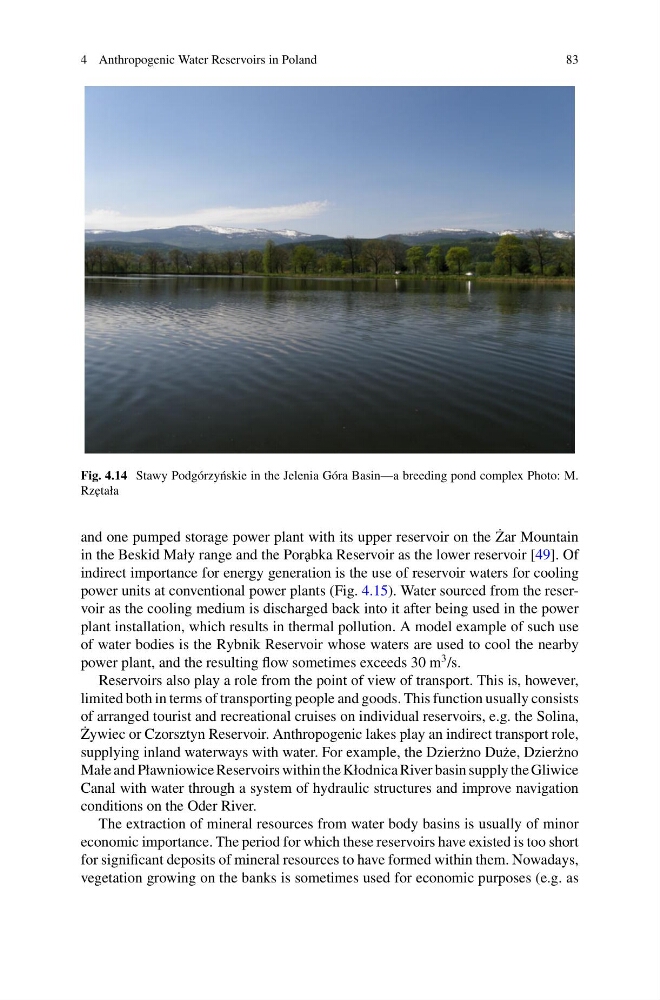
Fig. 4.14 Stawy Podgórzy´ nskie in the Jelenia Góra Basin—a breeding pond complex Photo: M.
Rz˛ etała
and one pumped storage power plant with its upper reservoir on the ˙
Zar Mountain
in the Beskid Mały range and the Por˛ abka Reservoir as the lower reservoir [49]. Of
indirect importance for energy generation is the use of reservoir waters for cooling
power units at conventional power plants (Fig. 4.15). Water sourced from the reservoir as the cooling medium is discharged back into it after being used in the power
plant installation, which results in thermal pollution. A model example of such use
of water bodies is the Rybnik Reservoir whose waters are used to cool the nearby
power plant, and the resulting flow sometimes exceeds 30 m
3 /s.
Reservoirs also play a role from the point of view of transport. This is, however,
limited both in terms of transporting people and goods. This function usually consists
of arranged tourist and recreational cruises on individual reservoirs, e.g. the Solina,
˙
Zywiec or Czorsztyn Reservoir. Anthropogenic lakes play an indirect transport role,
supplying inland waterways with water. For example, the Dzier˙ zno Du˙ ze, Dzier˙ zno
Małe and Pławniowice Reservoirs within the Kłodnica River basin supply the Gliwice
Canal with water through a system of hydraulic structures and improve navigation
conditions on the Oder River.
The extraction of mineral resources from water body basins is usually of minor
economic importance. The period for which these reservoirs have existed is too short
for significant deposits of mineral resources to have formed within them. Nowadays,
vegetation growing on the banks is sometimes used for economic purposes (e.g. as
83
Fig. 4.14 Stawy Podgórzy´ nskie in the Jelenia Góra Basin—a breeding pond complex Photo: M.
Rz˛ etała
and one pumped storage power plant with its upper reservoir on the ˙
Zar Mountain
in the Beskid Mały range and the Por˛ abka Reservoir as the lower reservoir [49]. Of
indirect importance for energy generation is the use of reservoir waters for cooling
power units at conventional power plants (Fig. 4.15). Water sourced from the reservoir as the cooling medium is discharged back into it after being used in the power
plant installation, which results in thermal pollution. A model example of such use
of water bodies is the Rybnik Reservoir whose waters are used to cool the nearby
power plant, and the resulting flow sometimes exceeds 30 m
3 /s.
Reservoirs also play a role from the point of view of transport. This is, however,
limited both in terms of transporting people and goods. This function usually consists
of arranged tourist and recreational cruises on individual reservoirs, e.g. the Solina,
˙
Zywiec or Czorsztyn Reservoir. Anthropogenic lakes play an indirect transport role,
supplying inland waterways with water. For example, the Dzier˙ zno Du˙ ze, Dzier˙ zno
Małe and Pławniowice Reservoirs within the Kłodnica River basin supply the Gliwice
Canal with water through a system of hydraulic structures and improve navigation
conditions on the Oder River.
The extraction of mineral resources from water body basins is usually of minor
economic importance. The period for which these reservoirs have existed is too short
for significant deposits of mineral resources to have formed within them. Nowadays,
vegetation growing on the banks is sometimes used for economic purposes (e.g. as