

3 Development and Protection of Water …
49
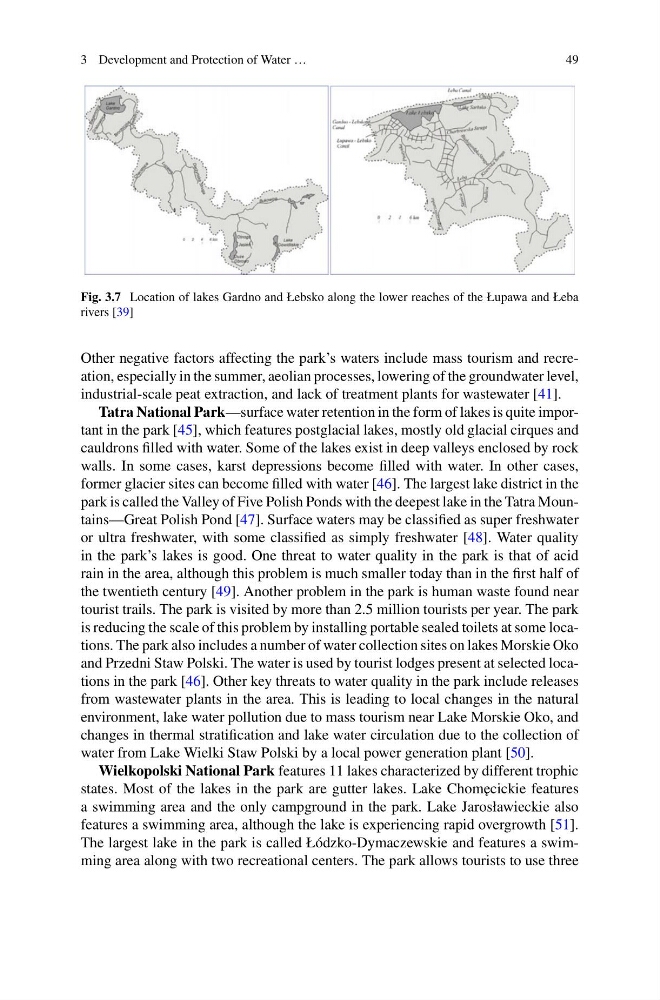
Fig. 3.7 Location of lakes Gardno and Łebsko along the lower reaches of the Łupawa and Łeba
rivers [39]
Other negative factors affecting the park’s waters include mass tourism and recreation, especially in the summer, aeolian processes, lowering of the groundwater level,
industrial-scale peat extraction, and lack of treatment plants for wastewater [41].
Tatra National Park—surface water retention in the form of lakes is quite important in the park [45], which features postglacial lakes, mostly old glacial cirques and
cauldrons filled with water. Some of the lakes exist in deep valleys enclosed by rock
walls. In some cases, karst depressions become filled with water. In other cases,
former glacier sites can become filled with water [46]. The largest lake district in the
park is called the Valley of Five Polish Ponds with the deepest lake in the Tatra Mountains—Great Polish Pond [47]. Surface waters may be classified as super freshwater
or ultra freshwater, with some classified as simply freshwater [48]. Water quality
in the park’s lakes is good. One threat to water quality in the park is that of acid
rain in the area, although this problem is much smaller today than in the first half of
the twentieth century [49]. Another problem in the park is human waste found near
tourist trails. The park is visited by more than 2.5 million tourists per year. The park
is reducing the scale of this problem by installing portable sealed toilets at some locations. The park also includes a number of water collection sites on lakes Morskie Oko
and Przedni Staw Polski. The water is used by tourist lodges present at selected locations in the park [46]. Other key threats to water quality in the park include releases
from wastewater plants in the area. This is leading to local changes in the natural
environment, lake water pollution due to mass tourism near Lake Morskie Oko, and
changes in thermal stratification and lake water circulation due to the collection of
water from Lake Wielki Staw Polski by a local power generation plant [50].
Wielkopolski National Park features 11 lakes characterized by different trophic
states. Most of the lakes in the park are gutter lakes. Lake Chom˛ ecickie features
a swimming area and the only campground in the park. Lake Jarosławieckie also
features a swimming area, although the lake is experiencing rapid overgrowth [51].
The largest lake in the park is called Łódzko-Dymaczewskie and features a swimming area along with two recreational centers. The park allows tourists to use three
49
Fig. 3.7 Location of lakes Gardno and Łebsko along the lower reaches of the Łupawa and Łeba
rivers [39]
Other negative factors affecting the park’s waters include mass tourism and recreation, especially in the summer, aeolian processes, lowering of the groundwater level,
industrial-scale peat extraction, and lack of treatment plants for wastewater [41].
Tatra National Park—surface water retention in the form of lakes is quite important in the park [45], which features postglacial lakes, mostly old glacial cirques and
cauldrons filled with water. Some of the lakes exist in deep valleys enclosed by rock
walls. In some cases, karst depressions become filled with water. In other cases,
former glacier sites can become filled with water [46]. The largest lake district in the
park is called the Valley of Five Polish Ponds with the deepest lake in the Tatra Mountains—Great Polish Pond [47]. Surface waters may be classified as super freshwater
or ultra freshwater, with some classified as simply freshwater [48]. Water quality
in the park’s lakes is good. One threat to water quality in the park is that of acid
rain in the area, although this problem is much smaller today than in the first half of
the twentieth century [49]. Another problem in the park is human waste found near
tourist trails. The park is visited by more than 2.5 million tourists per year. The park
is reducing the scale of this problem by installing portable sealed toilets at some locations. The park also includes a number of water collection sites on lakes Morskie Oko
and Przedni Staw Polski. The water is used by tourist lodges present at selected locations in the park [46]. Other key threats to water quality in the park include releases
from wastewater plants in the area. This is leading to local changes in the natural
environment, lake water pollution due to mass tourism near Lake Morskie Oko, and
changes in thermal stratification and lake water circulation due to the collection of
water from Lake Wielki Staw Polski by a local power generation plant [50].
Wielkopolski National Park features 11 lakes characterized by different trophic
states. Most of the lakes in the park are gutter lakes. Lake Chom˛ ecickie features
a swimming area and the only campground in the park. Lake Jarosławieckie also
features a swimming area, although the lake is experiencing rapid overgrowth [51].
The largest lake in the park is called Łódzko-Dymaczewskie and features a swimming area along with two recreational centers. The park allows tourists to use three