

392
K. Kubiak-Wójcicka and M. Kielik
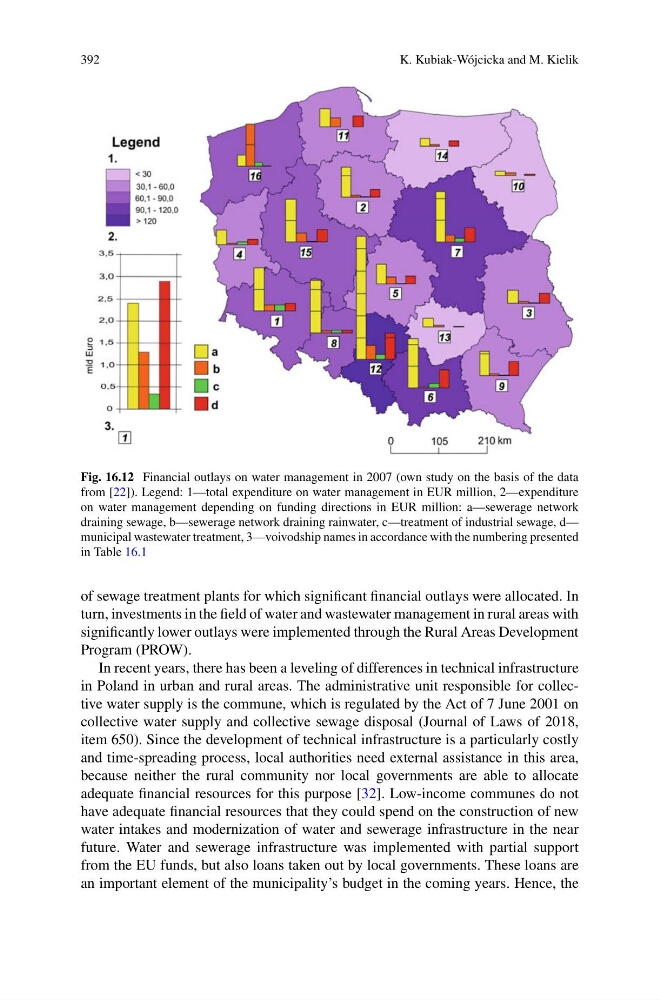
Fig. 16.12 Financial outlays on water management in 2007 (own study on the basis of the data
from [22]). Legend: 1—total expenditure on water management in EUR million, 2—expenditure
on water management depending on funding directions in EUR million: a—sewerage network
draining sewage, b—sewerage network draining rainwater, c—treatment of industrial sewage, d—
municipal wastewater treatment, 3—voivodship names in accordance with the numbering presented
in Table 16.1
of sewage treatment plants for which significant financial outlays were allocated. In
turn, investments in the field of water and wastewater management in rural areas with
significantly lower outlays were implemented through the Rural Areas Development
Program (PROW).
In recent years, there has been a leveling of differences in technical infrastructure
in Poland in urban and rural areas. The administrative unit responsible for collective water supply is the commune, which is regulated by the Act of 7 June 2001 on
collective water supply and collective sewage disposal (Journal of Laws of 2018,
item 650). Since the development of technical infrastructure is a particularly costly
and time-spreading process, local authorities need external assistance in this area,
because neither the rural community nor local governments are able to allocate
adequate financial resources for this purpose [32]. Low-income communes do not
have adequate financial resources that they could spend on the construction of new
water intakes and modernization of water and sewerage infrastructure in the near
future. Water and sewerage infrastructure was implemented with partial support
from the EU funds, but also loans taken out by local governments. These loans are
an important element of the municipality’s budget in the coming years. Hence, the
K. Kubiak-Wójcicka and M. Kielik
Fig. 16.12 Financial outlays on water management in 2007 (own study on the basis of the data
from [22]). Legend: 1—total expenditure on water management in EUR million, 2—expenditure
on water management depending on funding directions in EUR million: a—sewerage network
draining sewage, b—sewerage network draining rainwater, c—treatment of industrial sewage, d—
municipal wastewater treatment, 3—voivodship names in accordance with the numbering presented
in Table 16.1
of sewage treatment plants for which significant financial outlays were allocated. In
turn, investments in the field of water and wastewater management in rural areas with
significantly lower outlays were implemented through the Rural Areas Development
Program (PROW).
In recent years, there has been a leveling of differences in technical infrastructure
in Poland in urban and rural areas. The administrative unit responsible for collective water supply is the commune, which is regulated by the Act of 7 June 2001 on
collective water supply and collective sewage disposal (Journal of Laws of 2018,
item 650). Since the development of technical infrastructure is a particularly costly
and time-spreading process, local authorities need external assistance in this area,
because neither the rural community nor local governments are able to allocate
adequate financial resources for this purpose [32]. Low-income communes do not
have adequate financial resources that they could spend on the construction of new
water intakes and modernization of water and sewerage infrastructure in the near
future. Water and sewerage infrastructure was implemented with partial support
from the EU funds, but also loans taken out by local governments. These loans are
an important element of the municipality’s budget in the coming years. Hence, the