

16 The State of Water and Sewage …
393
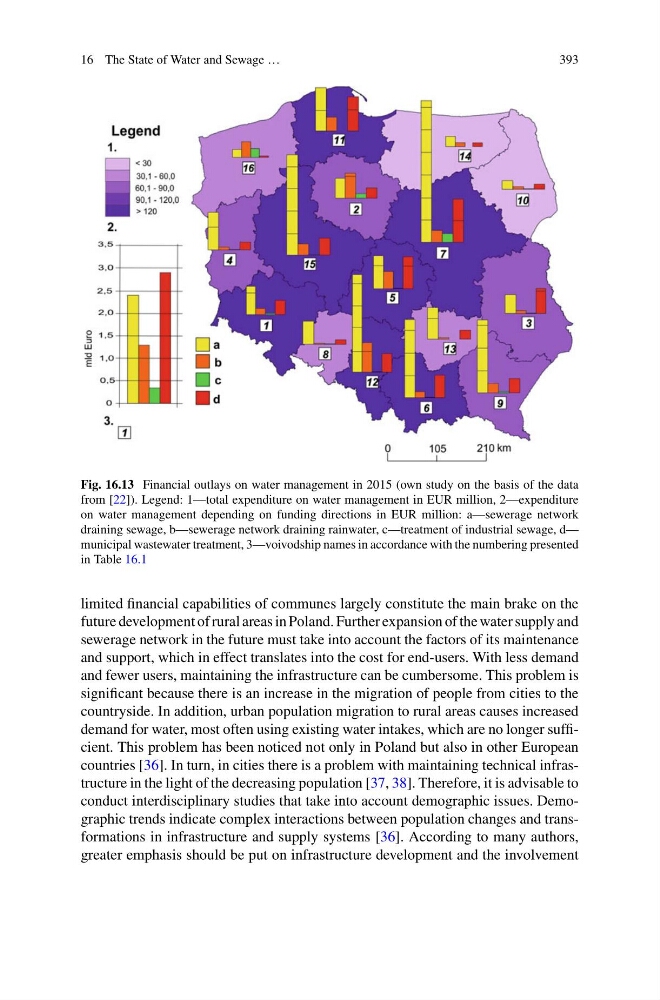
Fig. 16.13 Financial outlays on water management in 2015 (own study on the basis of the data
from [22]). Legend: 1—total expenditure on water management in EUR million, 2—expenditure
on water management depending on funding directions in EUR million: a—sewerage network
draining sewage, b—sewerage network draining rainwater, c—treatment of industrial sewage, d—
municipal wastewater treatment, 3—voivodship names in accordance with the numbering presented
in Table 16.1
limited financial capabilities of communes largely constitute the main brake on the
future development of rural areas in Poland. Further expansion of the water supply and
sewerage network in the future must take into account the factors of its maintenance
and support, which in effect translates into the cost for end-users. With less demand
and fewer users, maintaining the infrastructure can be cumbersome. This problem is
significant because there is an increase in the migration of people from cities to the
countryside. In addition, urban population migration to rural areas causes increased
demand for water, most often using existing water intakes, which are no longer sufficient. This problem has been noticed not only in Poland but also in other European
countries [36]. In turn, in cities there is a problem with maintaining technical infrastructure in the light of the decreasing population [37, 38]. Therefore, it is advisable to
conduct interdisciplinary studies that take into account demographic issues. Demographic trends indicate complex interactions between population changes and transformations in infrastructure and supply systems [36]. According to many authors,
greater emphasis should be put on infrastructure development and the involvement
393
Fig. 16.13 Financial outlays on water management in 2015 (own study on the basis of the data
from [22]). Legend: 1—total expenditure on water management in EUR million, 2—expenditure
on water management depending on funding directions in EUR million: a—sewerage network
draining sewage, b—sewerage network draining rainwater, c—treatment of industrial sewage, d—
municipal wastewater treatment, 3—voivodship names in accordance with the numbering presented
in Table 16.1
limited financial capabilities of communes largely constitute the main brake on the
future development of rural areas in Poland. Further expansion of the water supply and
sewerage network in the future must take into account the factors of its maintenance
and support, which in effect translates into the cost for end-users. With less demand
and fewer users, maintaining the infrastructure can be cumbersome. This problem is
significant because there is an increase in the migration of people from cities to the
countryside. In addition, urban population migration to rural areas causes increased
demand for water, most often using existing water intakes, which are no longer sufficient. This problem has been noticed not only in Poland but also in other European
countries [36]. In turn, in cities there is a problem with maintaining technical infrastructure in the light of the decreasing population [37, 38]. Therefore, it is advisable to
conduct interdisciplinary studies that take into account demographic issues. Demographic trends indicate complex interactions between population changes and transformations in infrastructure and supply systems [36]. According to many authors,
greater emphasis should be put on infrastructure development and the involvement