

14 Surface Water Eutrophication in Poland: Assessment and Prevention
339
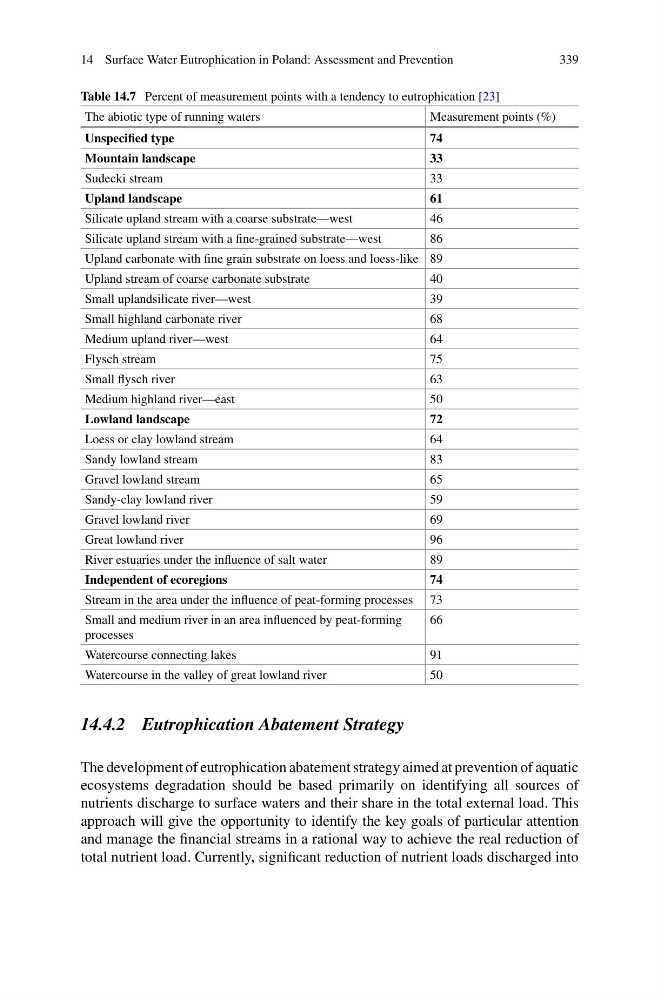
Table 14.7 Percent of measurement points with a tendency to eutrophication [23]
The abiotic type of running waters
Measurement points (%)
Unspecified type
74
Mountain landscape
33
Sudecki stream
33
Upland landscape
61
Silicate upland stream with a coarse substrate—west
46
Silicate upland stream with a fine-grained substrate—west
86
Upland carbonate with fine grain substrate on loess and loess-like 89
Upland stream of coarse carbonate substrate
40
Small uplandsilicate river—west
39
Small highland carbonate river
68
Medium upland river—west
64
Flysch stream
75
Small flysch river
63
Medium highland river—east
50
Lowland landscape
72
Loess or clay lowland stream
64
Sandy lowland stream
83
Gravel lowland stream
65
Sandy-clay lowland river
59
Gravel lowland river
69
Great lowland river
96
River estuaries under the influence of salt water
89
Independent of ecoregions
74
Stream in the area under the influence of peat-forming processes 73
Small and medium river in an area influenced by peat-forming
processes
66
Watercourse connecting lakes
91
Watercourse in the valley of great lowland river
50
14.4.2 Eutrophication Abatement Strategy
The development of eutrophication abatement strategy aimed at prevention of aquatic
ecosystems degradation should be based primarily on identifying all sources of
nutrients discharge to surface waters and their share in the total external load. This
approach will give the opportunity to identify the key goals of particular attention
and manage the financial streams in a rational way to achieve the real reduction of
total nutrient load. Currently, significant reduction of nutrient loads discharged into
339
Table 14.7 Percent of measurement points with a tendency to eutrophication [23]
The abiotic type of running waters
Measurement points (%)
Unspecified type
74
Mountain landscape
33
Sudecki stream
33
Upland landscape
61
Silicate upland stream with a coarse substrate—west
46
Silicate upland stream with a fine-grained substrate—west
86
Upland carbonate with fine grain substrate on loess and loess-like 89
Upland stream of coarse carbonate substrate
40
Small uplandsilicate river—west
39
Small highland carbonate river
68
Medium upland river—west
64
Flysch stream
75
Small flysch river
63
Medium highland river—east
50
Lowland landscape
72
Loess or clay lowland stream
64
Sandy lowland stream
83
Gravel lowland stream
65
Sandy-clay lowland river
59
Gravel lowland river
69
Great lowland river
96
River estuaries under the influence of salt water
89
Independent of ecoregions
74
Stream in the area under the influence of peat-forming processes 73
Small and medium river in an area influenced by peat-forming
processes
66
Watercourse connecting lakes
91
Watercourse in the valley of great lowland river
50
14.4.2 Eutrophication Abatement Strategy
The development of eutrophication abatement strategy aimed at prevention of aquatic
ecosystems degradation should be based primarily on identifying all sources of
nutrients discharge to surface waters and their share in the total external load. This
approach will give the opportunity to identify the key goals of particular attention
and manage the financial streams in a rational way to achieve the real reduction of
total nutrient load. Currently, significant reduction of nutrient loads discharged into