

164
D. Absalon et al.
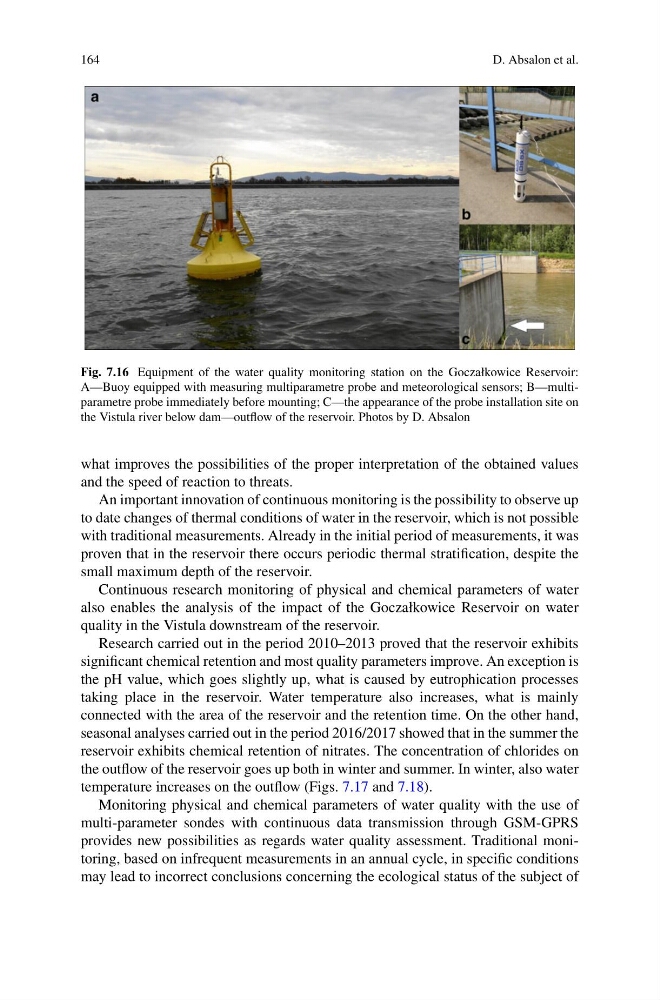
Fig. 7.16 Equipment of the water quality monitoring station on the Goczałkowice Reservoir:
A—Buoy equipped with measuring multiparametre probe and meteorological sensors; B—multiparametre probe immediately before mounting; C—the appearance of the probe installation site on
the Vistula river below dam—outflow of the reservoir. Photos by D. Absalon
what improves the possibilities of the proper interpretation of the obtained values
and the speed of reaction to threats.
An important innovation of continuous monitoring is the possibility to observe up
to date changes of thermal conditions of water in the reservoir, which is not possible
with traditional measurements. Already in the initial period of measurements, it was
proven that in the reservoir there occurs periodic thermal stratification, despite the
small maximum depth of the reservoir.
Continuous research monitoring of physical and chemical parameters of water
also enables the analysis of the impact of the Goczałkowice Reservoir on water
quality in the Vistula downstream of the reservoir.
Research carried out in the period 2010–2013 proved that the reservoir exhibits
significant chemical retention and most quality parameters improve. An exception is
the pH value, which goes slightly up, what is caused by eutrophication processes
taking place in the reservoir. Water temperature also increases, what is mainly
connected with the area of the reservoir and the retention time. On the other hand,
seasonal analyses carried out in the period 2016/2017 showed that in the summer the
reservoir exhibits chemical retention of nitrates. The concentration of chlorides on
the outflow of the reservoir goes up both in winter and summer. In winter, also water
temperature increases on the outflow (Figs. 7.17 and 7.18).
Monitoring physical and chemical parameters of water quality with the use of
multi-parameter sondes with continuous data transmission through GSM-GPRS
provides new possibilities as regards water quality assessment. Traditional monitoring, based on infrequent measurements in an annual cycle, in specific conditions
may lead to incorrect conclusions concerning the ecological status of the subject of
D. Absalon et al.
Fig. 7.16 Equipment of the water quality monitoring station on the Goczałkowice Reservoir:
A—Buoy equipped with measuring multiparametre probe and meteorological sensors; B—multiparametre probe immediately before mounting; C—the appearance of the probe installation site on
the Vistula river below dam—outflow of the reservoir. Photos by D. Absalon
what improves the possibilities of the proper interpretation of the obtained values
and the speed of reaction to threats.
An important innovation of continuous monitoring is the possibility to observe up
to date changes of thermal conditions of water in the reservoir, which is not possible
with traditional measurements. Already in the initial period of measurements, it was
proven that in the reservoir there occurs periodic thermal stratification, despite the
small maximum depth of the reservoir.
Continuous research monitoring of physical and chemical parameters of water
also enables the analysis of the impact of the Goczałkowice Reservoir on water
quality in the Vistula downstream of the reservoir.
Research carried out in the period 2010–2013 proved that the reservoir exhibits
significant chemical retention and most quality parameters improve. An exception is
the pH value, which goes slightly up, what is caused by eutrophication processes
taking place in the reservoir. Water temperature also increases, what is mainly
connected with the area of the reservoir and the retention time. On the other hand,
seasonal analyses carried out in the period 2016/2017 showed that in the summer the
reservoir exhibits chemical retention of nitrates. The concentration of chlorides on
the outflow of the reservoir goes up both in winter and summer. In winter, also water
temperature increases on the outflow (Figs. 7.17 and 7.18).
Monitoring physical and chemical parameters of water quality with the use of
multi-parameter sondes with continuous data transmission through GSM-GPRS
provides new possibilities as regards water quality assessment. Traditional monitoring, based on infrequent measurements in an annual cycle, in specific conditions
may lead to incorrect conclusions concerning the ecological status of the subject of