

7 Water Quality in Main Dam Reservoirs in Poland
157
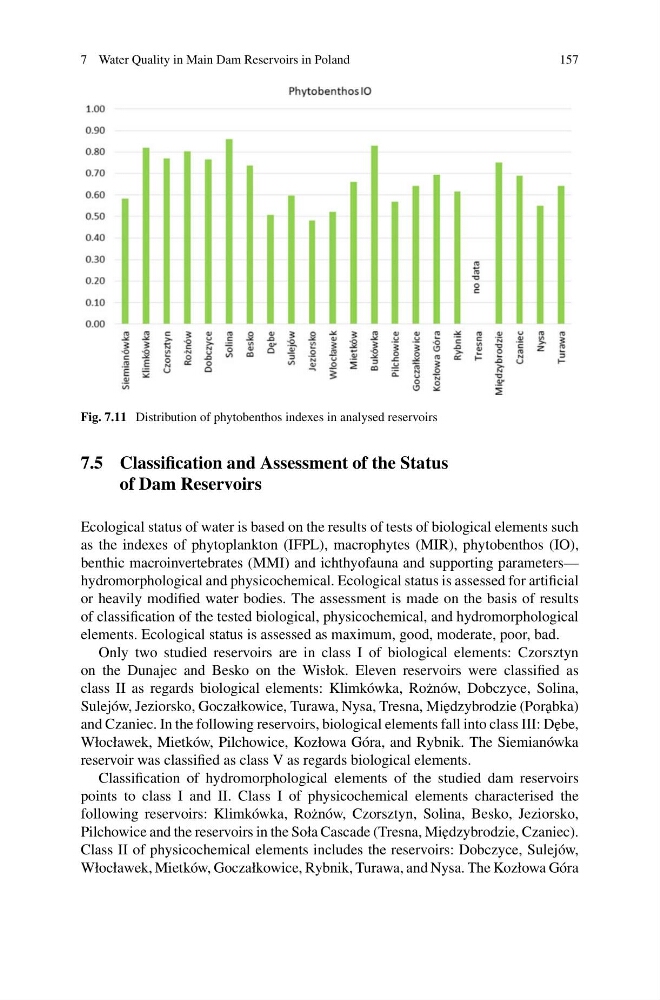
Fig. 7.11 Distribution of phytobenthos indexes in analysed reservoirs
7.5 Classification and Assessment of the Status
of Dam Reservoirs
Ecological status of water is based on the results of tests of biological elements such
as the indexes of phytoplankton (IFPL), macrophytes (MIR), phytobenthos (IO),
benthic macroinvertebrates (MMI) and ichthyofauna and supporting parameters—
hydromorphological and physicochemical. Ecological status is assessed for artificial
or heavily modified water bodies. The assessment is made on the basis of results
of classification of the tested biological, physicochemical, and hydromorphological
elements. Ecological status is assessed as maximum, good, moderate, poor, bad.
Only two studied reservoirs are in class I of biological elements: Czorsztyn
on the Dunajec and Besko on the Wisłok. Eleven reservoirs were classified as
class II as regards biological elements: Klimkówka, Ro˙ znów, Dobczyce, Solina,
Sulejów, Jeziorsko, Goczałkowice, Turawa, Nysa, Tresna, Mi˛ edzybrodzie (Por˛ abka)
and Czaniec. In the following reservoirs, biological elements fall into class III: D˛ ebe,
Włocławek, Mietków, Pilchowice, Kozłowa Góra, and Rybnik. The Siemianówka
reservoir was classified as class V as regards biological elements.
Classification of hydromorphological elements of the studied dam reservoirs
points to class I and II. Class I of physicochemical elements characterised the
following reservoirs: Klimkówka, Ro˙ znów, Czorsztyn, Solina, Besko, Jeziorsko,
Pilchowice and the reservoirs in the Soła Cascade (Tresna, Mi˛ edzybrodzie, Czaniec).
Class II of physicochemical elements includes the reservoirs: Dobczyce, Sulejów,
Włocławek, Mietków, Goczałkowice, Rybnik, Turawa, and Nysa. The Kozłowa Góra
157
Fig. 7.11 Distribution of phytobenthos indexes in analysed reservoirs
7.5 Classification and Assessment of the Status
of Dam Reservoirs
Ecological status of water is based on the results of tests of biological elements such
as the indexes of phytoplankton (IFPL), macrophytes (MIR), phytobenthos (IO),
benthic macroinvertebrates (MMI) and ichthyofauna and supporting parameters—
hydromorphological and physicochemical. Ecological status is assessed for artificial
or heavily modified water bodies. The assessment is made on the basis of results
of classification of the tested biological, physicochemical, and hydromorphological
elements. Ecological status is assessed as maximum, good, moderate, poor, bad.
Only two studied reservoirs are in class I of biological elements: Czorsztyn
on the Dunajec and Besko on the Wisłok. Eleven reservoirs were classified as
class II as regards biological elements: Klimkówka, Ro˙ znów, Dobczyce, Solina,
Sulejów, Jeziorsko, Goczałkowice, Turawa, Nysa, Tresna, Mi˛ edzybrodzie (Por˛ abka)
and Czaniec. In the following reservoirs, biological elements fall into class III: D˛ ebe,
Włocławek, Mietków, Pilchowice, Kozłowa Góra, and Rybnik. The Siemianówka
reservoir was classified as class V as regards biological elements.
Classification of hydromorphological elements of the studied dam reservoirs
points to class I and II. Class I of physicochemical elements characterised the
following reservoirs: Klimkówka, Ro˙ znów, Czorsztyn, Solina, Besko, Jeziorsko,
Pilchowice and the reservoirs in the Soła Cascade (Tresna, Mi˛ edzybrodzie, Czaniec).
Class II of physicochemical elements includes the reservoirs: Dobczyce, Sulejów,
Włocławek, Mietków, Goczałkowice, Rybnik, Turawa, and Nysa. The Kozłowa Góra