

156
D. Absalon et al.
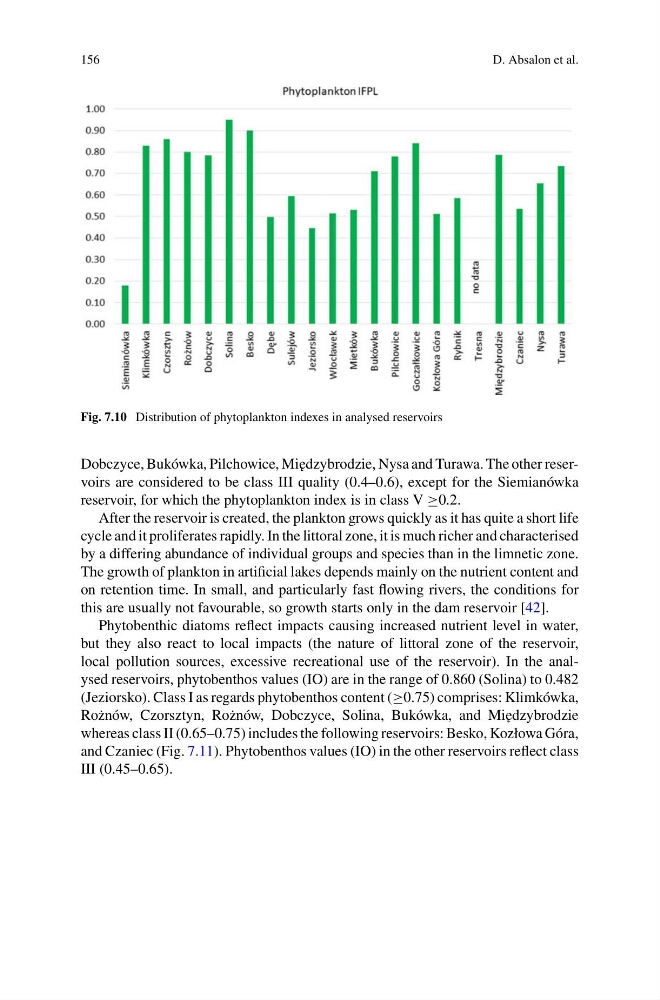
Fig. 7.10 Distribution of phytoplankton indexes in analysed reservoirs
Dobczyce, Bukówka, Pilchowice, Mi˛ edzybrodzie, Nysa and Turawa. The other reservoirs are considered to be class III quality (0.4–0.6), except for the Siemianówka
reservoir, for which the phytoplankton index is in class V ≥0.2.
After the reservoir is created, the plankton grows quickly as it has quite a short life
cycle and it proliferates rapidly. In the littoral zone, it is much richer and characterised
by a differing abundance of individual groups and species than in the limnetic zone.
The growth of plankton in artificial lakes depends mainly on the nutrient content and
on retention time. In small, and particularly fast flowing rivers, the conditions for
this are usually not favourable, so growth starts only in the dam reservoir [42].
Phytobenthic diatoms reflect impacts causing increased nutrient level in water,
but they also react to local impacts (the nature of littoral zone of the reservoir,
local pollution sources, excessive recreational use of the reservoir). In the analysed reservoirs, phytobenthos values (IO) are in the range of 0.860 (Solina) to 0.482
(Jeziorsko). Class I as regards phytobenthos content (≥0.75) comprises: Klimkówka,
Ro˙ znów, Czorsztyn, Ro˙ znów, Dobczyce, Solina, Bukówka, and Mi˛ edzybrodzie
whereas class II (0.65–0.75) includes the following reservoirs: Besko, Kozłowa Góra,
and Czaniec (Fig. 7.11). Phytobenthos values (IO) in the other reservoirs reflect class
III (0.45–0.65).
D. Absalon et al.
Fig. 7.10 Distribution of phytoplankton indexes in analysed reservoirs
Dobczyce, Bukówka, Pilchowice, Mi˛ edzybrodzie, Nysa and Turawa. The other reservoirs are considered to be class III quality (0.4–0.6), except for the Siemianówka
reservoir, for which the phytoplankton index is in class V ≥0.2.
After the reservoir is created, the plankton grows quickly as it has quite a short life
cycle and it proliferates rapidly. In the littoral zone, it is much richer and characterised
by a differing abundance of individual groups and species than in the limnetic zone.
The growth of plankton in artificial lakes depends mainly on the nutrient content and
on retention time. In small, and particularly fast flowing rivers, the conditions for
this are usually not favourable, so growth starts only in the dam reservoir [42].
Phytobenthic diatoms reflect impacts causing increased nutrient level in water,
but they also react to local impacts (the nature of littoral zone of the reservoir,
local pollution sources, excessive recreational use of the reservoir). In the analysed reservoirs, phytobenthos values (IO) are in the range of 0.860 (Solina) to 0.482
(Jeziorsko). Class I as regards phytobenthos content (≥0.75) comprises: Klimkówka,
Ro˙ znów, Czorsztyn, Ro˙ znów, Dobczyce, Solina, Bukówka, and Mi˛ edzybrodzie
whereas class II (0.65–0.75) includes the following reservoirs: Besko, Kozłowa Góra,
and Czaniec (Fig. 7.11). Phytobenthos values (IO) in the other reservoirs reflect class
III (0.45–0.65).