

6 Quality Assessment of Water Resources of River in Poland
141
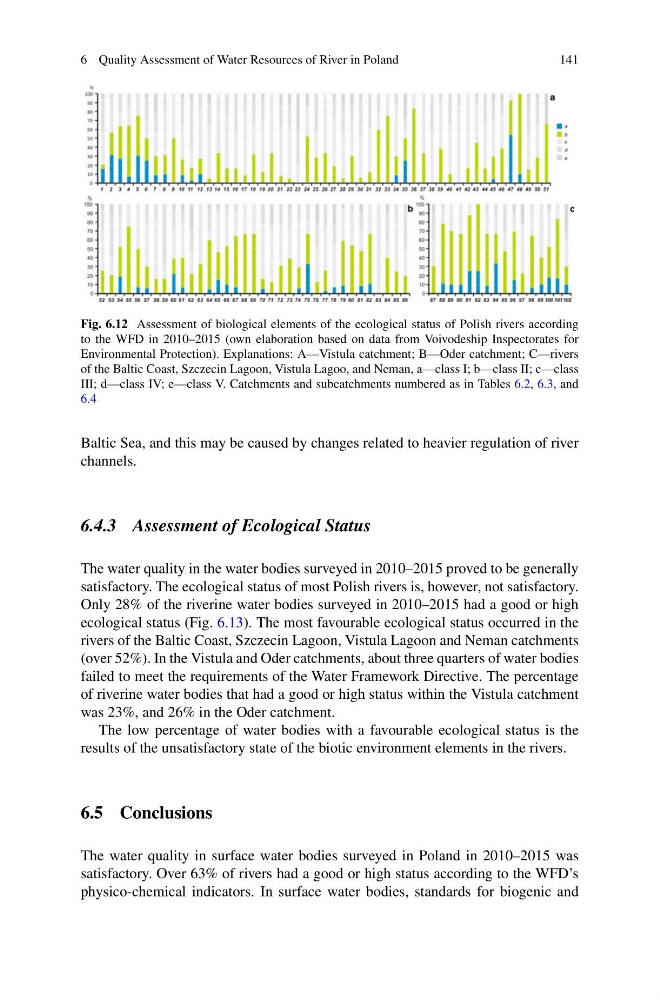
Fig. 6.12 Assessment of biological elements of the ecological status of Polish rivers according
to the WFD in 2010–2015 (own elaboration based on data from Voivodeship Inspectorates for
Environmental Protection). Explanations: A—Vistula catchment; B—Oder catchment; C—rivers
of the Baltic Coast, Szczecin Lagoon, Vistula Lagoo, and Neman, a—class I; b—class II; c—class
III; d—class IV; e—class V. Catchments and subcatchments numbered as in Tables 6.2, 6.3, and
6.4
Baltic Sea, and this may be caused by changes related to heavier regulation of river
channels.
6.4.3 Assessment of Ecological Status
The water quality in the water bodies surveyed in 2010–2015 proved to be generally
satisfactory. The ecological status of most Polish rivers is, however, not satisfactory.
Only 28% of the riverine water bodies surveyed in 2010–2015 had a good or high
ecological status (Fig. 6.13). The most favourable ecological status occurred in the
rivers of the Baltic Coast, Szczecin Lagoon, Vistula Lagoon and Neman catchments
(over 52%). In the Vistula and Oder catchments, about three quarters of water bodies
failed to meet the requirements of the Water Framework Directive. The percentage
of riverine water bodies that had a good or high status within the Vistula catchment
was 23%, and 26% in the Oder catchment.
The low percentage of water bodies with a favourable ecological status is the
results of the unsatisfactory state of the biotic environment elements in the rivers.
6.5 Conclusions
The water quality in surface water bodies surveyed in Poland in 2010–2015 was
satisfactory. Over 63% of rivers had a good or high status according to the WFD’s
physico-chemical indicators. In surface water bodies, standards for biogenic and
141
Fig. 6.12 Assessment of biological elements of the ecological status of Polish rivers according
to the WFD in 2010–2015 (own elaboration based on data from Voivodeship Inspectorates for
Environmental Protection). Explanations: A—Vistula catchment; B—Oder catchment; C—rivers
of the Baltic Coast, Szczecin Lagoon, Vistula Lagoo, and Neman, a—class I; b—class II; c—class
III; d—class IV; e—class V. Catchments and subcatchments numbered as in Tables 6.2, 6.3, and
6.4
Baltic Sea, and this may be caused by changes related to heavier regulation of river
channels.
6.4.3 Assessment of Ecological Status
The water quality in the water bodies surveyed in 2010–2015 proved to be generally
satisfactory. The ecological status of most Polish rivers is, however, not satisfactory.
Only 28% of the riverine water bodies surveyed in 2010–2015 had a good or high
ecological status (Fig. 6.13). The most favourable ecological status occurred in the
rivers of the Baltic Coast, Szczecin Lagoon, Vistula Lagoon and Neman catchments
(over 52%). In the Vistula and Oder catchments, about three quarters of water bodies
failed to meet the requirements of the Water Framework Directive. The percentage
of riverine water bodies that had a good or high status within the Vistula catchment
was 23%, and 26% in the Oder catchment.
The low percentage of water bodies with a favourable ecological status is the
results of the unsatisfactory state of the biotic environment elements in the rivers.
6.5 Conclusions
The water quality in surface water bodies surveyed in Poland in 2010–2015 was
satisfactory. Over 63% of rivers had a good or high status according to the WFD’s
physico-chemical indicators. In surface water bodies, standards for biogenic and