

140
A. Solarczyk
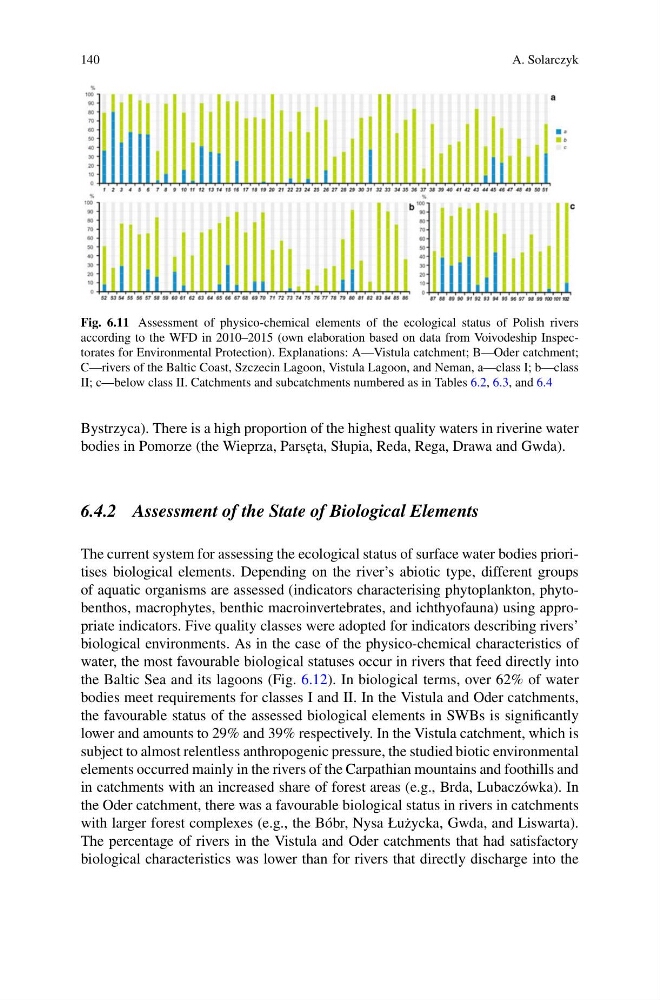
Fig. 6.11 Assessment of physico-chemical elements of the ecological status of Polish rivers
according to the WFD in 2010–2015 (own elaboration based on data from Voivodeship Inspectorates for Environmental Protection). Explanations: A—Vistula catchment; B—Oder catchment;
C—rivers of the Baltic Coast, Szczecin Lagoon, Vistula Lagoon, and Neman, a—class I; b—class
II; c—below class II. Catchments and subcatchments numbered as in Tables 6.2, 6.3, and 6.4
Bystrzyca). There is a high proportion of the highest quality waters in riverine water
bodies in Pomorze (the Wieprza, Pars˛ eta, Słupia, Reda, Rega, Drawa and Gwda).
6.4.2 Assessment of the State of Biological Elements
The current system for assessing the ecological status of surface water bodies prioritises biological elements. Depending on the river’s abiotic type, different groups
of aquatic organisms are assessed (indicators characterising phytoplankton, phytobenthos, macrophytes, benthic macroinvertebrates, and ichthyofauna) using appropriate indicators. Five quality classes were adopted for indicators describing rivers’
biological environments. As in the case of the physico-chemical characteristics of
water, the most favourable biological statuses occur in rivers that feed directly into
the Baltic Sea and its lagoons (Fig. 6.12). In biological terms, over 62% of water
bodies meet requirements for classes I and II. In the Vistula and Oder catchments,
the favourable status of the assessed biological elements in SWBs is significantly
lower and amounts to 29% and 39% respectively. In the Vistula catchment, which is
subject to almost relentless anthropogenic pressure, the studied biotic environmental
elements occurred mainly in the rivers of the Carpathian mountains and foothills and
in catchments with an increased share of forest areas (e.g., Brda, Lubaczówka). In
the Oder catchment, there was a favourable biological status in rivers in catchments
with larger forest complexes (e.g., the Bóbr, Nysa Łu˙ zycka, Gwda, and Liswarta).
The percentage of rivers in the Vistula and Oder catchments that had satisfactory
biological characteristics was lower than for rivers that directly discharge into the
A. Solarczyk
Fig. 6.11 Assessment of physico-chemical elements of the ecological status of Polish rivers
according to the WFD in 2010–2015 (own elaboration based on data from Voivodeship Inspectorates for Environmental Protection). Explanations: A—Vistula catchment; B—Oder catchment;
C—rivers of the Baltic Coast, Szczecin Lagoon, Vistula Lagoon, and Neman, a—class I; b—class
II; c—below class II. Catchments and subcatchments numbered as in Tables 6.2, 6.3, and 6.4
Bystrzyca). There is a high proportion of the highest quality waters in riverine water
bodies in Pomorze (the Wieprza, Pars˛ eta, Słupia, Reda, Rega, Drawa and Gwda).
6.4.2 Assessment of the State of Biological Elements
The current system for assessing the ecological status of surface water bodies prioritises biological elements. Depending on the river’s abiotic type, different groups
of aquatic organisms are assessed (indicators characterising phytoplankton, phytobenthos, macrophytes, benthic macroinvertebrates, and ichthyofauna) using appropriate indicators. Five quality classes were adopted for indicators describing rivers’
biological environments. As in the case of the physico-chemical characteristics of
water, the most favourable biological statuses occur in rivers that feed directly into
the Baltic Sea and its lagoons (Fig. 6.12). In biological terms, over 62% of water
bodies meet requirements for classes I and II. In the Vistula and Oder catchments,
the favourable status of the assessed biological elements in SWBs is significantly
lower and amounts to 29% and 39% respectively. In the Vistula catchment, which is
subject to almost relentless anthropogenic pressure, the studied biotic environmental
elements occurred mainly in the rivers of the Carpathian mountains and foothills and
in catchments with an increased share of forest areas (e.g., Brda, Lubaczówka). In
the Oder catchment, there was a favourable biological status in rivers in catchments
with larger forest complexes (e.g., the Bóbr, Nysa Łu˙ zycka, Gwda, and Liswarta).
The percentage of rivers in the Vistula and Oder catchments that had satisfactory
biological characteristics was lower than for rivers that directly discharge into the