

142
A. Solarczyk
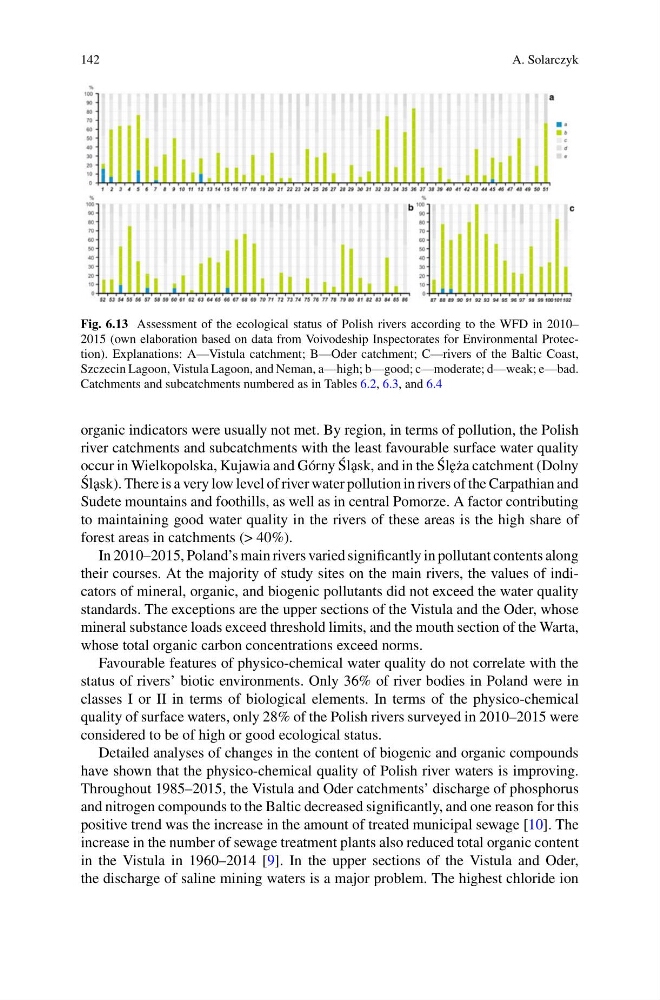
Fig. 6.13 Assessment of the ecological status of Polish rivers according to the WFD in 2010–
2015 (own elaboration based on data from Voivodeship Inspectorates for Environmental Protection). Explanations: A—Vistula catchment; B—Oder catchment; C—rivers of the Baltic Coast,
Szczecin Lagoon, Vistula Lagoon, and Neman, a—high; b—good; c—moderate; d—weak; e—bad.
Catchments and subcatchments numbered as in Tables 6.2, 6.3, and 6.4
organic indicators were usually not met. By region, in terms of pollution, the Polish
river catchments and subcatchments with the least favourable surface water quality
occur in Wielkopolska, Kujawia and Górny ´
Sl˛ ask, and in the ´
Sl˛ e˙ za catchment (Dolny
´
Sl˛ ask). There is a very low level of river water pollution in rivers of the Carpathian and
Sudete mountains and foothills, as well as in central Pomorze. A factor contributing
to maintaining good water quality in the rivers of these areas is the high share of
forest areas in catchments (> 40%).
In 2010–2015, Poland’s main rivers varied significantly in pollutant contents along
their courses. At the majority of study sites on the main rivers, the values of indicators of mineral, organic, and biogenic pollutants did not exceed the water quality
standards. The exceptions are the upper sections of the Vistula and the Oder, whose
mineral substance loads exceed threshold limits, and the mouth section of the Warta,
whose total organic carbon concentrations exceed norms.
Favourable features of physico-chemical water quality do not correlate with the
status of rivers’ biotic environments. Only 36% of river bodies in Poland were in
classes I or II in terms of biological elements. In terms of the physico-chemical
quality of surface waters, only 28% of the Polish rivers surveyed in 2010–2015 were
considered to be of high or good ecological status.
Detailed analyses of changes in the content of biogenic and organic compounds
have shown that the physico-chemical quality of Polish river waters is improving.
Throughout 1985–2015, the Vistula and Oder catchments’ discharge of phosphorus
and nitrogen compounds to the Baltic decreased significantly, and one reason for this
positive trend was the increase in the amount of treated municipal sewage [10]. The
increase in the number of sewage treatment plants also reduced total organic content
in the Vistula in 1960–2014 [9]. In the upper sections of the Vistula and Oder,
the discharge of saline mining waters is a major problem. The highest chloride ion
A. Solarczyk
Fig. 6.13 Assessment of the ecological status of Polish rivers according to the WFD in 2010–
2015 (own elaboration based on data from Voivodeship Inspectorates for Environmental Protection). Explanations: A—Vistula catchment; B—Oder catchment; C—rivers of the Baltic Coast,
Szczecin Lagoon, Vistula Lagoon, and Neman, a—high; b—good; c—moderate; d—weak; e—bad.
Catchments and subcatchments numbered as in Tables 6.2, 6.3, and 6.4
organic indicators were usually not met. By region, in terms of pollution, the Polish
river catchments and subcatchments with the least favourable surface water quality
occur in Wielkopolska, Kujawia and Górny ´
Sl˛ ask, and in the ´
Sl˛ e˙ za catchment (Dolny
´
Sl˛ ask). There is a very low level of river water pollution in rivers of the Carpathian and
Sudete mountains and foothills, as well as in central Pomorze. A factor contributing
to maintaining good water quality in the rivers of these areas is the high share of
forest areas in catchments (> 40%).
In 2010–2015, Poland’s main rivers varied significantly in pollutant contents along
their courses. At the majority of study sites on the main rivers, the values of indicators of mineral, organic, and biogenic pollutants did not exceed the water quality
standards. The exceptions are the upper sections of the Vistula and the Oder, whose
mineral substance loads exceed threshold limits, and the mouth section of the Warta,
whose total organic carbon concentrations exceed norms.
Favourable features of physico-chemical water quality do not correlate with the
status of rivers’ biotic environments. Only 36% of river bodies in Poland were in
classes I or II in terms of biological elements. In terms of the physico-chemical
quality of surface waters, only 28% of the Polish rivers surveyed in 2010–2015 were
considered to be of high or good ecological status.
Detailed analyses of changes in the content of biogenic and organic compounds
have shown that the physico-chemical quality of Polish river waters is improving.
Throughout 1985–2015, the Vistula and Oder catchments’ discharge of phosphorus
and nitrogen compounds to the Baltic decreased significantly, and one reason for this
positive trend was the increase in the amount of treated municipal sewage [10]. The
increase in the number of sewage treatment plants also reduced total organic content
in the Vistula in 1960–2014 [9]. In the upper sections of the Vistula and Oder,
the discharge of saline mining waters is a major problem. The highest chloride ion