

6 Quality Assessment of Water Resources of River in Poland
135
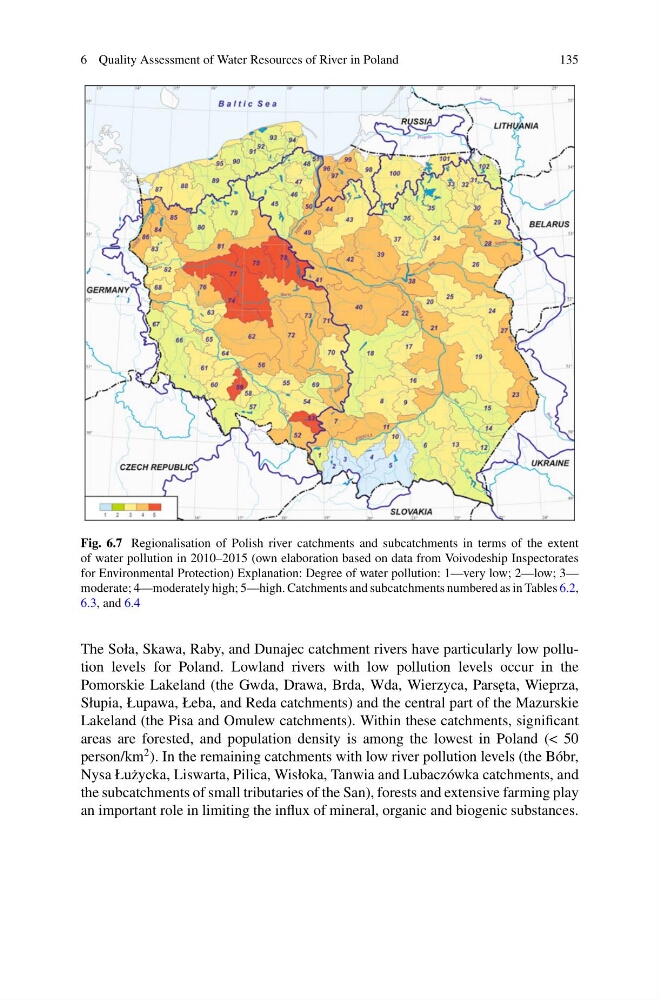
Fig. 6.7 Regionalisation of Polish river catchments and subcatchments in terms of the extent
of water pollution in 2010–2015 (own elaboration based on data from Voivodeship Inspectorates
for Environmental Protection) Explanation: Degree of water pollution: 1—very low; 2—low; 3—
moderate; 4—moderately high; 5—high. Catchments and subcatchments numbered as in Tables 6.2,
6.3, and 6.4
The Soła, Skawa, Raby, and Dunajec catchment rivers have particularly low pollution levels for Poland. Lowland rivers with low pollution levels occur in the
Pomorskie Lakeland (the Gwda, Drawa, Brda, Wda, Wierzyca, Pars˛ eta, Wieprza,
Słupia, Łupawa, Łeba, and Reda catchments) and the central part of the Mazurskie
Lakeland (the Pisa and Omulew catchments). Within these catchments, significant
areas are forested, and population density is among the lowest in Poland (< 50
person/km
2 ). In the remaining catchments with low river pollution levels (the Bóbr,
Nysa Łu˙ zycka, Liswarta, Pilica, Wisłoka, Tanwia and Lubaczówka catchments, and
the subcatchments of small tributaries of the San), forests and extensive farming play
an important role in limiting the influx of mineral, organic and biogenic substances.
135
Fig. 6.7 Regionalisation of Polish river catchments and subcatchments in terms of the extent
of water pollution in 2010–2015 (own elaboration based on data from Voivodeship Inspectorates
for Environmental Protection) Explanation: Degree of water pollution: 1—very low; 2—low; 3—
moderate; 4—moderately high; 5—high. Catchments and subcatchments numbered as in Tables 6.2,
6.3, and 6.4
The Soła, Skawa, Raby, and Dunajec catchment rivers have particularly low pollution levels for Poland. Lowland rivers with low pollution levels occur in the
Pomorskie Lakeland (the Gwda, Drawa, Brda, Wda, Wierzyca, Pars˛ eta, Wieprza,
Słupia, Łupawa, Łeba, and Reda catchments) and the central part of the Mazurskie
Lakeland (the Pisa and Omulew catchments). Within these catchments, significant
areas are forested, and population density is among the lowest in Poland (< 50
person/km
2 ). In the remaining catchments with low river pollution levels (the Bóbr,
Nysa Łu˙ zycka, Liswarta, Pilica, Wisłoka, Tanwia and Lubaczówka catchments, and
the subcatchments of small tributaries of the San), forests and extensive farming play
an important role in limiting the influx of mineral, organic and biogenic substances.