

of ingested cysts necessary to infect humans is often debated in the medical
literature, it is well known that humans can be infected by a low level of cysts in
drinking water and during recreational activities such as swimming. Since 2001,
Cryptosporidium oocysts and Giardia cysts are monitored in water supplies and
drinking waters using a normalized method with a concentration of 20 L of surface
water followed by IMS concentration and microscope counting after immune
staining of the concentrate (NF T90-455, AFNOR, 2014).
In the Paris area, a large monitoring project helped to describe the contamination
of surface water by these parasites. Results from 2005 to 2008 [26, 64] showed that if
the level of parasites is relatively low (about 1–4 Cryptosporidium oocysts/10 L and
30–50 Giardia cysts/10 L), specific events could induce significant contamination
(Fig. 13). Moreover, the contamination of surface water is not totally related to
WWTPs and probably more to agricultural practices upstream in the Seine catchment.
Monitoring of Cryptosporidium and Giardia in the Seine and Marne rivers between
2010 and 2018 shows that the concentration of such microorganisms has been
relatively stable since 2005 and follows the same pattern (see Fig. 13) with substantial
variation of parasites, unrelated to the increase in fecal indicators. The small increase
of the mean values between the two periods is not statistically significant.
9 Where to Now?
As shown in Sect. 7, most of the stations in the Marne and Seine rivers do not
presently attain the E. coli 90th percentile required for bathing. To illustrate the
necessary effort, a simplified evaluation of two complementary strategies will be
presented below. The first strategy is the reduction of the base dry weather input
of E. coli into the river, from WWTPs and diffuse leakages off the sewer system.
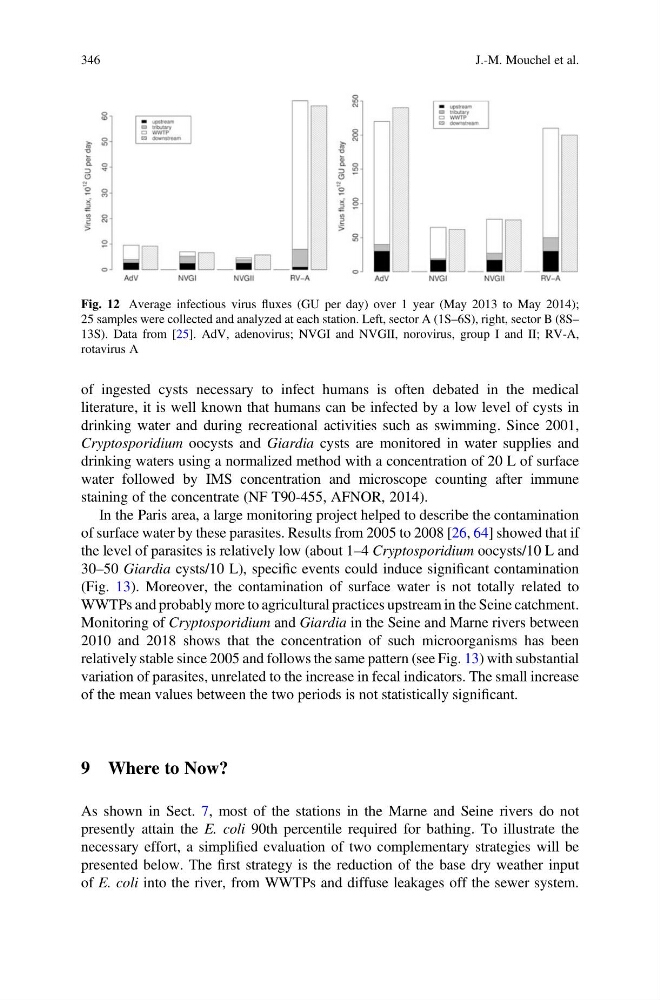
Fig. 12 Average infectious virus fluxes (GU per day) over 1 year (May 2013 to May 2014);
25 samples were collected and analyzed at each station. Left, sector A (1S–6S), right, sector B (8S–
13S). Data from [25]. AdV, adenovirus; NVGI and NVGII, norovirus, group I and II; RV-A,
rotavirus A
346
J.-M. Mouchel et al.
literature, it is well known that humans can be infected by a low level of cysts in
drinking water and during recreational activities such as swimming. Since 2001,
Cryptosporidium oocysts and Giardia cysts are monitored in water supplies and
drinking waters using a normalized method with a concentration of 20 L of surface
water followed by IMS concentration and microscope counting after immune
staining of the concentrate (NF T90-455, AFNOR, 2014).
In the Paris area, a large monitoring project helped to describe the contamination
of surface water by these parasites. Results from 2005 to 2008 [26, 64] showed that if
the level of parasites is relatively low (about 1–4 Cryptosporidium oocysts/10 L and
30–50 Giardia cysts/10 L), specific events could induce significant contamination
(Fig. 13). Moreover, the contamination of surface water is not totally related to
WWTPs and probably more to agricultural practices upstream in the Seine catchment.
Monitoring of Cryptosporidium and Giardia in the Seine and Marne rivers between
2010 and 2018 shows that the concentration of such microorganisms has been
relatively stable since 2005 and follows the same pattern (see Fig. 13) with substantial
variation of parasites, unrelated to the increase in fecal indicators. The small increase
of the mean values between the two periods is not statistically significant.
9 Where to Now?
As shown in Sect. 7, most of the stations in the Marne and Seine rivers do not
presently attain the E. coli 90th percentile required for bathing. To illustrate the
necessary effort, a simplified evaluation of two complementary strategies will be
presented below. The first strategy is the reduction of the base dry weather input
of E. coli into the river, from WWTPs and diffuse leakages off the sewer system.
Fig. 12 Average infectious virus fluxes (GU per day) over 1 year (May 2013 to May 2014);
25 samples were collected and analyzed at each station. Left, sector A (1S–6S), right, sector B (8S–
13S). Data from [25]. AdV, adenovirus; NVGI and NVGII, norovirus, group I and II; RV-A,
rotavirus A
346
J.-M. Mouchel et al.