

423
(Costi et al. 2010; Huang et al. 2014; Tan and Zhang 2015). Therefore, the proper
design and controlled synthesis of hybrid structures are important not only for the
development of advanced materials in specific applications but also for improving
their performance and properties.
As shown in Fig. 16.10, different structural architectures such as core–shell
structures, nanoparticle-incorporated structures, well-defined heterostructures, hierarchical heterostructures, and plate-like structures can be used to design hybrid
materials. Such structures can sometimes be achieved under very controlled conditions. These architectures for hybrid materials can be synthesized through a variety
of routes such as colloidal synthesis, chemical reduction, chemical vapor deposition, physical vapor deposition, electrochemical method, wet chemical synthesis
routes, etc.
16.7.2 Synthesis
Sol–Gel Method
Hybrid adsorbents are synthesized in a variety of ways such as sol–gel method,
hydrothermal method, microemulsion technique, coprecipitation, chemical vapor
deposition, physical vapor deposition, laser ablation, combustion synthesis, etc.
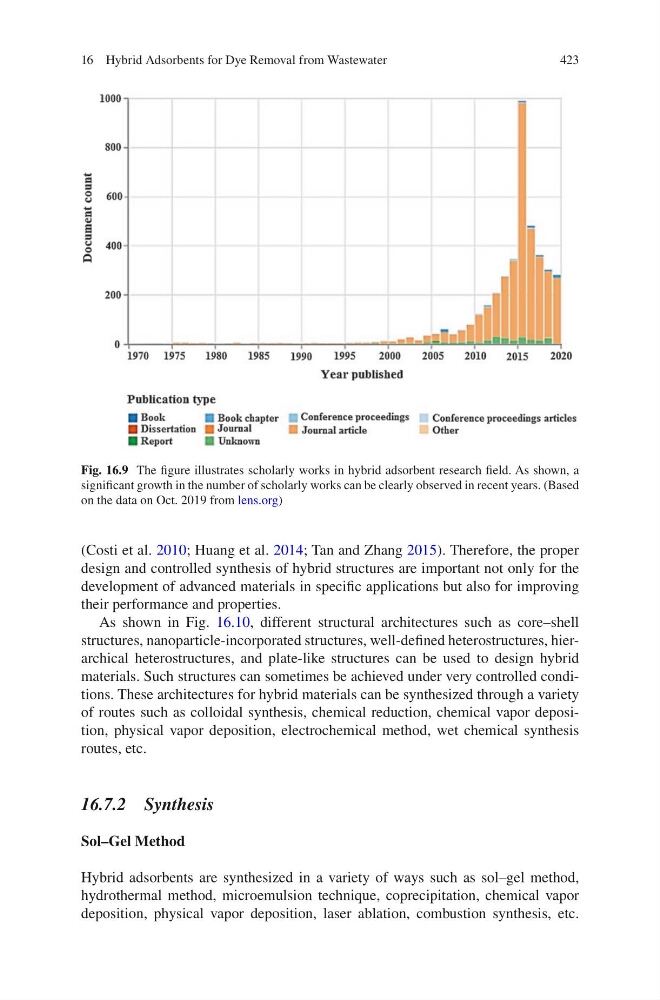
Fig. 16.9 The figure illustrates scholarly works in hybrid adsorbent research field. As shown, a
significant growth in the number of scholarly works can be clearly observed in recent years. (Based
on the data on Oct. 2019 from lens.org)
16 Hybrid Adsorbents for Dye Removal from Wastewater
(Costi et al. 2010; Huang et al. 2014; Tan and Zhang 2015). Therefore, the proper
design and controlled synthesis of hybrid structures are important not only for the
development of advanced materials in specific applications but also for improving
their performance and properties.
As shown in Fig. 16.10, different structural architectures such as core–shell
structures, nanoparticle-incorporated structures, well-defined heterostructures, hierarchical heterostructures, and plate-like structures can be used to design hybrid
materials. Such structures can sometimes be achieved under very controlled conditions. These architectures for hybrid materials can be synthesized through a variety
of routes such as colloidal synthesis, chemical reduction, chemical vapor deposition, physical vapor deposition, electrochemical method, wet chemical synthesis
routes, etc.
16.7.2 Synthesis
Sol–Gel Method
Hybrid adsorbents are synthesized in a variety of ways such as sol–gel method,
hydrothermal method, microemulsion technique, coprecipitation, chemical vapor
deposition, physical vapor deposition, laser ablation, combustion synthesis, etc.
Fig. 16.9 The figure illustrates scholarly works in hybrid adsorbent research field. As shown, a
significant growth in the number of scholarly works can be clearly observed in recent years. (Based
on the data on Oct. 2019 from lens.org)
16 Hybrid Adsorbents for Dye Removal from Wastewater