

417
prevent adequate chemical oxygenation (Ngulube et al. 2017; Umpierres et al.
2017). These dangerous dyes are absorbed into living organisms through the lungs,
skin, and digestive tract (Humans et al. 2010) and cause serious diseases due to their
mutagenic and carcinogenic nature (Akarslan and Demiralay 2015). Most dyes discharged from the textile industry are of azo type that are easily converted into aromatic amines by skin bacteria (Brüschweiler and Merlot 2017). Other widely
consumed industrial dyes include indigo, phthalocyanine derivatives, and sulfur
anthraquinone (Tan et al. 2016; Zare et al. 2015). These dyes are chemically stable
and highly water soluble. Hence it is difficult to degrade them.
Apart from their structure, all synthetic dyes have one common drawback which
is their dangerous nature (Montoya-Suarez et al. 2015). Therefore, efforts are
needed to find solutions that can perpetually remove one or more types of dyes
(Mojsov et al. 2016; Wang et al. 2011). Around 15% of dyes from industries directly
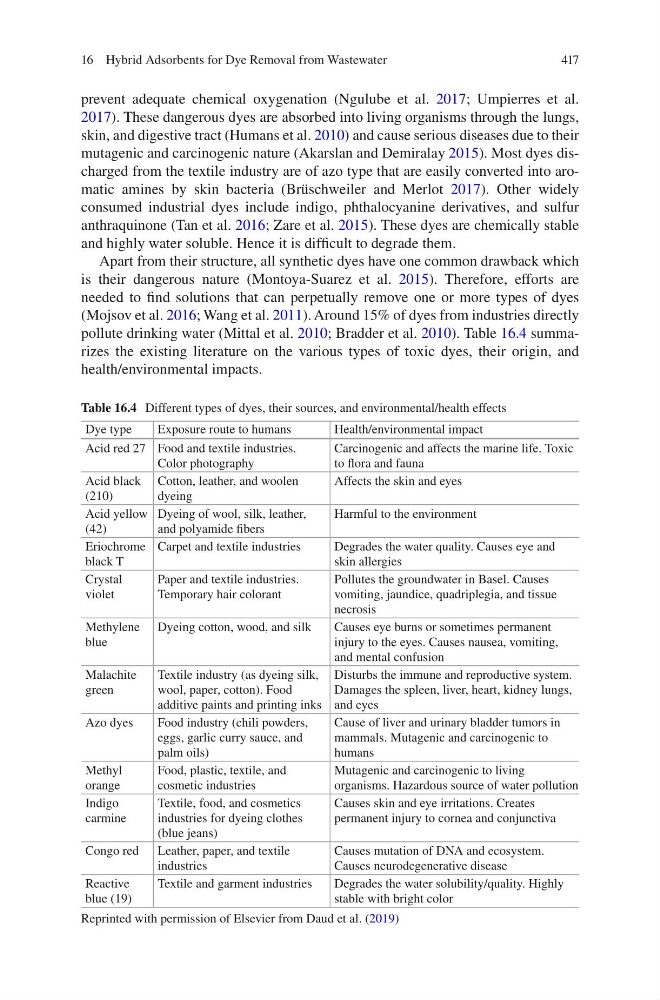
pollute drinking water (Mittal et al. 2010; Bradder et al. 2010). Table 16.4 summarizes the existing literature on the various types of toxic dyes, their origin, and
health/environmental impacts.
Table 16.4 Different types of dyes, their sources, and environmental/health effects
Dye type
Exposure route to humans
Health/environmental impact
Acid red 27 Food and textile industries.
Color photography
Carcinogenic and affects the marine life. Toxic
to flora and fauna
Acid black
(210)
Cotton, leather, and woolen
dyeing
Affects the skin and eyes
Acid yellow
(42)
Dyeing of wool, silk, leather,
and polyamide fibers
Harmful to the environment
Eriochrome
black T
Carpet and textile industries
Degrades the water quality. Causes eye and
skin allergies
Crystal
violet
Paper and textile industries.
Temporary hair colorant
Pollutes the groundwater in Basel. Causes
vomiting, jaundice, quadriplegia, and tissue
necrosis
Methylene
blue
Dyeing cotton, wood, and silk
Causes eye burns or sometimes permanent
injury to the eyes. Causes nausea, vomiting,
and mental confusion
Malachite
green
Textile industry (as dyeing silk,
wool, paper, cotton). Food
additive paints and printing inks
Disturbs the immune and reproductive system.
Damages the spleen, liver, heart, kidney lungs,
and eyes
Azo dyes
Food industry (chili powders,
eggs, garlic curry sauce, and
palm oils)
Cause of liver and urinary bladder tumors in
mammals. Mutagenic and carcinogenic to
humans
Methyl
orange
Food, plastic, textile, and
cosmetic industries
Mutagenic and carcinogenic to living
organisms. Hazardous source of water pollution
Indigo
carmine
Textile, food, and cosmetics
industries for dyeing clothes
(blue jeans)
Causes skin and eye irritations. Creates
permanent injury to cornea and conjunctiva
Congo red Leather, paper, and textile
industries
Causes mutation of DNA and ecosystem.
Causes neurodegenerative disease
Reactive
blue (19)
Textile and garment industries
Degrades the water solubility/quality. Highly
stable with bright color
Reprinted with permission of Elsevier from Daud et al. (2019)
16 Hybrid Adsorbents for Dye Removal from Wastewater
prevent adequate chemical oxygenation (Ngulube et al. 2017; Umpierres et al.
2017). These dangerous dyes are absorbed into living organisms through the lungs,
skin, and digestive tract (Humans et al. 2010) and cause serious diseases due to their
mutagenic and carcinogenic nature (Akarslan and Demiralay 2015). Most dyes discharged from the textile industry are of azo type that are easily converted into aromatic amines by skin bacteria (Brüschweiler and Merlot 2017). Other widely
consumed industrial dyes include indigo, phthalocyanine derivatives, and sulfur
anthraquinone (Tan et al. 2016; Zare et al. 2015). These dyes are chemically stable
and highly water soluble. Hence it is difficult to degrade them.
Apart from their structure, all synthetic dyes have one common drawback which
is their dangerous nature (Montoya-Suarez et al. 2015). Therefore, efforts are
needed to find solutions that can perpetually remove one or more types of dyes
(Mojsov et al. 2016; Wang et al. 2011). Around 15% of dyes from industries directly
pollute drinking water (Mittal et al. 2010; Bradder et al. 2010). Table 16.4 summarizes the existing literature on the various types of toxic dyes, their origin, and
health/environmental impacts.
Table 16.4 Different types of dyes, their sources, and environmental/health effects
Dye type
Exposure route to humans
Health/environmental impact
Acid red 27 Food and textile industries.
Color photography
Carcinogenic and affects the marine life. Toxic
to flora and fauna
Acid black
(210)
Cotton, leather, and woolen
dyeing
Affects the skin and eyes
Acid yellow
(42)
Dyeing of wool, silk, leather,
and polyamide fibers
Harmful to the environment
Eriochrome
black T
Carpet and textile industries
Degrades the water quality. Causes eye and
skin allergies
Crystal
violet
Paper and textile industries.
Temporary hair colorant
Pollutes the groundwater in Basel. Causes
vomiting, jaundice, quadriplegia, and tissue
necrosis
Methylene
blue
Dyeing cotton, wood, and silk
Causes eye burns or sometimes permanent
injury to the eyes. Causes nausea, vomiting,
and mental confusion
Malachite
green
Textile industry (as dyeing silk,
wool, paper, cotton). Food
additive paints and printing inks
Disturbs the immune and reproductive system.
Damages the spleen, liver, heart, kidney lungs,
and eyes
Azo dyes
Food industry (chili powders,
eggs, garlic curry sauce, and
palm oils)
Cause of liver and urinary bladder tumors in
mammals. Mutagenic and carcinogenic to
humans
Methyl
orange
Food, plastic, textile, and
cosmetic industries
Mutagenic and carcinogenic to living
organisms. Hazardous source of water pollution
Indigo
carmine
Textile, food, and cosmetics
industries for dyeing clothes
(blue jeans)
Causes skin and eye irritations. Creates
permanent injury to cornea and conjunctiva
Congo red Leather, paper, and textile
industries
Causes mutation of DNA and ecosystem.
Causes neurodegenerative disease
Reactive
blue (19)
Textile and garment industries
Degrades the water solubility/quality. Highly
stable with bright color
Reprinted with permission of Elsevier from Daud et al. (2019)
16 Hybrid Adsorbents for Dye Removal from Wastewater