

413
16.3 Sources of Dyes
Natural dyes come from natural sources and are widely classified as animal, plant,
microbial, and mineral based on their origin. However, plants are the main sources
of natural dyes (Saxena and Raja 2014). Many industries such as paper, textiles,
plastics, rubber, cosmetics, leather, pharmaceuticals, agricultural research, photoelectrochemical cells, pulp, hair colorings, tannery, food, and bleaching increasingly use synthetic dyes because of their low cost of synthesis, ease of use, stability,
and variety compared to natural dyes. In addition, synthetic dyes have been used to
control the effectiveness of wastewater treatment, to determine the specific surface
area of activated sludge for groundwater tracking ( Jafarinejad 2017a, b; Legrouri
et al. 2017; Majolagbe et al. 2017). Approximately 700,000 tons of different coloring types are produced from about 100,000 commercially available dyes annually
(Abdi et al. 2017; Holkar et al. 2016) which are used in various industries (Banerjee
et al. 2017). Commercially, there are more than 10,000 dyes available, and their
biodegradability is difficult due to their synthetic origin and complex aromatic
molecular structure and. The textile industry releases significant amounts of dyes.
About 15–20% of the color is discharged into the wastewater, during the coloring
process (Duran-Jimenez et al. 2014). Due to the inadequacy of the coloring process,
approximately 100 tons of dye is released to water during the process (Yagub et al.
2014). The textile and related industries generate a lot of dye waste that is
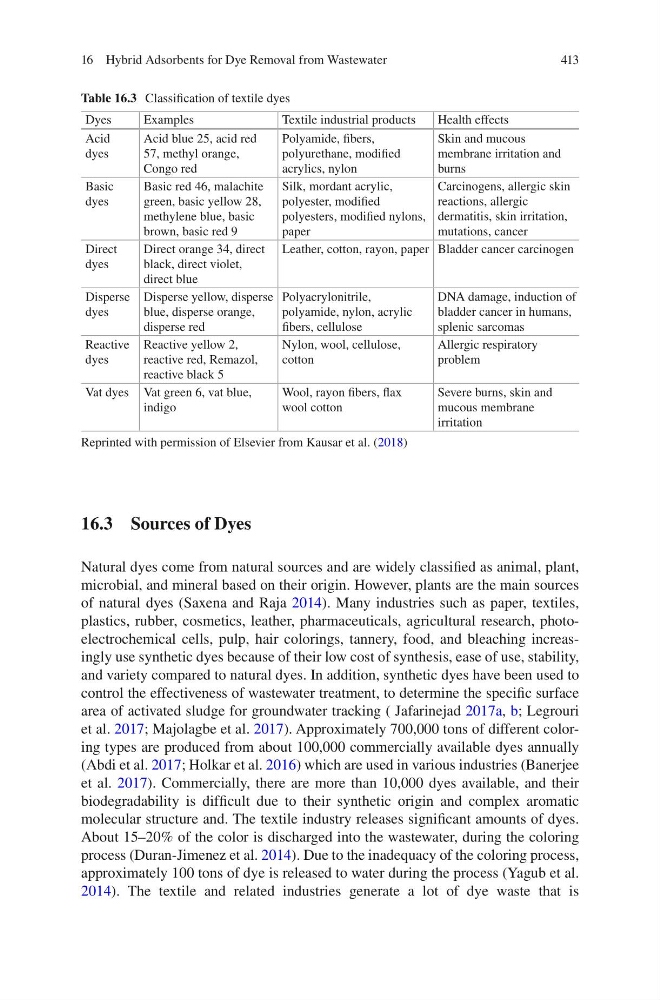
Table 16.3 Classification of textile dyes
Dyes
Examples
Textile industrial products
Health effects
Acid
dyes
Acid blue 25, acid red
57, methyl orange,
Congo red
Polyamide, fibers,
polyurethane, modified
acrylics, nylon
Skin and mucous
membrane irritation and
burns
Basic
dyes
Basic red 46, malachite
green, basic yellow 28,
methylene blue, basic
brown, basic red 9
Silk, mordant acrylic,
polyester, modified
polyesters, modified nylons,
paper
Carcinogens, allergic skin
reactions, allergic
dermatitis, skin irritation,
mutations, cancer
Direct
dyes
Direct orange 34, direct
black, direct violet,
direct blue
Leather, cotton, rayon, paper Bladder cancer carcinogen
Disperse
dyes
Disperse yellow, disperse
blue, disperse orange,
disperse red
Polyacrylonitrile,
polyamide, nylon, acrylic
fibers, cellulose
DNA damage, induction of
bladder cancer in humans,
splenic sarcomas
Reactive
dyes
Reactive yellow 2,
reactive red, Remazol,
reactive black 5
Nylon, wool, cellulose,
cotton
Allergic respiratory
problem
Vat dyes Vat green 6, vat blue,
indigo
Wool, rayon fibers, flax
wool cotton
Severe burns, skin and
mucous membrane
irritation
Reprinted with permission of Elsevier from Kausar et al. (2018)
16 Hybrid Adsorbents for Dye Removal from Wastewater
16.3 Sources of Dyes
Natural dyes come from natural sources and are widely classified as animal, plant,
microbial, and mineral based on their origin. However, plants are the main sources
of natural dyes (Saxena and Raja 2014). Many industries such as paper, textiles,
plastics, rubber, cosmetics, leather, pharmaceuticals, agricultural research, photoelectrochemical cells, pulp, hair colorings, tannery, food, and bleaching increasingly use synthetic dyes because of their low cost of synthesis, ease of use, stability,
and variety compared to natural dyes. In addition, synthetic dyes have been used to
control the effectiveness of wastewater treatment, to determine the specific surface
area of activated sludge for groundwater tracking ( Jafarinejad 2017a, b; Legrouri
et al. 2017; Majolagbe et al. 2017). Approximately 700,000 tons of different coloring types are produced from about 100,000 commercially available dyes annually
(Abdi et al. 2017; Holkar et al. 2016) which are used in various industries (Banerjee
et al. 2017). Commercially, there are more than 10,000 dyes available, and their
biodegradability is difficult due to their synthetic origin and complex aromatic
molecular structure and. The textile industry releases significant amounts of dyes.
About 15–20% of the color is discharged into the wastewater, during the coloring
process (Duran-Jimenez et al. 2014). Due to the inadequacy of the coloring process,
approximately 100 tons of dye is released to water during the process (Yagub et al.
2014). The textile and related industries generate a lot of dye waste that is
Table 16.3 Classification of textile dyes
Dyes
Examples
Textile industrial products
Health effects
Acid
dyes
Acid blue 25, acid red
57, methyl orange,
Congo red
Polyamide, fibers,
polyurethane, modified
acrylics, nylon
Skin and mucous
membrane irritation and
burns
Basic
dyes
Basic red 46, malachite
green, basic yellow 28,
methylene blue, basic
brown, basic red 9
Silk, mordant acrylic,
polyester, modified
polyesters, modified nylons,
paper
Carcinogens, allergic skin
reactions, allergic
dermatitis, skin irritation,
mutations, cancer
Direct
dyes
Direct orange 34, direct
black, direct violet,
direct blue
Leather, cotton, rayon, paper Bladder cancer carcinogen
Disperse
dyes
Disperse yellow, disperse
blue, disperse orange,
disperse red
Polyacrylonitrile,
polyamide, nylon, acrylic
fibers, cellulose
DNA damage, induction of
bladder cancer in humans,
splenic sarcomas
Reactive
dyes
Reactive yellow 2,
reactive red, Remazol,
reactive black 5
Nylon, wool, cellulose,
cotton
Allergic respiratory
problem
Vat dyes Vat green 6, vat blue,
indigo
Wool, rayon fibers, flax
wool cotton
Severe burns, skin and
mucous membrane
irritation
Reprinted with permission of Elsevier from Kausar et al. (2018)
16 Hybrid Adsorbents for Dye Removal from Wastewater