

364
carboxyl group participate for the binding of metal ions as described in Table 14.13.
For the determination of the metal uptake by the active sites of the biosorbent, various instruments such as Infrared spectroscopy, X-ray diffraction analysis, electron
dispersive spectroscopy, nuclear magnetic resonance, etc. are utilized.
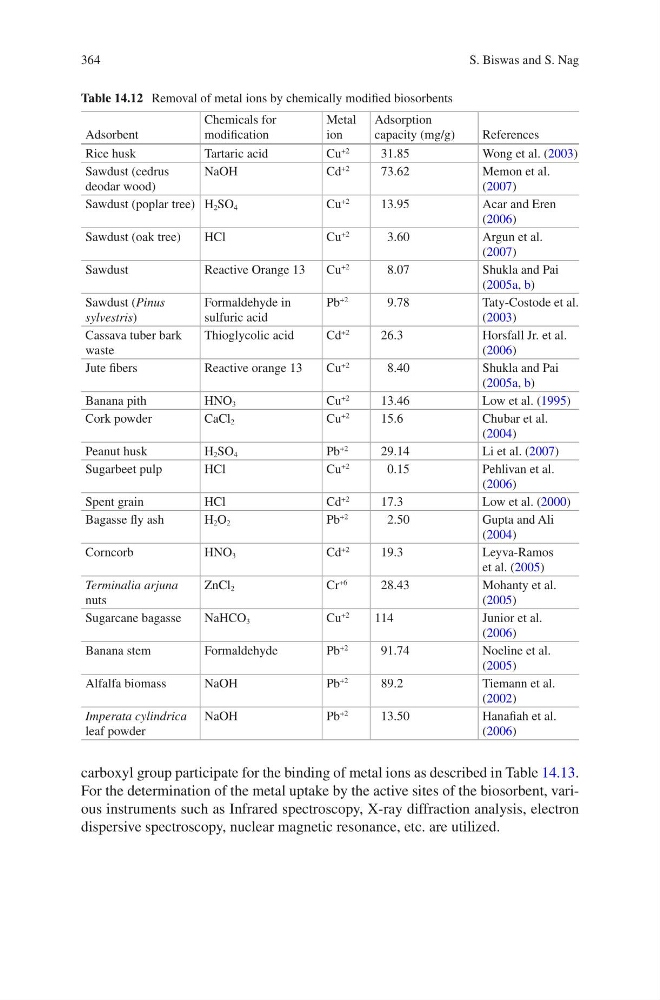
Table 14.12 Removal of metal ions by chemically modified biosorbents
Adsorbent
Chemicals for
modification
Metal
ion
Adsorption
capacity (mg/g)
References
Rice husk
Tartaric acid
Cu
+2
31.85
Wong et al. (2003)
Sawdust (cedrus
deodar wood)
NaOH
Cd
+2
73.62
Memon et al.
(2007)
Sawdust (poplar tree) H 2 SO 4
Cu
+2
13.95
Acar and Eren
(2006)
Sawdust (oak tree)
HCl
Cu
+2
3.60
Argun et al.
(2007)
Sawdust
Reactive Orange 13
Cu
+2
8.07
Shukla and Pai
(2005a, b)
Sawdust (Pinus
sylvestris)
Formaldehyde in
sulfuric acid
Pb
+2
9.78
Taty-Costode et al.
(2003)
Cassava tuber bark
waste
Thioglycolic acid
Cd
+2
26.3
Horsfall Jr. et al.
(2006)
Jute fibers
Reactive orange 13
Cu
+2
8.40
Shukla and Pai
(2005a, b)
Banana pith
HNO 3
Cu
+2
13.46
Low et al. (1995)
Cork powder
CaCl 2
Cu
+2
15.6
Chubar et al.
(2004)
Peanut husk
H 2 SO 4
Pb
+2
29.14
Li et al. (2007)
Sugarbeet pulp
HCl
Cu
+2
0.15
Pehlivan et al.
(2006)
Spent grain
HCl
Cd
+2
17.3
Low et al. (2000)
Bagasse fly ash
H 2 O 2
Pb
+2
2.50
Gupta and Ali
(2004)
Corncorb
HNO 3
Cd
+2
19.3
Leyva-Ramos
et al. (2005)
Terminalia arjuna
nuts
ZnCl 2
Cr
+6
28.43
Mohanty et al.
(2005)
Sugarcane bagasse
NaHCO 3
Cu
+2
114
Junior et al.
(2006)
Banana stem
Formaldehyde
Pb
+2
91.74
Noeline et al.
(2005)
Alfalfa biomass
NaOH
Pb
+2
89.2
Tiemann et al.
(2002)
Imperata cylindrica
leaf powder
NaOH
Pb
+2
13.50
Hanafiah et al.
(2006)
S. Biswas and S. Nag
carboxyl group participate for the binding of metal ions as described in Table 14.13.
For the determination of the metal uptake by the active sites of the biosorbent, various instruments such as Infrared spectroscopy, X-ray diffraction analysis, electron
dispersive spectroscopy, nuclear magnetic resonance, etc. are utilized.
Table 14.12 Removal of metal ions by chemically modified biosorbents
Adsorbent
Chemicals for
modification
Metal
ion
Adsorption
capacity (mg/g)
References
Rice husk
Tartaric acid
Cu
+2
31.85
Wong et al. (2003)
Sawdust (cedrus
deodar wood)
NaOH
Cd
+2
73.62
Memon et al.
(2007)
Sawdust (poplar tree) H 2 SO 4
Cu
+2
13.95
Acar and Eren
(2006)
Sawdust (oak tree)
HCl
Cu
+2
3.60
Argun et al.
(2007)
Sawdust
Reactive Orange 13
Cu
+2
8.07
Shukla and Pai
(2005a, b)
Sawdust (Pinus
sylvestris)
Formaldehyde in
sulfuric acid
Pb
+2
9.78
Taty-Costode et al.
(2003)
Cassava tuber bark
waste
Thioglycolic acid
Cd
+2
26.3
Horsfall Jr. et al.
(2006)
Jute fibers
Reactive orange 13
Cu
+2
8.40
Shukla and Pai
(2005a, b)
Banana pith
HNO 3
Cu
+2
13.46
Low et al. (1995)
Cork powder
CaCl 2
Cu
+2
15.6
Chubar et al.
(2004)
Peanut husk
H 2 SO 4
Pb
+2
29.14
Li et al. (2007)
Sugarbeet pulp
HCl
Cu
+2
0.15
Pehlivan et al.
(2006)
Spent grain
HCl
Cd
+2
17.3
Low et al. (2000)
Bagasse fly ash
H 2 O 2
Pb
+2
2.50
Gupta and Ali
(2004)
Corncorb
HNO 3
Cd
+2
19.3
Leyva-Ramos
et al. (2005)
Terminalia arjuna
nuts
ZnCl 2
Cr
+6
28.43
Mohanty et al.
(2005)
Sugarcane bagasse
NaHCO 3
Cu
+2
114
Junior et al.
(2006)
Banana stem
Formaldehyde
Pb
+2
91.74
Noeline et al.
(2005)
Alfalfa biomass
NaOH
Pb
+2
89.2
Tiemann et al.
(2002)
Imperata cylindrica
leaf powder
NaOH
Pb
+2
13.50
Hanafiah et al.
(2006)
S. Biswas and S. Nag