

231
causes a severe threat to the environment as pesticides and fertilizers get accumulated in the ecosystem contaminate the major part of the groundwater. Also, several
other activities like silviculture, aquaculture, toxic pathogens, fertilizers, hazardous
chemicals, and numerous metals decrease the quality of surface water (Naushad
2018). Accumulation of the toxic metals in the tissues of the human beings above
the certain permissible limits results in the numerous diseases and disorders. Also,
heavy metals get accumulated in the soil also pollute the environment with the
major effects. These pollutants are nonbiodegradable in nature, and their prevalent
existence causes and affects many humans, animals, and microbial sources that
exist in the ecosystem. Above the certain permissible limits, these heavy metals and
other pollutants cause the deadly effect to both the flora and fauna that exists in our
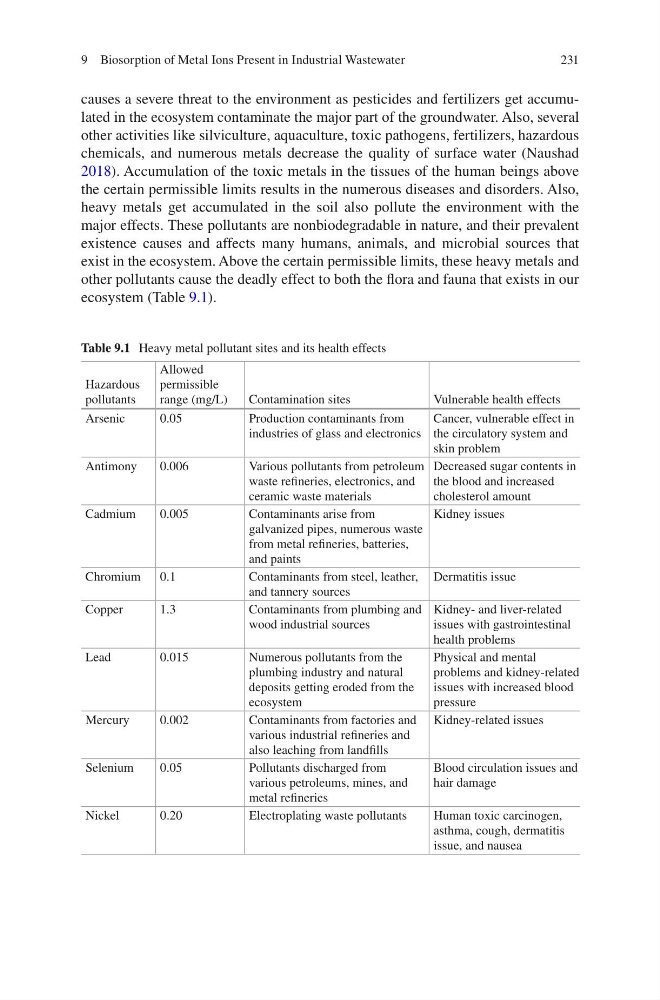
ecosystem (Table 9.1).
Table 9.1 Heavy metal pollutant sites and its health effects
Hazardous
pollutants
Allowed
permissible
range (mg/L)
Contamination sites
Vulnerable health effects
Arsenic
0.05
Production contaminants from
industries of glass and electronics
Cancer, vulnerable effect in
the circulatory system and
skin problem
Antimony
0.006
Various pollutants from petroleum
waste refineries, electronics, and
ceramic waste materials
Decreased sugar contents in
the blood and increased
cholesterol amount
Cadmium
0.005
Contaminants arise from
galvanized pipes, numerous waste
from metal refineries, batteries,
and paints
Kidney issues
Chromium
0.1
Contaminants from steel, leather,
and tannery sources
Dermatitis issue
Copper
1.3
Contaminants from plumbing and
wood industrial sources
Kidney- and liver-related
issues with gastrointestinal
health problems
Lead
0.015
Numerous pollutants from the
plumbing industry and natural
deposits getting eroded from the
ecosystem
Physical and mental
problems and kidney-related
issues with increased blood
pressure
Mercury
0.002
Contaminants from factories and
various industrial refineries and
also leaching from landfills
Kidney-related issues
Selenium
0.05
Pollutants discharged from
various petroleums, mines, and
metal refineries
Blood circulation issues and
hair damage
Nickel
0.20
Electroplating waste pollutants
Human toxic carcinogen,
asthma, cough, dermatitis
issue, and nausea
9 Biosorption of Metal Ions Present in Industrial Wastewater
causes a severe threat to the environment as pesticides and fertilizers get accumulated in the ecosystem contaminate the major part of the groundwater. Also, several
other activities like silviculture, aquaculture, toxic pathogens, fertilizers, hazardous
chemicals, and numerous metals decrease the quality of surface water (Naushad
2018). Accumulation of the toxic metals in the tissues of the human beings above
the certain permissible limits results in the numerous diseases and disorders. Also,
heavy metals get accumulated in the soil also pollute the environment with the
major effects. These pollutants are nonbiodegradable in nature, and their prevalent
existence causes and affects many humans, animals, and microbial sources that
exist in the ecosystem. Above the certain permissible limits, these heavy metals and
other pollutants cause the deadly effect to both the flora and fauna that exists in our
ecosystem (Table 9.1).
Table 9.1 Heavy metal pollutant sites and its health effects
Hazardous
pollutants
Allowed
permissible
range (mg/L)
Contamination sites
Vulnerable health effects
Arsenic
0.05
Production contaminants from
industries of glass and electronics
Cancer, vulnerable effect in
the circulatory system and
skin problem
Antimony
0.006
Various pollutants from petroleum
waste refineries, electronics, and
ceramic waste materials
Decreased sugar contents in
the blood and increased
cholesterol amount
Cadmium
0.005
Contaminants arise from
galvanized pipes, numerous waste
from metal refineries, batteries,
and paints
Kidney issues
Chromium
0.1
Contaminants from steel, leather,
and tannery sources
Dermatitis issue
Copper
1.3
Contaminants from plumbing and
wood industrial sources
Kidney- and liver-related
issues with gastrointestinal
health problems
Lead
0.015
Numerous pollutants from the
plumbing industry and natural
deposits getting eroded from the
ecosystem
Physical and mental
problems and kidney-related
issues with increased blood
pressure
Mercury
0.002
Contaminants from factories and
various industrial refineries and
also leaching from landfills
Kidney-related issues
Selenium
0.05
Pollutants discharged from
various petroleums, mines, and
metal refineries
Blood circulation issues and
hair damage
Nickel
0.20
Electroplating waste pollutants
Human toxic carcinogen,
asthma, cough, dermatitis
issue, and nausea
9 Biosorption of Metal Ions Present in Industrial Wastewater