

8
1.4 Types of Surface Modification and Treatment
of Activated Carbon
Several factors are considered to affect the metal adsorption capacity of activated
carbon, such factors include surface chemistry, surface porosity, and pore size distribution (Gupta et al. 2015a, b). The understanding of these factors prior to the
modification of activated carbon is essential as this will assist in modifying their
physiochemical properties to enhance their affinity for contaminants of great concern in an environmental media, such as in wastewater (Rivera-Utrilla et al. 2011).
Chemical modification of the surface of activated carbon significantly changes their
adsorption capacities since adsorption process has to do with retaining of contaminants at the surface of the adsorbents. Surface chemistry of activated carbon is
dependent on the quantity and inherent characteristic of functional groups present
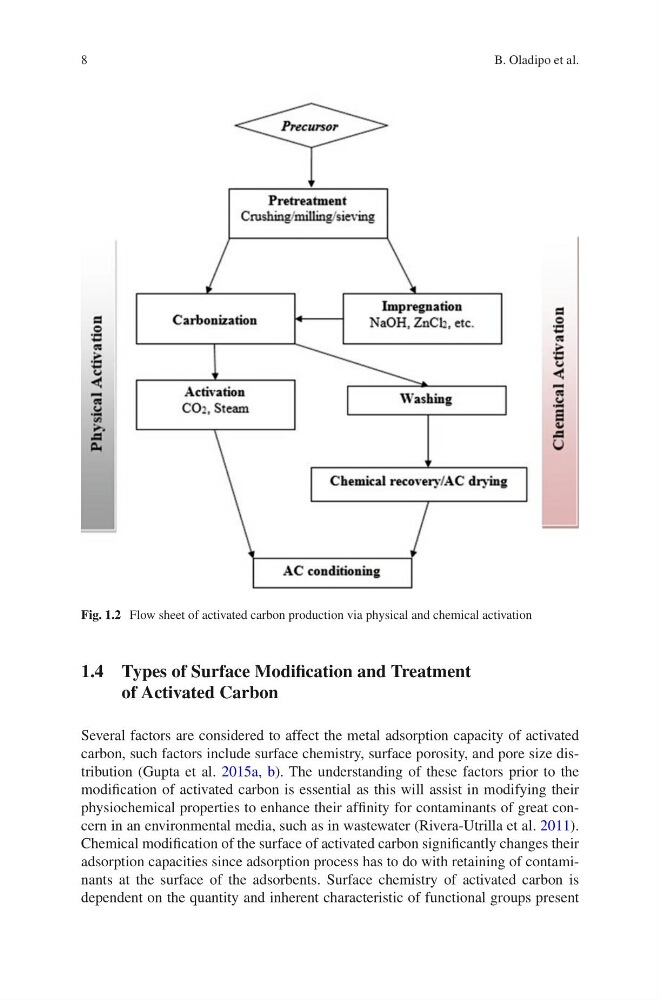
Fig. 1.2 Flow sheet of activated carbon production via physical and chemical activation
B. Oladipo et al.
1.4 Types of Surface Modification and Treatment
of Activated Carbon
Several factors are considered to affect the metal adsorption capacity of activated
carbon, such factors include surface chemistry, surface porosity, and pore size distribution (Gupta et al. 2015a, b). The understanding of these factors prior to the
modification of activated carbon is essential as this will assist in modifying their
physiochemical properties to enhance their affinity for contaminants of great concern in an environmental media, such as in wastewater (Rivera-Utrilla et al. 2011).
Chemical modification of the surface of activated carbon significantly changes their
adsorption capacities since adsorption process has to do with retaining of contaminants at the surface of the adsorbents. Surface chemistry of activated carbon is
dependent on the quantity and inherent characteristic of functional groups present
Fig. 1.2 Flow sheet of activated carbon production via physical and chemical activation
B. Oladipo et al.