

9
(Yang et al. 2019). These functional groups are attached to heteroatoms at the carbon surface, and the functional groups are therefore categorized based on the heteroatom attached at the carbon surface as oxygen-containing, nitrogen-containing,
and sulfur-containing functional groups (Yang et al. 2019). Reagents usually
employed for chemical modification include basic solutions, organic acids, organic
compounds, and oxidizing agents, where the functional groups are covalently and
chemically bonded to the surface of the activated carbon (Gupta et al. 2015b).
Rivera-Utrilla et al. (2011) broadly categorized surface modification and treatment
techniques of activated carbon into four, viz., (1) oxidation, (2) sulfuration, (3)
ammonification, and (4) coordinated ligand anchorage.
1.4.1 Surface Modification by Oxidation
The functional groups with oxygen attachment such as –OH, –COOH, –C–O, and
–C=O are commonly created at the surface of carbon adsorbent by oxidation (Lu
et al. 2015; Wepasnick et al. 2011). Carbon materials are oxidized under reflux condition in the presence of some reagents such as the inorganic acids (HNO 3 , H 2 SO 4 )
and oxidizing agents (H 2 O 2 , KMnO 4 , NaOCl) (Sarkar et al. 2018; Xue et al. 2012).
Oxidation of activated carbon can either be dry oxidation or wet oxidation. In dry
oxidation, oxidizing gases like O 3 , CO 2 , and steam are employed, while the wet
oxidation involves oxidizing solutions like H 2 O 2 , aqueous O 3 , and HNO 3 (RiveraUtrilla et al. 2011). The amount of oxygen on the carbon surface can be controlled
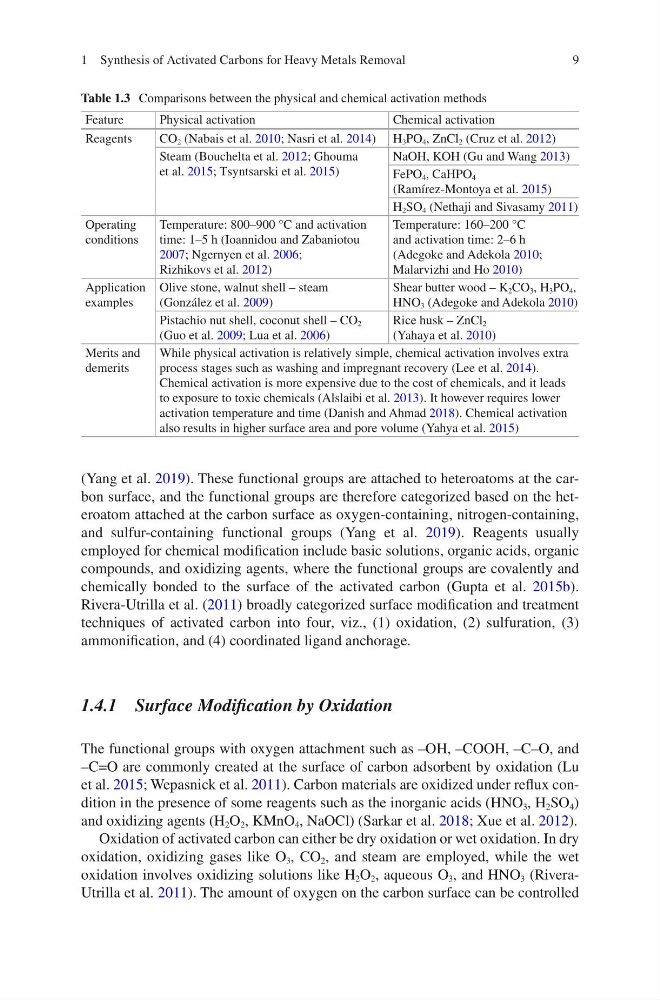
Table 1.3 Comparisons between the physical and chemical activation methods
Feature
Physical activation
Chemical activation
Reagents
CO 2 (Nabais et al. 2010; Nasri et al. 2014) H 3 PO 4 , ZnCl 2 (Cruz et al. 2012)
Steam (Bouchelta et al. 2012; Ghouma
et al. 2015; Tsyntsarski et al. 2015)
NaOH, KOH (Gu and Wang 2013)
FePO 4 , CaHPO 4
(Ramírez-Montoya et al. 2015)
H 2 SO 4 (Nethaji and Sivasamy 2011)
Operating
conditions
Temperature: 800–900 °C and activation
time: 1–5 h (Ioannidou and Zabaniotou
2007; Ngernyen et al. 2006;
Rizhikovs et al. 2012)
Temperature: 160–200 °C
and activation time: 2–6 h
(Adegoke and Adekola 2010;
Malarvizhi and Ho 2010)
Application
examples
Olive stone, walnut shell – steam
(González et al. 2009)
Shear butter wood – K 2 CO 3 , H 3 PO 4 ,
HNO 3 (Adegoke and Adekola 2010)
Pistachio nut shell, coconut shell – CO 2
(Guo et al. 2009; Lua et al. 2006)
Rice husk – ZnCl 2
(Yahaya et al. 2010)
Merits and
demerits
While physical activation is relatively simple, chemical activation involves extra
process stages such as washing and impregnant recovery (Lee et al. 2014).
Chemical activation is more expensive due to the cost of chemicals, and it leads
to exposure to toxic chemicals (Alslaibi et al. 2013). It however requires lower
activation temperature and time (Danish and Ahmad 2018). Chemical activation
also results in higher surface area and pore volume (Yahya et al. 2015)
1 Synthesis of Activated Carbons for Heavy Metals Removal
(Yang et al. 2019). These functional groups are attached to heteroatoms at the carbon surface, and the functional groups are therefore categorized based on the heteroatom attached at the carbon surface as oxygen-containing, nitrogen-containing,
and sulfur-containing functional groups (Yang et al. 2019). Reagents usually
employed for chemical modification include basic solutions, organic acids, organic
compounds, and oxidizing agents, where the functional groups are covalently and
chemically bonded to the surface of the activated carbon (Gupta et al. 2015b).
Rivera-Utrilla et al. (2011) broadly categorized surface modification and treatment
techniques of activated carbon into four, viz., (1) oxidation, (2) sulfuration, (3)
ammonification, and (4) coordinated ligand anchorage.
1.4.1 Surface Modification by Oxidation
The functional groups with oxygen attachment such as –OH, –COOH, –C–O, and
–C=O are commonly created at the surface of carbon adsorbent by oxidation (Lu
et al. 2015; Wepasnick et al. 2011). Carbon materials are oxidized under reflux condition in the presence of some reagents such as the inorganic acids (HNO 3 , H 2 SO 4 )
and oxidizing agents (H 2 O 2 , KMnO 4 , NaOCl) (Sarkar et al. 2018; Xue et al. 2012).
Oxidation of activated carbon can either be dry oxidation or wet oxidation. In dry
oxidation, oxidizing gases like O 3 , CO 2 , and steam are employed, while the wet
oxidation involves oxidizing solutions like H 2 O 2 , aqueous O 3 , and HNO 3 (RiveraUtrilla et al. 2011). The amount of oxygen on the carbon surface can be controlled
Table 1.3 Comparisons between the physical and chemical activation methods
Feature
Physical activation
Chemical activation
Reagents
CO 2 (Nabais et al. 2010; Nasri et al. 2014) H 3 PO 4 , ZnCl 2 (Cruz et al. 2012)
Steam (Bouchelta et al. 2012; Ghouma
et al. 2015; Tsyntsarski et al. 2015)
NaOH, KOH (Gu and Wang 2013)
FePO 4 , CaHPO 4
(Ramírez-Montoya et al. 2015)
H 2 SO 4 (Nethaji and Sivasamy 2011)
Operating
conditions
Temperature: 800–900 °C and activation
time: 1–5 h (Ioannidou and Zabaniotou
2007; Ngernyen et al. 2006;
Rizhikovs et al. 2012)
Temperature: 160–200 °C
and activation time: 2–6 h
(Adegoke and Adekola 2010;
Malarvizhi and Ho 2010)
Application
examples
Olive stone, walnut shell – steam
(González et al. 2009)
Shear butter wood – K 2 CO 3 , H 3 PO 4 ,
HNO 3 (Adegoke and Adekola 2010)
Pistachio nut shell, coconut shell – CO 2
(Guo et al. 2009; Lua et al. 2006)
Rice husk – ZnCl 2
(Yahaya et al. 2010)
Merits and
demerits
While physical activation is relatively simple, chemical activation involves extra
process stages such as washing and impregnant recovery (Lee et al. 2014).
Chemical activation is more expensive due to the cost of chemicals, and it leads
to exposure to toxic chemicals (Alslaibi et al. 2013). It however requires lower
activation temperature and time (Danish and Ahmad 2018). Chemical activation
also results in higher surface area and pore volume (Yahya et al. 2015)
1 Synthesis of Activated Carbons for Heavy Metals Removal