

treated wastewater for gardening or irrigation as
well as for safe disposal into a waterbody or
natural drain. However, if further treatment is
required to meet other water quality standards,
then additional treatment units will be required.
Due to the lack of appropriate disposal, the main
purpose of the treatment unit is the safe disposal
of wastewater and to improve deteriorating
environmental and hygiene conditions.
(2) Appropriate irrigation practices
In the case of wastewater-irrigated villages, most
of the farmers use overland irrigation (flood
irrigation) and ridge and furrow irrigation, but
farmers with larger farmlands mostly use sprinkler systems. However, it is recommended to
follow proper irrigation practices to reduce
pathogen load as follows:
• Localized irrigation techniques such as furrow
or drip irrigation can protect farmers by
reducing pathogen load
• Pre-harvest irrigation control such as cessation
of irrigation before harvest
• UV (ultraviolet) exposure—Storing water in
polishing ponds/lagoon lakes under sunlight
for some period
• Dilution such as mixing of raw wastewater
with freshwater can serve as a means to
reduce pathogen load. Large dilution rates
will, however, be required to eliminate
pathogen contamination.
• Pathogen die-off before consumption can be
achieved by keeping an interval between final
irrigation and consumption.
(3) Crop restrictions
Certain crop restrictions are to be followed when
using treated wastewater to irrigate food crops. The
Sanitation Safety Planning by WHO (2016) recommends using wastewater to irrigate food crops
where the fruit or leaves are above the ground and
not in direct contact with the soil (e.g., root crops
and leafy vegetables such as radish, carrot, and
spinach). The latter crops and food crops that are
eaten raw, such as salad leaves, must not be irrigated with wastewater as these are directly in
contact with soil and wastewater. The recommended crops are non-food crops, such as cotton
and flowers; food crops that have to be cooked
before consumption; tall-growing crops, such as
beans; and crops that are processed or canned
before consumption, such as peas (WHO 2016).
(4) Safety measures for crop handlers
Hookworm and Ascaris infestation, enteric fever,
cholera, Helicobacter pylori infection, and diarrheal diseases are some diseases associated with
wastewater farming in the exposure groups
(Fattal et al. 1986; Fuhrimann et al. 2016).
Recommended measures to protect crop handlers
are as follows (see also Alberta Government
2012):
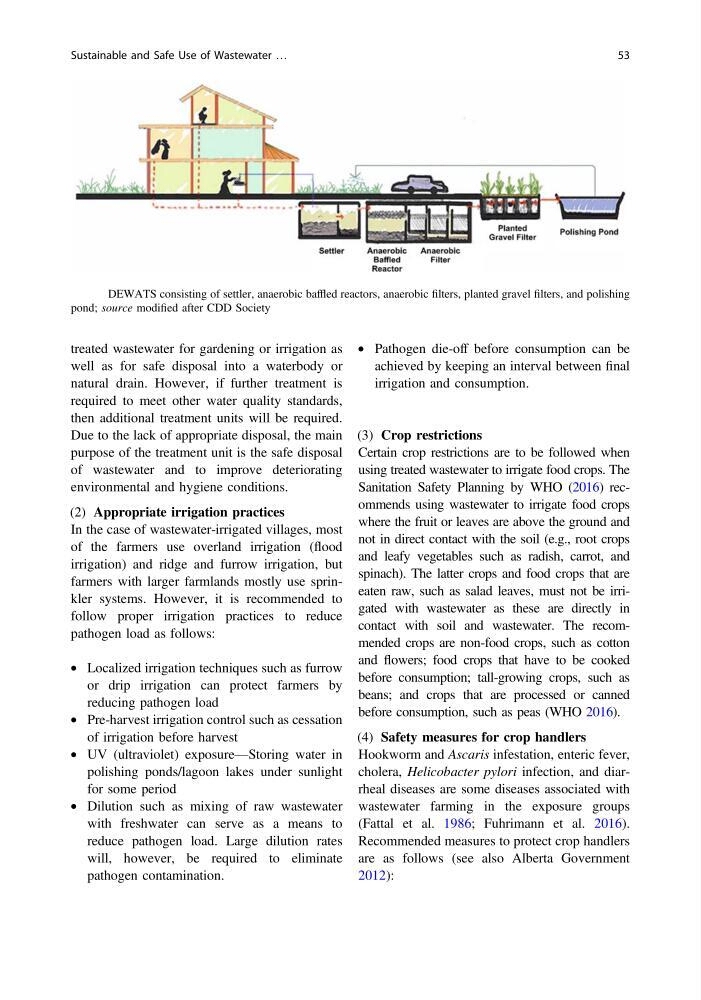
Fig. 8 DEWATS consisting of settler, anaerobic baffled reactors, anaerobic filters, planted gravel filters, and polishing
pond; source modified after CDD Society
Sustainable and Safe Use of Wastewater …
53
well as for safe disposal into a waterbody or
natural drain. However, if further treatment is
required to meet other water quality standards,
then additional treatment units will be required.
Due to the lack of appropriate disposal, the main
purpose of the treatment unit is the safe disposal
of wastewater and to improve deteriorating
environmental and hygiene conditions.
(2) Appropriate irrigation practices
In the case of wastewater-irrigated villages, most
of the farmers use overland irrigation (flood
irrigation) and ridge and furrow irrigation, but
farmers with larger farmlands mostly use sprinkler systems. However, it is recommended to
follow proper irrigation practices to reduce
pathogen load as follows:
• Localized irrigation techniques such as furrow
or drip irrigation can protect farmers by
reducing pathogen load
• Pre-harvest irrigation control such as cessation
of irrigation before harvest
• UV (ultraviolet) exposure—Storing water in
polishing ponds/lagoon lakes under sunlight
for some period
• Dilution such as mixing of raw wastewater
with freshwater can serve as a means to
reduce pathogen load. Large dilution rates
will, however, be required to eliminate
pathogen contamination.
• Pathogen die-off before consumption can be
achieved by keeping an interval between final
irrigation and consumption.
(3) Crop restrictions
Certain crop restrictions are to be followed when
using treated wastewater to irrigate food crops. The
Sanitation Safety Planning by WHO (2016) recommends using wastewater to irrigate food crops
where the fruit or leaves are above the ground and
not in direct contact with the soil (e.g., root crops
and leafy vegetables such as radish, carrot, and
spinach). The latter crops and food crops that are
eaten raw, such as salad leaves, must not be irrigated with wastewater as these are directly in
contact with soil and wastewater. The recommended crops are non-food crops, such as cotton
and flowers; food crops that have to be cooked
before consumption; tall-growing crops, such as
beans; and crops that are processed or canned
before consumption, such as peas (WHO 2016).
(4) Safety measures for crop handlers
Hookworm and Ascaris infestation, enteric fever,
cholera, Helicobacter pylori infection, and diarrheal diseases are some diseases associated with
wastewater farming in the exposure groups
(Fattal et al. 1986; Fuhrimann et al. 2016).
Recommended measures to protect crop handlers
are as follows (see also Alberta Government
2012):
Fig. 8 DEWATS consisting of settler, anaerobic baffled reactors, anaerobic filters, planted gravel filters, and polishing
pond; source modified after CDD Society
Sustainable and Safe Use of Wastewater …
53