

highly polluted wastewater (e.g. dyeing facilities). The secondary class of industry served as
an intermediate category.
In order to create the profiles of the individual
industries, the verified data were included in the
industry profiles. After the validation of the
profiles, the input–output-scheme (Fig. 4) was
assessed in order to find out the feasible connection of the water fluxes amongst industries
along the flux chain with the increasing pollution, deriving primary, secondary and tertiary
users. Figure 4 shows an input–output-scheme,
how the flux chain of industries could be linked
after a categorization in primary, secondary and
tertiary users. After prioritization, linking principles for the respective industries have been
developed as they are of fundamental importance
for sharing the wastewater resources. The following options have been considered: bilateral
principle, nucleus principle, and cascade principle (von Koerber 2016), as illustrated in Fig. 5.
Using the company classification, its resulting
wastewater, and the requirements for the process
water of the respective industries, the linking
options between the companies were assessed
through an input–output-scheme (Fig. 4)
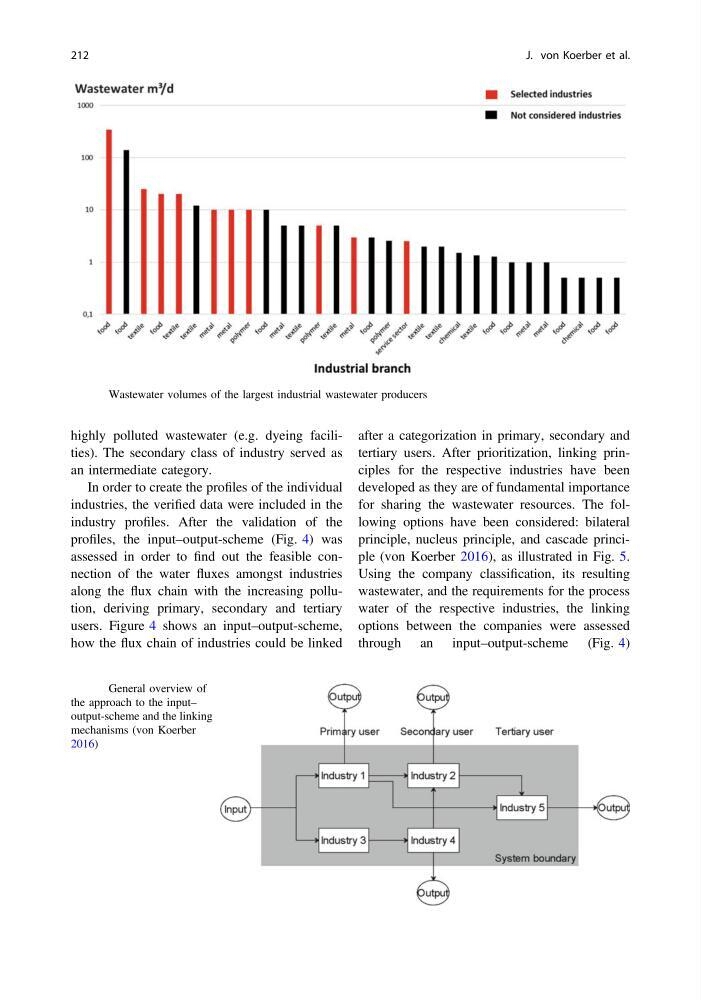
Fig. 3 Wastewater volumes of the largest industrial wastewater producers
Fig. 4 General overview of
the approach to the input–
output-scheme and the linking
mechanisms (von Koerber
2016)
212
J. von Koerber et al.
an intermediate category.
In order to create the profiles of the individual
industries, the verified data were included in the
industry profiles. After the validation of the
profiles, the input–output-scheme (Fig. 4) was
assessed in order to find out the feasible connection of the water fluxes amongst industries
along the flux chain with the increasing pollution, deriving primary, secondary and tertiary
users. Figure 4 shows an input–output-scheme,
how the flux chain of industries could be linked
after a categorization in primary, secondary and
tertiary users. After prioritization, linking principles for the respective industries have been
developed as they are of fundamental importance
for sharing the wastewater resources. The following options have been considered: bilateral
principle, nucleus principle, and cascade principle (von Koerber 2016), as illustrated in Fig. 5.
Using the company classification, its resulting
wastewater, and the requirements for the process
water of the respective industries, the linking
options between the companies were assessed
through an input–output-scheme (Fig. 4)
Fig. 3 Wastewater volumes of the largest industrial wastewater producers
Fig. 4 General overview of
the approach to the input–
output-scheme and the linking
mechanisms (von Koerber
2016)
212
J. von Koerber et al.