

81
are causing the dispersal of radiotoxic elements in the environment (Carvalho et al.
2006). Sulfuric acid used for in situ leaching might have infiltrated into groundwater, whereas the contributions from wind erosion and radon emanation enhanced the
environmental radioactivity levels, causing the exposure to ionizing radiation above
the natural background levels (Neiva et al. 2014).
An assessment of environmental radioactivity, including the Urgeiriça mine,
revealed an average ambient radiation of 2.5 mSv a
−1
at the outside of mining areas
in Canas de Senhorim. However, the inside areas affected by the mining activities
showed an elevated radiation doses up to 41.2 mSv a
−1
at the ore discharge area during the milling operation. At the residual dumpsite for extracted ore, the average
ambient radiation (18.6 mSv a
–1
containing elevated concentrations of U-descendants,
like
230
Th,
226
Ra and
210
Pb) was higher than that of the sludge dumpsite (3.4 mSv a
−1
).
The acid water of mine drainage from Urgeiriça also displayed a high radionuclide
concentration that may runoff to surface water reservoirs and confirmed the role of
these transport pathways contaminating the Ribeira da Pantanha by three orders of
magnitude (Carvalho et al. 2006; Falcão et al. 2006). The analysis of radio-elements
in agriculture soils and water from well used for irrigation purpose has also exhibited
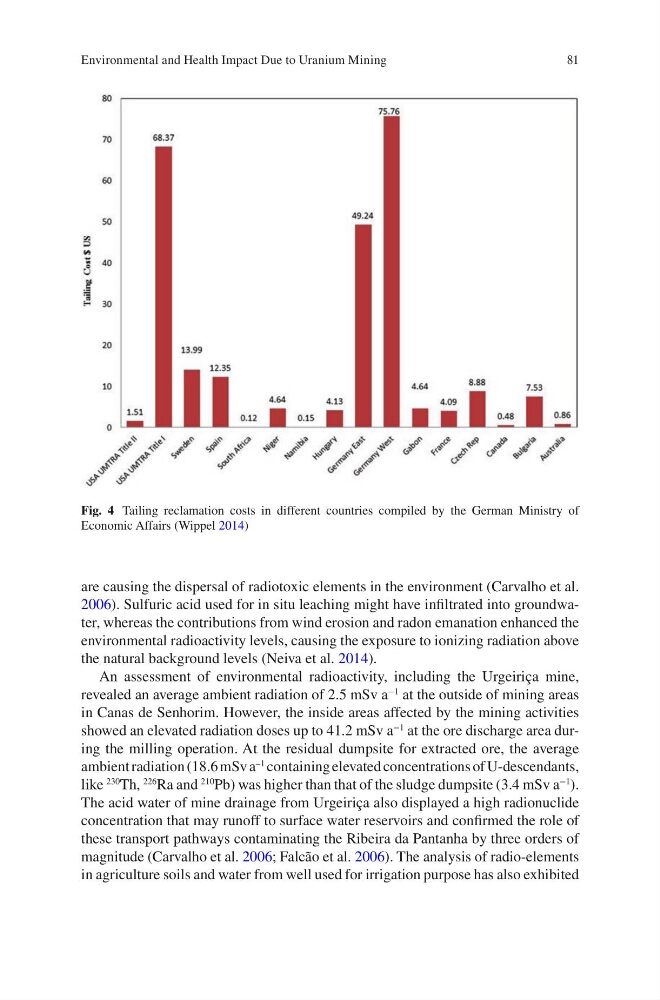
Fig. 4 Tailing reclamation costs in different countries compiled by the German Ministry of
Economic Affairs (Wippel 2014)
Environmental and Health Impact Due to Uranium Mining
are causing the dispersal of radiotoxic elements in the environment (Carvalho et al.
2006). Sulfuric acid used for in situ leaching might have infiltrated into groundwater, whereas the contributions from wind erosion and radon emanation enhanced the
environmental radioactivity levels, causing the exposure to ionizing radiation above
the natural background levels (Neiva et al. 2014).
An assessment of environmental radioactivity, including the Urgeiriça mine,
revealed an average ambient radiation of 2.5 mSv a
−1
at the outside of mining areas
in Canas de Senhorim. However, the inside areas affected by the mining activities
showed an elevated radiation doses up to 41.2 mSv a
−1
at the ore discharge area during the milling operation. At the residual dumpsite for extracted ore, the average
ambient radiation (18.6 mSv a
–1
containing elevated concentrations of U-descendants,
like
230
Th,
226
Ra and
210
Pb) was higher than that of the sludge dumpsite (3.4 mSv a
−1
).
The acid water of mine drainage from Urgeiriça also displayed a high radionuclide
concentration that may runoff to surface water reservoirs and confirmed the role of
these transport pathways contaminating the Ribeira da Pantanha by three orders of
magnitude (Carvalho et al. 2006; Falcão et al. 2006). The analysis of radio-elements
in agriculture soils and water from well used for irrigation purpose has also exhibited
Fig. 4 Tailing reclamation costs in different countries compiled by the German Ministry of
Economic Affairs (Wippel 2014)
Environmental and Health Impact Due to Uranium Mining