

80
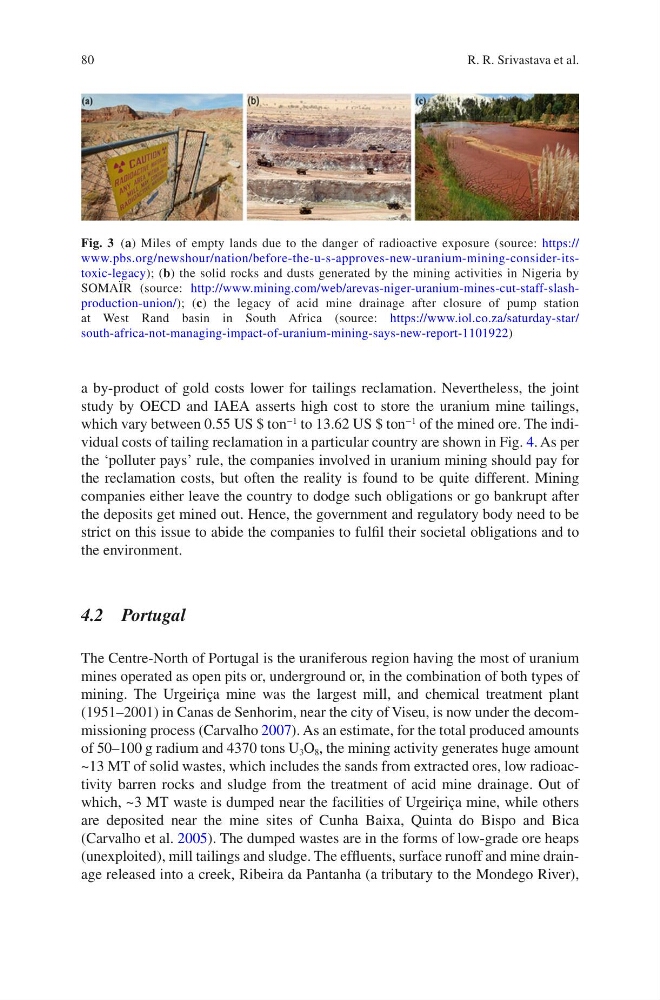
Fig. 3 (a) Miles of empty lands due to the danger of radioactive exposure (source: https://
www.pbs.org/newshour/nation/before-the-u-s-approves-new-uranium-mining-consider-itstoxic-legacy); (b) the solid rocks and dusts generated by the mining activities in Nigeria by
SOMAΪR (source: http://www.mining.com/web/arevas-niger-uranium-mines-cut-staff-slashproduction-union/); (c) the legacy of acid mine drainage after closure of pump station
at West Rand basin in South Africa (source: https://www.iol.co.za/saturday-star/
south-africa-not-managing-impact-of-uranium-mining-says-new-report-1101922)
a by-product of gold costs lower for tailings reclamation. Nevertheless, the joint
study by OECD and IAEA asserts high cost to store the uranium mine tailings,
which vary between 0.55 US $ ton
−1
to 13.62 US $ ton
−1
of the mined ore. The individual costs of tailing reclamation in a particular country are shown in Fig. 4. As per
the ‘polluter pays’ rule, the companies involved in uranium mining should pay for
the reclamation costs, but often the reality is found to be quite different. Mining
companies either leave the country to dodge such obligations or go bankrupt after
the deposits get mined out. Hence, the government and regulatory body need to be
strict on this issue to abide the companies to fulfil their societal obligations and to
the environment.
4.2 Portugal
The Centre-North of Portugal is the uraniferous region having the most of uranium
mines operated as open pits or, underground or, in the combination of both types of
mining. The Urgeiriça mine was the largest mill, and chemical treatment plant
(1951–2001) in Canas de Senhorim, near the city of Viseu, is now under the decommissioning process (Carvalho 2007). As an estimate, for the total produced amounts
of 50–100 g radium and 4370 tons U 3 O 8 , the mining activity generates huge amount
~13 MT of solid wastes, which includes the sands from extracted ores, low radioactivity barren rocks and sludge from the treatment of acid mine drainage. Out of
which, ~3 MT waste is dumped near the facilities of Urgeiriça mine, while others
are deposited near the mine sites of Cunha Baixa, Quinta do Bispo and Bica
(Carvalho et al. 2005). The dumped wastes are in the forms of low-grade ore heaps
(unexploited), mill tailings and sludge. The effluents, surface runoff and mine drainage released into a creek, Ribeira da Pantanha (a tributary to the Mondego River),
R. R. Srivastava et al.
Fig. 3 (a) Miles of empty lands due to the danger of radioactive exposure (source: https://
www.pbs.org/newshour/nation/before-the-u-s-approves-new-uranium-mining-consider-itstoxic-legacy); (b) the solid rocks and dusts generated by the mining activities in Nigeria by
SOMAΪR (source: http://www.mining.com/web/arevas-niger-uranium-mines-cut-staff-slashproduction-union/); (c) the legacy of acid mine drainage after closure of pump station
at West Rand basin in South Africa (source: https://www.iol.co.za/saturday-star/
south-africa-not-managing-impact-of-uranium-mining-says-new-report-1101922)
a by-product of gold costs lower for tailings reclamation. Nevertheless, the joint
study by OECD and IAEA asserts high cost to store the uranium mine tailings,
which vary between 0.55 US $ ton
−1
to 13.62 US $ ton
−1
of the mined ore. The individual costs of tailing reclamation in a particular country are shown in Fig. 4. As per
the ‘polluter pays’ rule, the companies involved in uranium mining should pay for
the reclamation costs, but often the reality is found to be quite different. Mining
companies either leave the country to dodge such obligations or go bankrupt after
the deposits get mined out. Hence, the government and regulatory body need to be
strict on this issue to abide the companies to fulfil their societal obligations and to
the environment.
4.2 Portugal
The Centre-North of Portugal is the uraniferous region having the most of uranium
mines operated as open pits or, underground or, in the combination of both types of
mining. The Urgeiriça mine was the largest mill, and chemical treatment plant
(1951–2001) in Canas de Senhorim, near the city of Viseu, is now under the decommissioning process (Carvalho 2007). As an estimate, for the total produced amounts
of 50–100 g radium and 4370 tons U 3 O 8 , the mining activity generates huge amount
~13 MT of solid wastes, which includes the sands from extracted ores, low radioactivity barren rocks and sludge from the treatment of acid mine drainage. Out of
which, ~3 MT waste is dumped near the facilities of Urgeiriça mine, while others
are deposited near the mine sites of Cunha Baixa, Quinta do Bispo and Bica
(Carvalho et al. 2005). The dumped wastes are in the forms of low-grade ore heaps
(unexploited), mill tailings and sludge. The effluents, surface runoff and mine drainage released into a creek, Ribeira da Pantanha (a tributary to the Mondego River),
R. R. Srivastava et al.