

14
emitted from such items was relatively low. However, later it was found that in some
other similar factories, the workers engaged in the use of radium paints were in
grave danger. Unfortunately, this was discovered only after some time when the
consequences of internal exposure became visible and had produced terrible health
effects. Radium, as an alpha emitter, is characterized by extremely high radiotoxicity since all energy of the radiation is absorbed in small volumes of tissues inside the
body. This was the case of the so-called radium girls in the USA (Laurence 1979;
Clark 1997; Abrams 2011).
The fine yellow powder which contained only a minuscule amount of radium
was mixed with zinc sulphide, with which the radium reacted to give a brilliant
glow. The effect was breathtaking. The demand at such factories showed no signs of
slowing; more and more girls were recruited to paint dials. They used luminous
radium paints to make the numbers on watches, clocks and aeronautical dials glow
brightly in the dark.
It is estimated that more than 4000 workers worked in various factories in the
USA and Canada to paint watch faces with paints containing radium. The brushes
would lose shape after a few strokes, so some supervisors encouraged their workers
to point the brushes with their lips (“lip, dip, paint”) or use their tongues to keep
them sharp. Because the girls were not aware of any danger, they painted their nails,
teeth and faces for fun with the deadly paint. After some time, many girls who
painted dials began to fall ill with a mysterious disease. It was later concluded that
the main reasons behind this illness was extensive internal contamination of the
radium girls as a result of applying the recommended technique they adopted
(Fig. 13). During these operations, they often swallowed some paint containing
radium. A number of these workers suffered from bone cancer, which usually
affected their jaws. It was only in the 1970s, when radium was no longer allowed to
use on watch and clock dials.
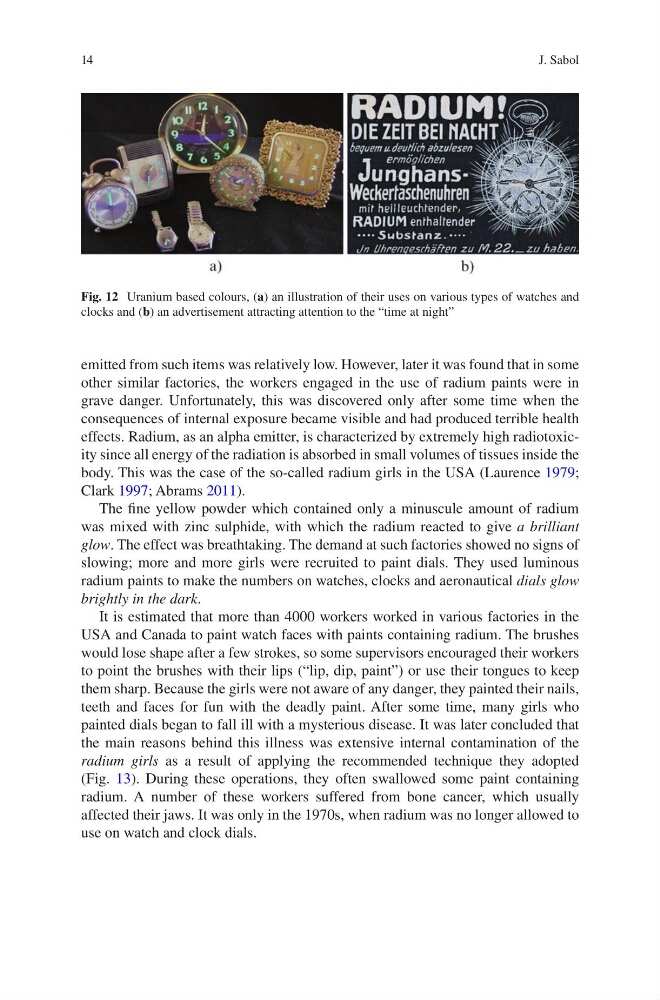
Fig. 12 Uranium based colours, (a) an illustration of their uses on various types of watches and
clocks and (b) an advertisement attracting attention to the “time at night”
J. Sabol
emitted from such items was relatively low. However, later it was found that in some
other similar factories, the workers engaged in the use of radium paints were in
grave danger. Unfortunately, this was discovered only after some time when the
consequences of internal exposure became visible and had produced terrible health
effects. Radium, as an alpha emitter, is characterized by extremely high radiotoxicity since all energy of the radiation is absorbed in small volumes of tissues inside the
body. This was the case of the so-called radium girls in the USA (Laurence 1979;
Clark 1997; Abrams 2011).
The fine yellow powder which contained only a minuscule amount of radium
was mixed with zinc sulphide, with which the radium reacted to give a brilliant
glow. The effect was breathtaking. The demand at such factories showed no signs of
slowing; more and more girls were recruited to paint dials. They used luminous
radium paints to make the numbers on watches, clocks and aeronautical dials glow
brightly in the dark.
It is estimated that more than 4000 workers worked in various factories in the
USA and Canada to paint watch faces with paints containing radium. The brushes
would lose shape after a few strokes, so some supervisors encouraged their workers
to point the brushes with their lips (“lip, dip, paint”) or use their tongues to keep
them sharp. Because the girls were not aware of any danger, they painted their nails,
teeth and faces for fun with the deadly paint. After some time, many girls who
painted dials began to fall ill with a mysterious disease. It was later concluded that
the main reasons behind this illness was extensive internal contamination of the
radium girls as a result of applying the recommended technique they adopted
(Fig. 13). During these operations, they often swallowed some paint containing
radium. A number of these workers suffered from bone cancer, which usually
affected their jaws. It was only in the 1970s, when radium was no longer allowed to
use on watch and clock dials.
Fig. 12 Uranium based colours, (a) an illustration of their uses on various types of watches and
clocks and (b) an advertisement attracting attention to the “time at night”
J. Sabol