

13.2 Role of Microorganisms
363
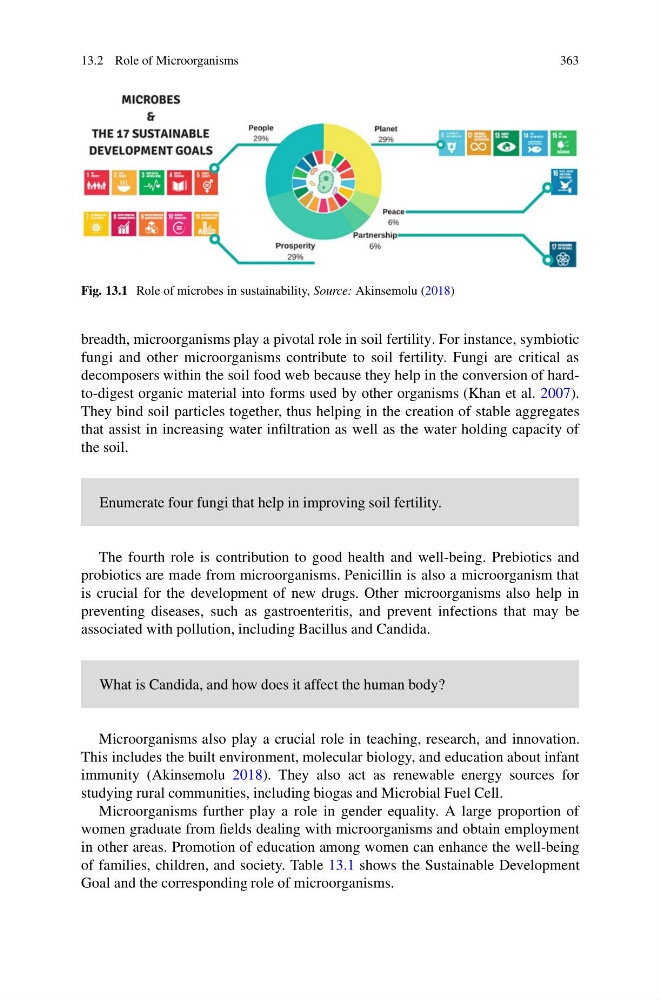
Fig. 13.1 Role of microbes in sustainability, Source: Akinsemolu (2018)
breadth, microorganisms play a pivotal role in soil fertility. For instance, symbiotic
fungi and other microorganisms contribute to soil fertility. Fungi are critical as
decomposers within the soil food web because they help in the conversion of hardto-digest organic material into forms used by other organisms (Khan et al. 2007).
They bind soil particles together, thus helping in the creation of stable aggregates
that assist in increasing water infiltration as well as the water holding capacity of
the soil.
Enumerate four fungi that help in improving soil fertility.
The fourth role is contribution to good health and well-being. Prebiotics and
probiotics are made from microorganisms. Penicillin is also a microorganism that
is crucial for the development of new drugs. Other microorganisms also help in
preventing diseases, such as gastroenteritis, and prevent infections that may be
associated with pollution, including Bacillus and Candida.
What is Candida, and how does it affect the human body?
Microorganisms also play a crucial role in teaching, research, and innovation.
This includes the built environment, molecular biology, and education about infant
immunity (Akinsemolu 2018). They also act as renewable energy sources for
studying rural communities, including biogas and Microbial Fuel Cell.
Microorganisms further play a role in gender equality. A large proportion of
women graduate from fields dealing with microorganisms and obtain employment
in other areas. Promotion of education among women can enhance the well-being
of families, children, and society. Table 13.1 shows the Sustainable Development
Goal and the corresponding role of microorganisms.
363
Fig. 13.1 Role of microbes in sustainability, Source: Akinsemolu (2018)
breadth, microorganisms play a pivotal role in soil fertility. For instance, symbiotic
fungi and other microorganisms contribute to soil fertility. Fungi are critical as
decomposers within the soil food web because they help in the conversion of hardto-digest organic material into forms used by other organisms (Khan et al. 2007).
They bind soil particles together, thus helping in the creation of stable aggregates
that assist in increasing water infiltration as well as the water holding capacity of
the soil.
Enumerate four fungi that help in improving soil fertility.
The fourth role is contribution to good health and well-being. Prebiotics and
probiotics are made from microorganisms. Penicillin is also a microorganism that
is crucial for the development of new drugs. Other microorganisms also help in
preventing diseases, such as gastroenteritis, and prevent infections that may be
associated with pollution, including Bacillus and Candida.
What is Candida, and how does it affect the human body?
Microorganisms also play a crucial role in teaching, research, and innovation.
This includes the built environment, molecular biology, and education about infant
immunity (Akinsemolu 2018). They also act as renewable energy sources for
studying rural communities, including biogas and Microbial Fuel Cell.
Microorganisms further play a role in gender equality. A large proportion of
women graduate from fields dealing with microorganisms and obtain employment
in other areas. Promotion of education among women can enhance the well-being
of families, children, and society. Table 13.1 shows the Sustainable Development
Goal and the corresponding role of microorganisms.