

364
13 The Future: Achieving Sustainability
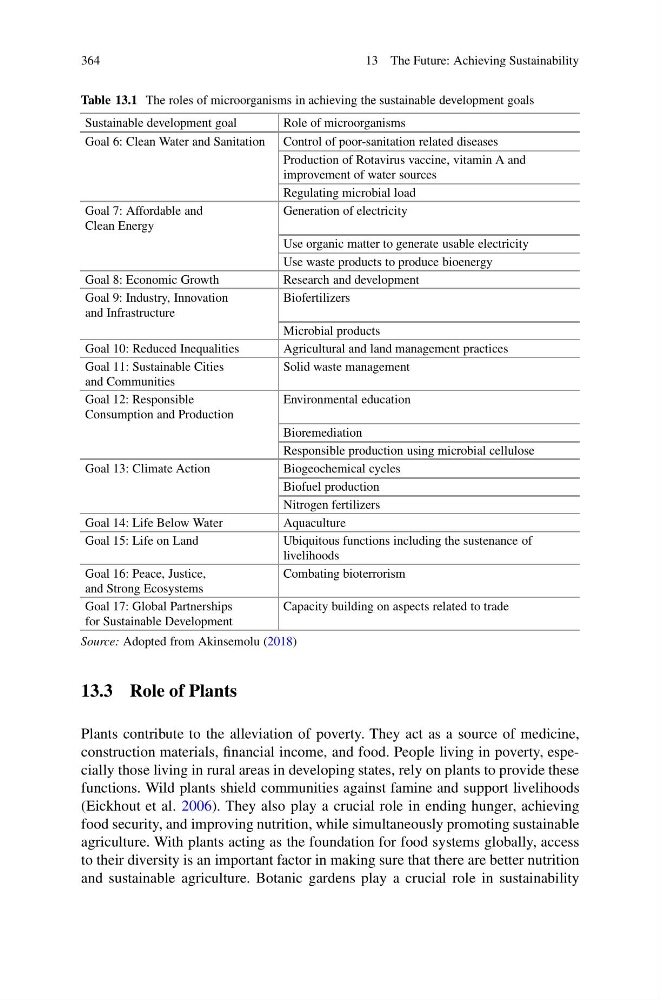
Table 13.1 The roles of microorganisms in achieving the sustainable development goals
Sustainable development goal
Role of microorganisms
Goal 6: Clean Water and Sanitation Control of poor-sanitation related diseases
Production of Rotavirus vaccine, vitamin A and
improvement of water sources
Regulating microbial load
Goal 7: Affordable and
Clean Energy
Generation of electricity
Use organic matter to generate usable electricity
Use waste products to produce bioenergy
Goal 8: Economic Growth
Research and development
Goal 9: Industry, Innovation
and Infrastructure
Biofertilizers
Microbial products
Goal 10: Reduced Inequalities
Agricultural and land management practices
Goal 11: Sustainable Cities
and Communities
Solid waste management
Goal 12: Responsible
Consumption and Production
Environmental education
Bioremediation
Responsible production using microbial cellulose
Goal 13: Climate Action
Biogeochemical cycles
Biofuel production
Nitrogen fertilizers
Goal 14: Life Below Water
Aquaculture
Goal 15: Life on Land
Ubiquitous functions including the sustenance of
livelihoods
Goal 16: Peace, Justice,
and Strong Ecosystems
Combating bioterrorism
Goal 17: Global Partnerships
for Sustainable Development
Capacity building on aspects related to trade
Source: Adopted from Akinsemolu (2018)
13.3 Role of Plants
Plants contribute to the alleviation of poverty. They act as a source of medicine,
construction materials, financial income, and food. People living in poverty, especially those living in rural areas in developing states, rely on plants to provide these
functions. Wild plants shield communities against famine and support livelihoods
(Eickhout et al. 2006). They also play a crucial role in ending hunger, achieving
food security, and improving nutrition, while simultaneously promoting sustainable
agriculture. With plants acting as the foundation for food systems globally, access
to their diversity is an important factor in making sure that there are better nutrition
and sustainable agriculture. Botanic gardens play a crucial role in sustainability
13 The Future: Achieving Sustainability
Table 13.1 The roles of microorganisms in achieving the sustainable development goals
Sustainable development goal
Role of microorganisms
Goal 6: Clean Water and Sanitation Control of poor-sanitation related diseases
Production of Rotavirus vaccine, vitamin A and
improvement of water sources
Regulating microbial load
Goal 7: Affordable and
Clean Energy
Generation of electricity
Use organic matter to generate usable electricity
Use waste products to produce bioenergy
Goal 8: Economic Growth
Research and development
Goal 9: Industry, Innovation
and Infrastructure
Biofertilizers
Microbial products
Goal 10: Reduced Inequalities
Agricultural and land management practices
Goal 11: Sustainable Cities
and Communities
Solid waste management
Goal 12: Responsible
Consumption and Production
Environmental education
Bioremediation
Responsible production using microbial cellulose
Goal 13: Climate Action
Biogeochemical cycles
Biofuel production
Nitrogen fertilizers
Goal 14: Life Below Water
Aquaculture
Goal 15: Life on Land
Ubiquitous functions including the sustenance of
livelihoods
Goal 16: Peace, Justice,
and Strong Ecosystems
Combating bioterrorism
Goal 17: Global Partnerships
for Sustainable Development
Capacity building on aspects related to trade
Source: Adopted from Akinsemolu (2018)
13.3 Role of Plants
Plants contribute to the alleviation of poverty. They act as a source of medicine,
construction materials, financial income, and food. People living in poverty, especially those living in rural areas in developing states, rely on plants to provide these
functions. Wild plants shield communities against famine and support livelihoods
(Eickhout et al. 2006). They also play a crucial role in ending hunger, achieving
food security, and improving nutrition, while simultaneously promoting sustainable
agriculture. With plants acting as the foundation for food systems globally, access
to their diversity is an important factor in making sure that there are better nutrition
and sustainable agriculture. Botanic gardens play a crucial role in sustainability