

238
10 Sustainability
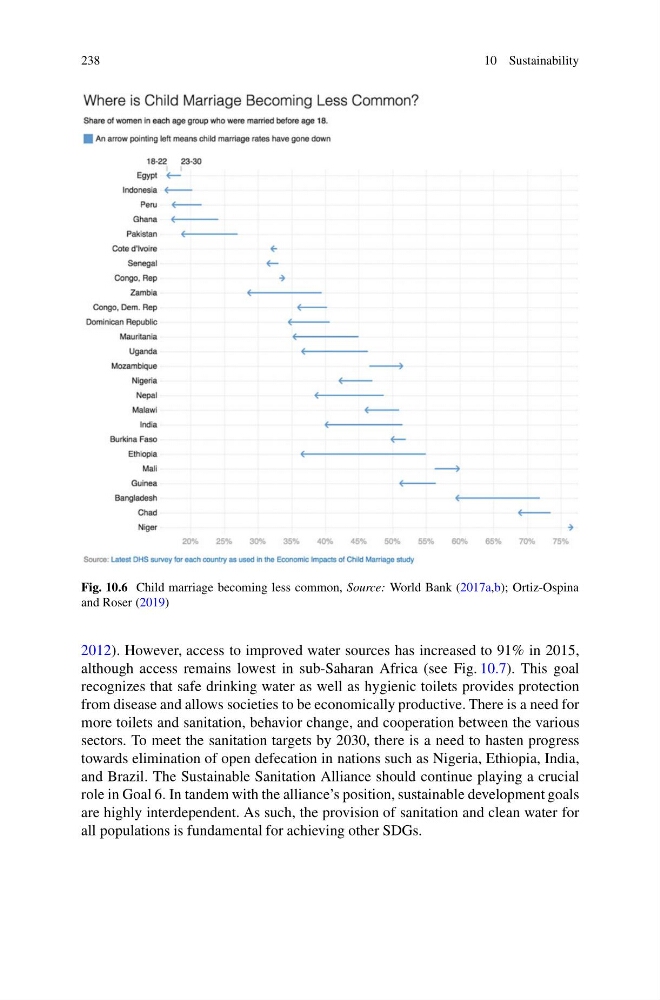
Fig. 10.6 Child marriage becoming less common, Source: World Bank (2017a,b); Ortiz-Ospina
and Roser (2019)
2012). However, access to improved water sources has increased to 91% in 2015,
although access remains lowest in sub-Saharan Africa (see Fig. 10.7). This goal
recognizes that safe drinking water as well as hygienic toilets provides protection
from disease and allows societies to be economically productive. There is a need for
more toilets and sanitation, behavior change, and cooperation between the various
sectors. To meet the sanitation targets by 2030, there is a need to hasten progress
towards elimination of open defecation in nations such as Nigeria, Ethiopia, India,
and Brazil. The Sustainable Sanitation Alliance should continue playing a crucial
role in Goal 6. In tandem with the alliance’s position, sustainable development goals
are highly interdependent. As such, the provision of sanitation and clean water for
all populations is fundamental for achieving other SDGs.
10 Sustainability
Fig. 10.6 Child marriage becoming less common, Source: World Bank (2017a,b); Ortiz-Ospina
and Roser (2019)
2012). However, access to improved water sources has increased to 91% in 2015,
although access remains lowest in sub-Saharan Africa (see Fig. 10.7). This goal
recognizes that safe drinking water as well as hygienic toilets provides protection
from disease and allows societies to be economically productive. There is a need for
more toilets and sanitation, behavior change, and cooperation between the various
sectors. To meet the sanitation targets by 2030, there is a need to hasten progress
towards elimination of open defecation in nations such as Nigeria, Ethiopia, India,
and Brazil. The Sustainable Sanitation Alliance should continue playing a crucial
role in Goal 6. In tandem with the alliance’s position, sustainable development goals
are highly interdependent. As such, the provision of sanitation and clean water for
all populations is fundamental for achieving other SDGs.