

324
Surface Water Nutrients
In Indian Sundarbans region nutrients are basically contributed through land run-off
(that increases during monsoon) and litter and detritus of mangrove vegetation. The
entire nutrients (nitrate, phosphate and silicate) exhibit high values during monsoon
and lowest during the premonsoon periods. The large discharges of fresh water from
land run-off during the monsoon may contribute to the observed increase in nutrient
content in the aquatic sub-system. Nutrient entrapped in the bottom sediments may
get released to the overlying water column due to turbulence during the monsoon.
All these sources saturate the water in and around Indian Sundarbans with considerable concentrations of nutrients due which phytoplankton growth never shows a
decreasing trend.
Phytoplankton Population
These are free floating minute plants that constitute the drifting community of shallow seas, estuaries and bays, where light can penetrate. They are the major food for
oyster and other filter feeding bivalves and form the primary biological component
of any aquatic system, sweet or saline, which play the chief role of energy transference to higher trophic level. The phytoplankton diet of oysters is composed of diatoms such as Chaetoceros affinis, Skeletonema costatum, Thalasiosira subtilis and
Nitzchia closterium, the phytoflagellates Isochrysis galbana and Pavlova sp. and the
microgreen alga Chlorella salina. According to Nayar (1987), the optimum algal
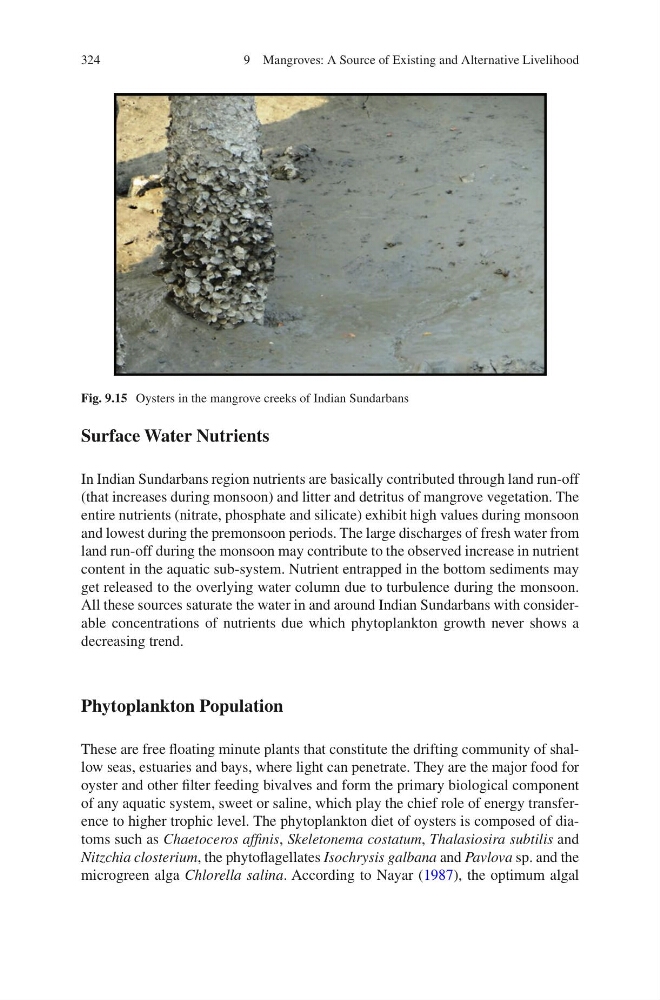
Fig. 9.15 Oysters in the mangrove creeks of Indian Sundarbans
9 Mangroves: A Source of Existing and Alternative Livelihood
Surface Water Nutrients
In Indian Sundarbans region nutrients are basically contributed through land run-off
(that increases during monsoon) and litter and detritus of mangrove vegetation. The
entire nutrients (nitrate, phosphate and silicate) exhibit high values during monsoon
and lowest during the premonsoon periods. The large discharges of fresh water from
land run-off during the monsoon may contribute to the observed increase in nutrient
content in the aquatic sub-system. Nutrient entrapped in the bottom sediments may
get released to the overlying water column due to turbulence during the monsoon.
All these sources saturate the water in and around Indian Sundarbans with considerable concentrations of nutrients due which phytoplankton growth never shows a
decreasing trend.
Phytoplankton Population
These are free floating minute plants that constitute the drifting community of shallow seas, estuaries and bays, where light can penetrate. They are the major food for
oyster and other filter feeding bivalves and form the primary biological component
of any aquatic system, sweet or saline, which play the chief role of energy transference to higher trophic level. The phytoplankton diet of oysters is composed of diatoms such as Chaetoceros affinis, Skeletonema costatum, Thalasiosira subtilis and
Nitzchia closterium, the phytoflagellates Isochrysis galbana and Pavlova sp. and the
microgreen alga Chlorella salina. According to Nayar (1987), the optimum algal
Fig. 9.15 Oysters in the mangrove creeks of Indian Sundarbans
9 Mangroves: A Source of Existing and Alternative Livelihood