

302
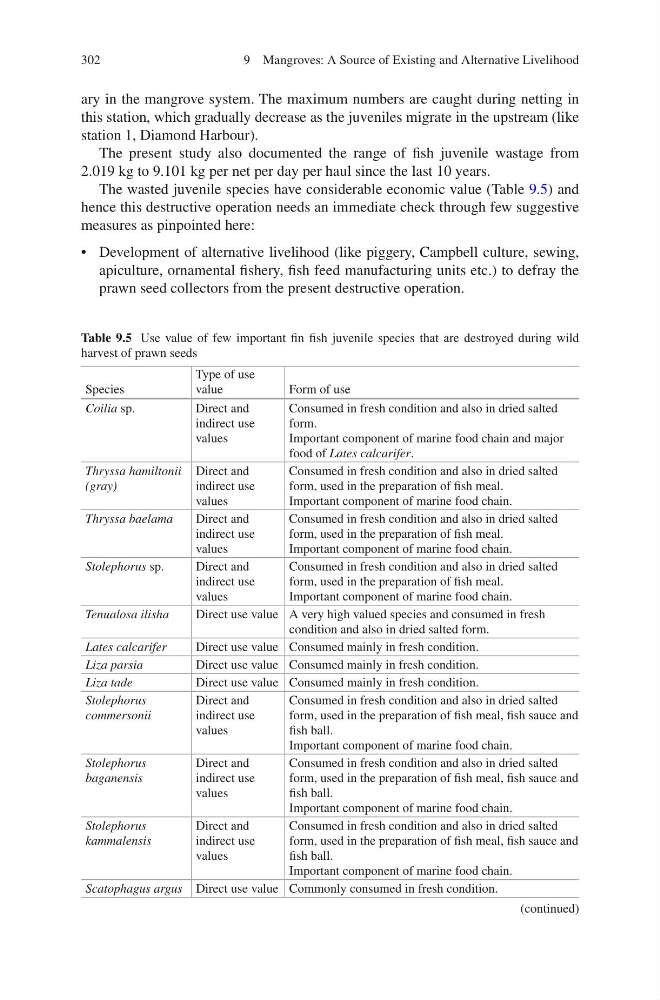
Table 9.5 Use value of few important fin fish juvenile species that are destroyed during wild
harvest of prawn seeds
Species
Type of use
value
Form of use
Coilia sp.
Direct and
indirect use
values
Consumed in fresh condition and also in dried salted
form.
Important component of marine food chain and major
food of Lates calcarifer.
Thryssa hamiltonii
(gray)
Direct and
indirect use
values
Consumed in fresh condition and also in dried salted
form, used in the preparation of fish meal.
Important component of marine food chain.
Thryssa baelama
Direct and
indirect use
values
Consumed in fresh condition and also in dried salted
form, used in the preparation of fish meal.
Important component of marine food chain.
Stolephorus sp.
Direct and
indirect use
values
Consumed in fresh condition and also in dried salted
form, used in the preparation of fish meal.
Important component of marine food chain.
Tenualosa ilisha
Direct use value A very high valued species and consumed in fresh
condition and also in dried salted form.
Lates calcarifer
Direct use value Consumed mainly in fresh condition.
Liza parsia
Direct use value Consumed mainly in fresh condition.
Liza tade
Direct use value Consumed mainly in fresh condition.
Stolephorus
commersonii
Direct and
indirect use
values
Consumed in fresh condition and also in dried salted
form, used in the preparation of fish meal, fish sauce and
fish ball.
Important component of marine food chain.
Stolephorus
baganensis
Direct and
indirect use
values
Consumed in fresh condition and also in dried salted
form, used in the preparation of fish meal, fish sauce and
fish ball.
Important component of marine food chain.
Stolephorus
kammalensis
Direct and
indirect use
values
Consumed in fresh condition and also in dried salted
form, used in the preparation of fish meal, fish sauce and
fish ball.
Important component of marine food chain.
Scatophagus argus Direct use value Commonly consumed in fresh condition.
(continued)
ary in the mangrove system. The maximum numbers are caught during netting in
this station, which gradually decrease as the juveniles migrate in the upstream (like
station 1, Diamond Harbour).
The present study also documented the range of fish juvenile wastage from
2.019 kg to 9.101 kg per net per day per haul since the last 10 years.
The wasted juvenile species have considerable economic value (Table 9.5) and
hence this destructive operation needs an immediate check through few suggestive
measures as pinpointed here:
• Development of alternative livelihood (like piggery, Campbell culture, sewing,
apiculture, ornamental fishery, fish feed manufacturing units etc.) to defray the
prawn seed collectors from the present destructive operation.
9 Mangroves: A Source of Existing and Alternative Livelihood
Table 9.5 Use value of few important fin fish juvenile species that are destroyed during wild
harvest of prawn seeds
Species
Type of use
value
Form of use
Coilia sp.
Direct and
indirect use
values
Consumed in fresh condition and also in dried salted
form.
Important component of marine food chain and major
food of Lates calcarifer.
Thryssa hamiltonii
(gray)
Direct and
indirect use
values
Consumed in fresh condition and also in dried salted
form, used in the preparation of fish meal.
Important component of marine food chain.
Thryssa baelama
Direct and
indirect use
values
Consumed in fresh condition and also in dried salted
form, used in the preparation of fish meal.
Important component of marine food chain.
Stolephorus sp.
Direct and
indirect use
values
Consumed in fresh condition and also in dried salted
form, used in the preparation of fish meal.
Important component of marine food chain.
Tenualosa ilisha
Direct use value A very high valued species and consumed in fresh
condition and also in dried salted form.
Lates calcarifer
Direct use value Consumed mainly in fresh condition.
Liza parsia
Direct use value Consumed mainly in fresh condition.
Liza tade
Direct use value Consumed mainly in fresh condition.
Stolephorus
commersonii
Direct and
indirect use
values
Consumed in fresh condition and also in dried salted
form, used in the preparation of fish meal, fish sauce and
fish ball.
Important component of marine food chain.
Stolephorus
baganensis
Direct and
indirect use
values
Consumed in fresh condition and also in dried salted
form, used in the preparation of fish meal, fish sauce and
fish ball.
Important component of marine food chain.
Stolephorus
kammalensis
Direct and
indirect use
values
Consumed in fresh condition and also in dried salted
form, used in the preparation of fish meal, fish sauce and
fish ball.
Important component of marine food chain.
Scatophagus argus Direct use value Commonly consumed in fresh condition.
(continued)
ary in the mangrove system. The maximum numbers are caught during netting in
this station, which gradually decrease as the juveniles migrate in the upstream (like
station 1, Diamond Harbour).
The present study also documented the range of fish juvenile wastage from
2.019 kg to 9.101 kg per net per day per haul since the last 10 years.
The wasted juvenile species have considerable economic value (Table 9.5) and
hence this destructive operation needs an immediate check through few suggestive
measures as pinpointed here:
• Development of alternative livelihood (like piggery, Campbell culture, sewing,
apiculture, ornamental fishery, fish feed manufacturing units etc.) to defray the
prawn seed collectors from the present destructive operation.
9 Mangroves: A Source of Existing and Alternative Livelihood