

9
• Tidal mixing, nutrient trapping and fresh water inflow that result in considerable primary productivity and provide base of a food web from zooplankton
to post larval fishes and juveniles.
• The physical and structural complexity of the habitat itself provides a variety
of niches favourable to survival of juveniles. Niche segregation often leads
to minimization of inter-and intra-specific competition resulting in a high
survival rate of finfish and shellfish juveniles.
4. The vibrating mangrove ecosystem provides nutritional inputs to adjacent shallow channels and bay system that constitute the primary habitat of a large number of aquatic species, algae of commercial importance, seaweeds, phytoplankton
etc. Mangroves and mangrove habitats contribute significantly to the global carbon cycle. Twilley et al. (1992) estimated the total global mangrove biomass to
be approximately 8.70 gigatons dry weight (which is equivalent to 4.00 gigatons
of carbon). Accurate biomass estimation however needs the measurement of the
volumes of individual trees.
5. Mangroves trap debris and silt, leading to the stabilization of the near shore environment. (http://www.reefrelief.org/Documents/mangrove.html).
6. The highly specialized mangrove ecosystem also acts as the protector of the
coastal landmass from storm surges, tropical cyclone, high winds, tidal bores,
seawater seepage and intrusion.
7. Bioaccumulation of heavy metals by certain mangrove species reveals a most
surprising feature about these plants as they can act as bio-purifier or bio-filter.
Certain mangrove species are highly efficient in detecting or assessing the change
of ambient environment. The concentration of heavy metal pollutants in different
parts of mangrove plants may act as a pathfinder for water quality monitoring
programme (Mitra et al. 2004).
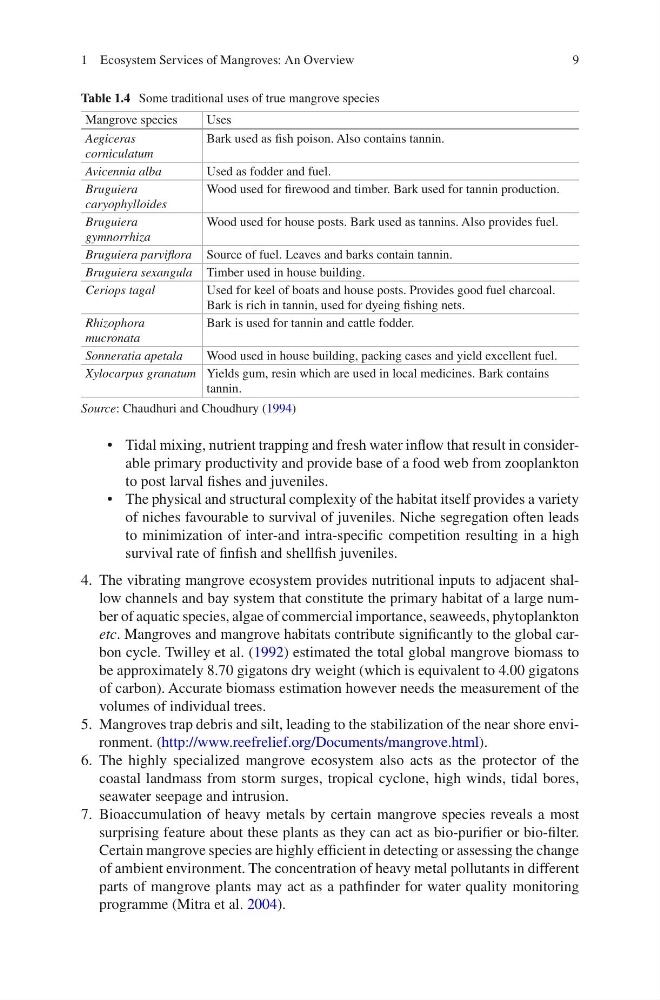
Table 1.4 Some traditional uses of true mangrove species
Mangrove species
Uses
Aegiceras
corniculatum
Bark used as fish poison. Also contains tannin.
Avicennia alba
Used as fodder and fuel.
Bruguiera
caryophylloides
Wood used for firewood and timber. Bark used for tannin production.
Bruguiera
gymnorrhiza
Wood used for house posts. Bark used as tannins. Also provides fuel.
Bruguiera parviflora Source of fuel. Leaves and barks contain tannin.
Bruguiera sexangula Timber used in house building.
Ceriops tagal
Used for keel of boats and house posts. Provides good fuel charcoal.
Bark is rich in tannin, used for dyeing fishing nets.
Rhizophora
mucronata
Bark is used for tannin and cattle fodder.
Sonneratia apetala
Wood used in house building, packing cases and yield excellent fuel.
Xylocarpus granatum Yields gum, resin which are used in local medicines. Bark contains
tannin.
Source: Chaudhuri and Choudhury (1994)
1 Ecosystem Services of Mangroves: An Overview
• Tidal mixing, nutrient trapping and fresh water inflow that result in considerable primary productivity and provide base of a food web from zooplankton
to post larval fishes and juveniles.
• The physical and structural complexity of the habitat itself provides a variety
of niches favourable to survival of juveniles. Niche segregation often leads
to minimization of inter-and intra-specific competition resulting in a high
survival rate of finfish and shellfish juveniles.
4. The vibrating mangrove ecosystem provides nutritional inputs to adjacent shallow channels and bay system that constitute the primary habitat of a large number of aquatic species, algae of commercial importance, seaweeds, phytoplankton
etc. Mangroves and mangrove habitats contribute significantly to the global carbon cycle. Twilley et al. (1992) estimated the total global mangrove biomass to
be approximately 8.70 gigatons dry weight (which is equivalent to 4.00 gigatons
of carbon). Accurate biomass estimation however needs the measurement of the
volumes of individual trees.
5. Mangroves trap debris and silt, leading to the stabilization of the near shore environment. (http://www.reefrelief.org/Documents/mangrove.html).
6. The highly specialized mangrove ecosystem also acts as the protector of the
coastal landmass from storm surges, tropical cyclone, high winds, tidal bores,
seawater seepage and intrusion.
7. Bioaccumulation of heavy metals by certain mangrove species reveals a most
surprising feature about these plants as they can act as bio-purifier or bio-filter.
Certain mangrove species are highly efficient in detecting or assessing the change
of ambient environment. The concentration of heavy metal pollutants in different
parts of mangrove plants may act as a pathfinder for water quality monitoring
programme (Mitra et al. 2004).
Table 1.4 Some traditional uses of true mangrove species
Mangrove species
Uses
Aegiceras
corniculatum
Bark used as fish poison. Also contains tannin.
Avicennia alba
Used as fodder and fuel.
Bruguiera
caryophylloides
Wood used for firewood and timber. Bark used for tannin production.
Bruguiera
gymnorrhiza
Wood used for house posts. Bark used as tannins. Also provides fuel.
Bruguiera parviflora Source of fuel. Leaves and barks contain tannin.
Bruguiera sexangula Timber used in house building.
Ceriops tagal
Used for keel of boats and house posts. Provides good fuel charcoal.
Bark is rich in tannin, used for dyeing fishing nets.
Rhizophora
mucronata
Bark is used for tannin and cattle fodder.
Sonneratia apetala
Wood used in house building, packing cases and yield excellent fuel.
Xylocarpus granatum Yields gum, resin which are used in local medicines. Bark contains
tannin.
Source: Chaudhuri and Choudhury (1994)
1 Ecosystem Services of Mangroves: An Overview