

8
2. Mangroves are thought to possess the ability to control coastal water quality. The
complexity of the mangrove forest habitat increases the residence time, which
assists in the assimilation of inorganic nutrients and traps suspended particulate
matter. The mangroves also function as flood control barrier and binder of sediment particles (http://www.fao.org/gpa/sediments/habitat.htm).
3. The ecosystem forms an ideal ecological asset because the production of leaf
litter and detrital matter from mangrove plants fulfill the nutritional requirements
of prawn juveniles, adult shrimps, molluscs and fishes of high economic value.
Because of this, mangrove ecosystem is recognized as the world’s most potential
nursery. There are three main factors to justify the nursery role of the mangrove
habitat. They are:
• High levels of water turbidity, which increases the survival rate of larvae
through reduced perception distance of predators.
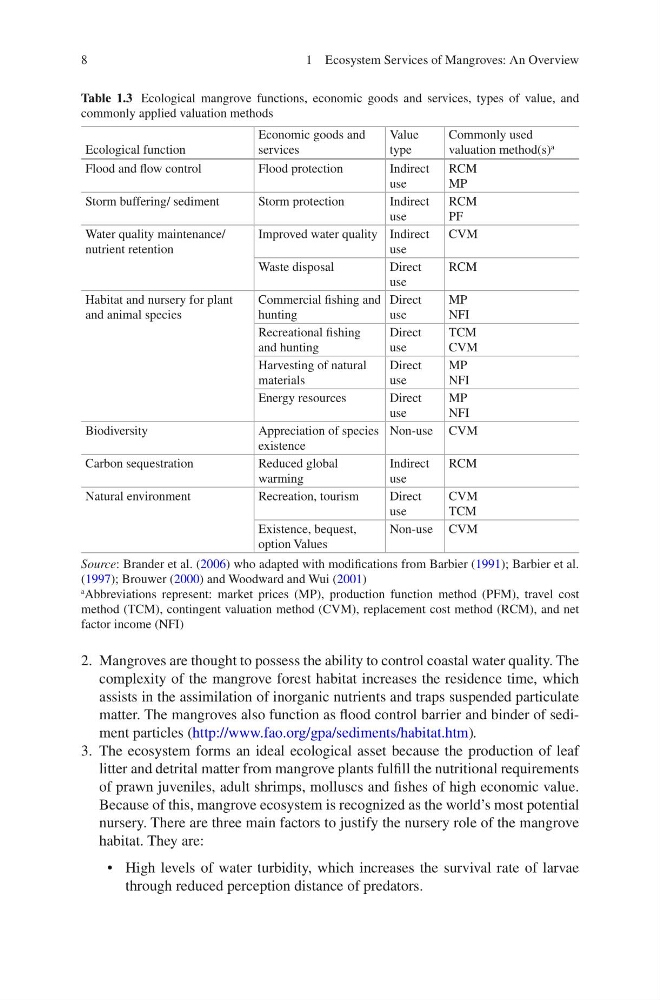
Table 1.3 Ecological mangrove functions, economic goods and services, types of value, and
commonly applied valuation methods
Ecological function
Economic goods and
services
Value
type
Commonly used
valuation method(s)
a
Flood and flow control
Flood protection
Indirect
use
RCM
MP
Storm buffering/ sediment
Storm protection
Indirect
use
RCM
PF
Water quality maintenance/
nutrient retention
Improved water quality Indirect
use
CVM
Waste disposal
Direct
use
RCM
Habitat and nursery for plant
and animal species
Commercial fishing and
hunting
Direct
use
MP
NFI
Recreational fishing
and hunting
Direct
use
TCM
CVM
Harvesting of natural
materials
Direct
use
MP
NFI
Energy resources
Direct
use
MP
NFI
Biodiversity
Appreciation of species
existence
Non-use CVM
Carbon sequestration
Reduced global
warming
Indirect
use
RCM
Natural environment
Recreation, tourism
Direct
use
CVM
TCM
Existence, bequest,
option Values
Non-use CVM
Source: Brander et al. (2006) who adapted with modifications from Barbier (1991); Barbier et al.
(1997); Brouwer (2000) and Woodward and Wui (2001)
a
Abbreviations represent: market prices (MP), production function method (PFM), travel cost
method (TCM), contingent valuation method (CVM), replacement cost method (RCM), and net
factor income (NFI)
1 Ecosystem Services of Mangroves: An Overview
2. Mangroves are thought to possess the ability to control coastal water quality. The
complexity of the mangrove forest habitat increases the residence time, which
assists in the assimilation of inorganic nutrients and traps suspended particulate
matter. The mangroves also function as flood control barrier and binder of sediment particles (http://www.fao.org/gpa/sediments/habitat.htm).
3. The ecosystem forms an ideal ecological asset because the production of leaf
litter and detrital matter from mangrove plants fulfill the nutritional requirements
of prawn juveniles, adult shrimps, molluscs and fishes of high economic value.
Because of this, mangrove ecosystem is recognized as the world’s most potential
nursery. There are three main factors to justify the nursery role of the mangrove
habitat. They are:
• High levels of water turbidity, which increases the survival rate of larvae
through reduced perception distance of predators.
Table 1.3 Ecological mangrove functions, economic goods and services, types of value, and
commonly applied valuation methods
Ecological function
Economic goods and
services
Value
type
Commonly used
valuation method(s)
a
Flood and flow control
Flood protection
Indirect
use
RCM
MP
Storm buffering/ sediment
Storm protection
Indirect
use
RCM
PF
Water quality maintenance/
nutrient retention
Improved water quality Indirect
use
CVM
Waste disposal
Direct
use
RCM
Habitat and nursery for plant
and animal species
Commercial fishing and
hunting
Direct
use
MP
NFI
Recreational fishing
and hunting
Direct
use
TCM
CVM
Harvesting of natural
materials
Direct
use
MP
NFI
Energy resources
Direct
use
MP
NFI
Biodiversity
Appreciation of species
existence
Non-use CVM
Carbon sequestration
Reduced global
warming
Indirect
use
RCM
Natural environment
Recreation, tourism
Direct
use
CVM
TCM
Existence, bequest,
option Values
Non-use CVM
Source: Brander et al. (2006) who adapted with modifications from Barbier (1991); Barbier et al.
(1997); Brouwer (2000) and Woodward and Wui (2001)
a
Abbreviations represent: market prices (MP), production function method (PFM), travel cost
method (TCM), contingent valuation method (CVM), replacement cost method (RCM), and net
factor income (NFI)
1 Ecosystem Services of Mangroves: An Overview