

179
Vertical accretion allows salt marshes to move up vertically as sea-level rises.
This process relies on the contribution of belowground organic matter and sediment
deposition on the marsh surface (Fagherazzi et al. 2013). Changes in marsh plant
abundance and biomass can affect sediment deposition, and ultimately vertical
accretion (Fagherazzi et al. 2013).
A comparative study was undertaken by me with Ms. Ankita Ankita Mitra, a
gratuate with Environmental Science background on the sediment accretion rate in
two different set ups of mangrove ecosystem with saltmarsh grass (Porteresia
coarctata) vegetation (Fig. 6.24).
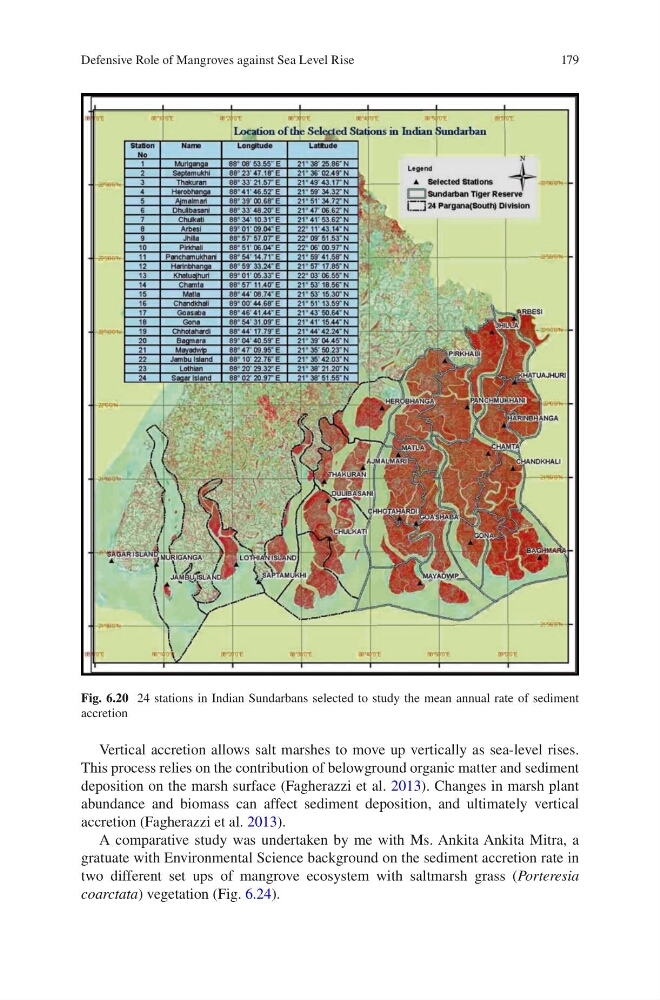
Fig. 6.20 24 stations in Indian Sundarbans selected to study the mean annual rate of sediment
accretion
Defensive Role of Mangroves against Sea Level Rise
Vertical accretion allows salt marshes to move up vertically as sea-level rises.
This process relies on the contribution of belowground organic matter and sediment
deposition on the marsh surface (Fagherazzi et al. 2013). Changes in marsh plant
abundance and biomass can affect sediment deposition, and ultimately vertical
accretion (Fagherazzi et al. 2013).
A comparative study was undertaken by me with Ms. Ankita Ankita Mitra, a
gratuate with Environmental Science background on the sediment accretion rate in
two different set ups of mangrove ecosystem with saltmarsh grass (Porteresia
coarctata) vegetation (Fig. 6.24).
Fig. 6.20 24 stations in Indian Sundarbans selected to study the mean annual rate of sediment
accretion
Defensive Role of Mangroves against Sea Level Rise