

141
level of pollution in this sector. The central sector on contrary is deprived of freshwater supply of Ganga-Bhagirathi system on account of siltation of Bidyadhari
River in the fifteenth century. The Matla River, in the central sector is now tide fed
with an increasing trend of salinity (Mitra et al. 2009; Sengupta et al. 2013).
Industrial activities are also low in this sector except tourism. The eastern sector
of Indian Sundarbans is mainly fed from fresh water running from the creeks and
canals of Brahmaputra-Padma-Meghna basin. This sector is not so polluted by the
industrial discharges and urbanized cities due to its remoteness from cities
(Chakraborty et al. 2013).
Kakdwip
Harinbari
Chemaguri
Sagar south
Lothian island
Jambu island
Frasergunj
Gosaba
Chotomollakhali
Bali island
Sajnekhali
Bagmara
Root Premonsoon
Stem Premonsoon
Leaf Premonsoon
Leaf Monsoon
Stem Postmonsoon
Leaf Postmonsoon
Stem Monsoon
Root Postmonsoon
Root Monsoon
Concentration of Pb (ppm dry wt.)
18
16
14
12
10
8
6
4
2
–2
0
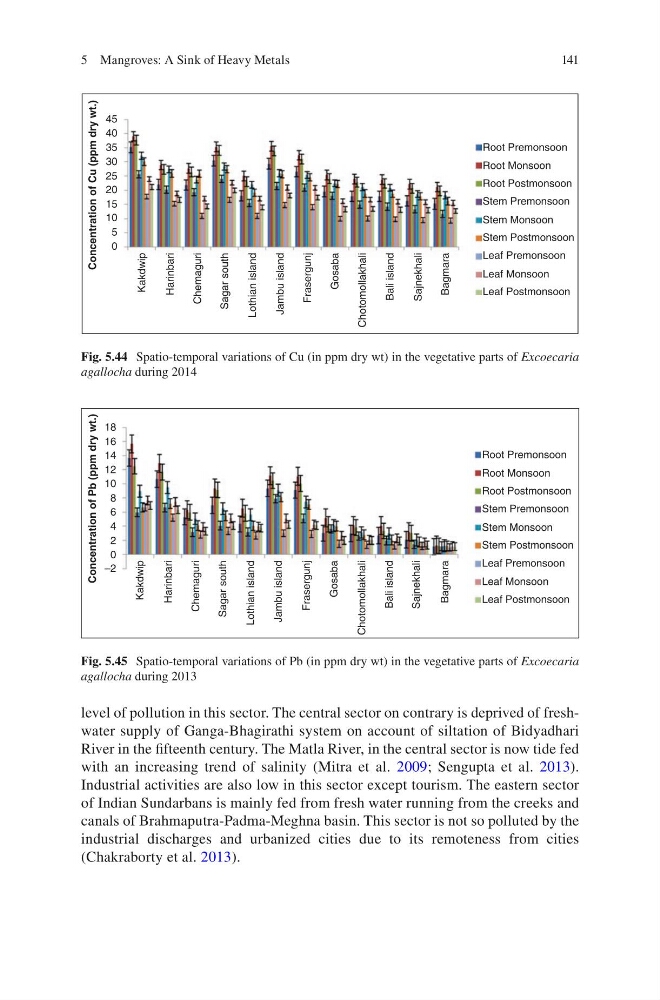
Fig. 5.45 Spatio-temporal variations of Pb (in ppm dry wt) in the vegetative parts of Excoecaria
agallocha during 2013
Kakdwip
Harinbari
Chemaguri
Sagar south
Lothian island
Jambu island
Frasergunj
Gosaba
Chotomollakhali
Bali island
Sajnekhali
Bagmara
Root Premonsoon
Stem Premonsoon
Leaf Premonsoon
Leaf Monsoon
Stem Postmonsoon
Leaf Postmonsoon
Stem Monsoon
Root Postmonsoon
Root Monsoon
Concentration of Cu (ppm dry wt.)
45
35
25
15
5
0
10
20
30
40
Fig. 5.44 Spatio-temporal variations of Cu (in ppm dry wt) in the vegetative parts of Excoecaria
agallocha during 2014
5 Mangroves: A Sink of Heavy Metals
level of pollution in this sector. The central sector on contrary is deprived of freshwater supply of Ganga-Bhagirathi system on account of siltation of Bidyadhari
River in the fifteenth century. The Matla River, in the central sector is now tide fed
with an increasing trend of salinity (Mitra et al. 2009; Sengupta et al. 2013).
Industrial activities are also low in this sector except tourism. The eastern sector
of Indian Sundarbans is mainly fed from fresh water running from the creeks and
canals of Brahmaputra-Padma-Meghna basin. This sector is not so polluted by the
industrial discharges and urbanized cities due to its remoteness from cities
(Chakraborty et al. 2013).
Kakdwip
Harinbari
Chemaguri
Sagar south
Lothian island
Jambu island
Frasergunj
Gosaba
Chotomollakhali
Bali island
Sajnekhali
Bagmara
Root Premonsoon
Stem Premonsoon
Leaf Premonsoon
Leaf Monsoon
Stem Postmonsoon
Leaf Postmonsoon
Stem Monsoon
Root Postmonsoon
Root Monsoon
Concentration of Pb (ppm dry wt.)
18
16
14
12
10
8
6
4
2
–2
0
Fig. 5.45 Spatio-temporal variations of Pb (in ppm dry wt) in the vegetative parts of Excoecaria
agallocha during 2013
Kakdwip
Harinbari
Chemaguri
Sagar south
Lothian island
Jambu island
Frasergunj
Gosaba
Chotomollakhali
Bali island
Sajnekhali
Bagmara
Root Premonsoon
Stem Premonsoon
Leaf Premonsoon
Leaf Monsoon
Stem Postmonsoon
Leaf Postmonsoon
Stem Monsoon
Root Postmonsoon
Root Monsoon
Concentration of Cu (ppm dry wt.)
45
35
25
15
5
0
10
20
30
40
Fig. 5.44 Spatio-temporal variations of Cu (in ppm dry wt) in the vegetative parts of Excoecaria
agallocha during 2014
5 Mangroves: A Sink of Heavy Metals