

140
important for developing a sound management plan for coastal industries in terms
of control and minimization of heavy metal pollution.
The western part of the Indian Sundarbans is connected to Himalayan glacier
through Ganga-Bhagirathi River. Researchers pointed out that the glaciers in the
Himalayan range are melting at the rate of 23 m year
−1
(Hasnain 2002). This along
with Farakka discharge has resulted in gradual freshening of the system which has
role in elevation of dissolved metal level in the system by way lowering of pH
(Mitra et al. 2009). The chain of factories and industries present along the bank of
Hooghly estuary is another important cause of magnified metal level in the aquatic
phase of this estuary that have been reflected in the vegetative tissues of mangroves. Unplanned tourism and fishing activities are also responsible for increased
Kakdwip
Harinbari
Chemaguri
Sagar south
Lothian island
Jambu island
Frasergunj
Gosaba
Chotomollakhali
Bali island
Sajnekhali
Bagmara
Concentration of Zn (ppm dry wt.)
Root Premonsoon
Stem Premonsoon
Leaf Premonsoon
Leaf Monsoon
Stem Postmonsoon
Leaf Postmonsoon
Stem Monsoon
Root Postmonsoon
Root Monsoon
120
100
80
60
40
20
0
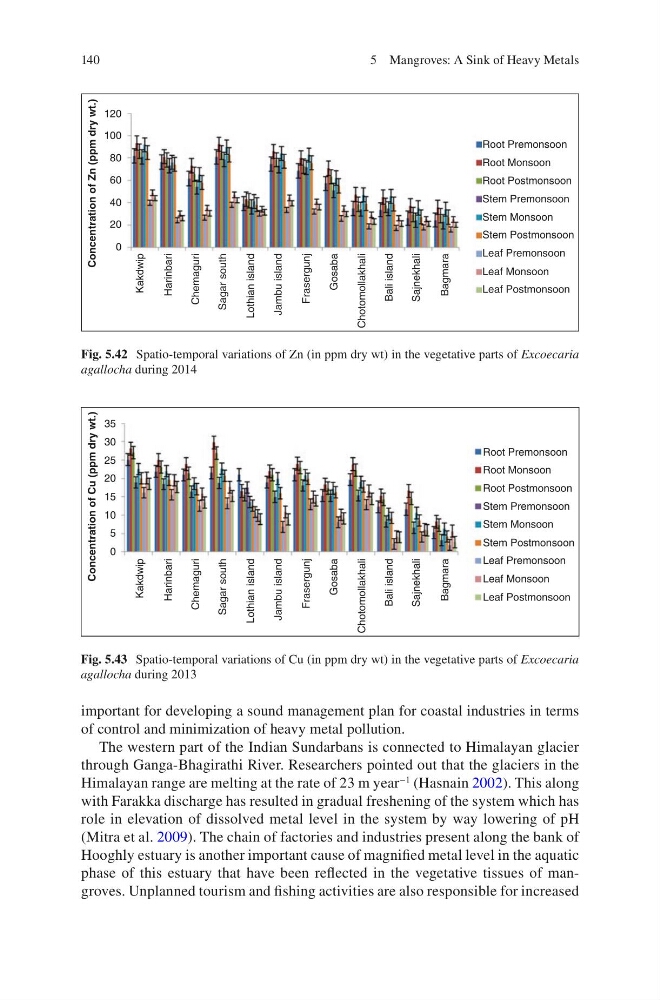
Fig. 5.42 Spatio-temporal variations of Zn (in ppm dry wt) in the vegetative parts of Excoecaria
agallocha during 2014
Kakdwip
Harinbari
Chemaguri
Sagar south
Lothian island
Jambu island
Frasergunj
Gosaba
Chotomollakhali
Bali island
Sajnekhali
Bagmara
Root Premonsoon
Stem Premonsoon
Leaf Premonsoon
Leaf Monsoon
Stem Postmonsoon
Leaf Postmonsoon
Stem Monsoon
Root Postmonsoon
Root Monsoon
Concentration of Cu (ppm dry wt.)
35
25
15
5
0
10
20
30
Fig. 5.43 Spatio-temporal variations of Cu (in ppm dry wt) in the vegetative parts of Excoecaria
agallocha during 2013
5 Mangroves: A Sink of Heavy Metals
important for developing a sound management plan for coastal industries in terms
of control and minimization of heavy metal pollution.
The western part of the Indian Sundarbans is connected to Himalayan glacier
through Ganga-Bhagirathi River. Researchers pointed out that the glaciers in the
Himalayan range are melting at the rate of 23 m year
−1
(Hasnain 2002). This along
with Farakka discharge has resulted in gradual freshening of the system which has
role in elevation of dissolved metal level in the system by way lowering of pH
(Mitra et al. 2009). The chain of factories and industries present along the bank of
Hooghly estuary is another important cause of magnified metal level in the aquatic
phase of this estuary that have been reflected in the vegetative tissues of mangroves. Unplanned tourism and fishing activities are also responsible for increased
Kakdwip
Harinbari
Chemaguri
Sagar south
Lothian island
Jambu island
Frasergunj
Gosaba
Chotomollakhali
Bali island
Sajnekhali
Bagmara
Concentration of Zn (ppm dry wt.)
Root Premonsoon
Stem Premonsoon
Leaf Premonsoon
Leaf Monsoon
Stem Postmonsoon
Leaf Postmonsoon
Stem Monsoon
Root Postmonsoon
Root Monsoon
120
100
80
60
40
20
0
Fig. 5.42 Spatio-temporal variations of Zn (in ppm dry wt) in the vegetative parts of Excoecaria
agallocha during 2014
Kakdwip
Harinbari
Chemaguri
Sagar south
Lothian island
Jambu island
Frasergunj
Gosaba
Chotomollakhali
Bali island
Sajnekhali
Bagmara
Root Premonsoon
Stem Premonsoon
Leaf Premonsoon
Leaf Monsoon
Stem Postmonsoon
Leaf Postmonsoon
Stem Monsoon
Root Postmonsoon
Root Monsoon
Concentration of Cu (ppm dry wt.)
35
25
15
5
0
10
20
30
Fig. 5.43 Spatio-temporal variations of Cu (in ppm dry wt) in the vegetative parts of Excoecaria
agallocha during 2013
5 Mangroves: A Sink of Heavy Metals